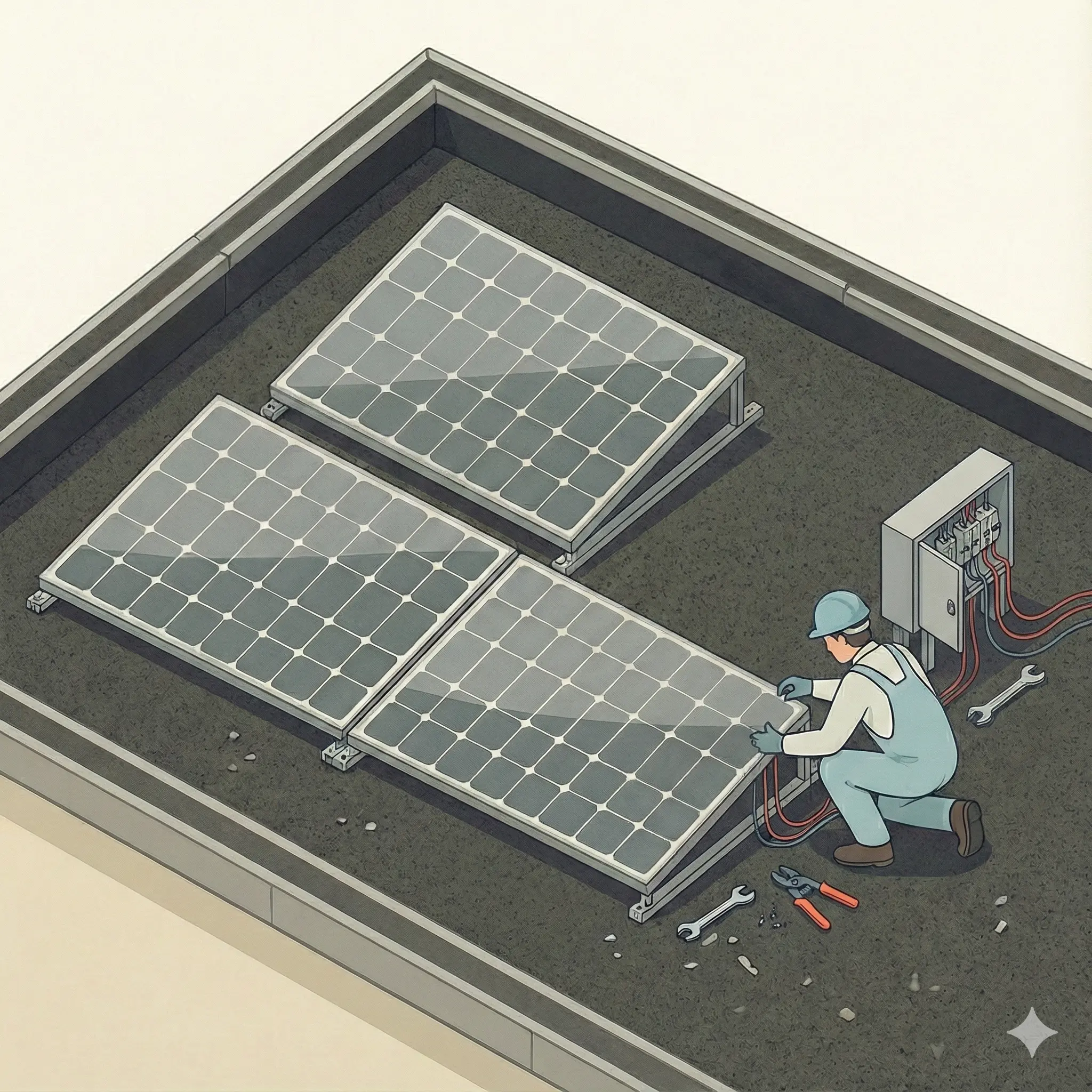
The proliferation of residential solar photovoltaic (PV) systems across the United States marks a significant shift in the national energy infrastructure, transitioning power generation from centralized utilities to distributed, homeowner-managed assets. With over 4.2 million residential systems currently in operation, the narrative surrounding solar energy is evolving from one of acquisition and installation to one of long-term stewardship and asset optimization.1 For the modern homeowner, a solar array represents not merely an eco-conscious purchase but a substantial financial instrument—typically valued between $20,000 and $30,000—that requires sophisticated management to yield its projected return on investment (ROI) over a 25 to 30-year lifespan.1
While the industry marketing engine has historically touted solar as a "set it and forget it" technology, the technical reality is far more nuanced. Solar degradation, environmental soiling, and component fatigue are inevitable physical processes that, if left unmanaged, can severely erode the Levelized Cost of Energy (LCOE) and extend the system’s payback period by years. Furthermore, the complexities of warranty law, electrical safety regulations, and the diagnostic limitations of the naked eye create a landscape where "Do-It-Yourself" (DIY) maintenance is not only ineffective but potentially ruinous.
This report provides an exhaustive analysis of the critical role professional maintenance plays in the solar lifecycle. It dissects the physics of energy loss, the legal intricacies of warranty preservation, and the advanced diagnostic technologies—such as electroluminescence imaging and IV curve tracing—that distinguish professional servicing from amateur cleaning. By examining the rigorous certification standards of the North American Board of Certified Energy Practitioners (NABCEP) and state-specific licensing requirements in key markets like California, Texas, and Florida, this document empowers homeowners to navigate the complex service market. Ultimately, it argues that professional asset management is not a discretionary luxury but a fundamental requisite for securing the financial and operational integrity of residential solar investments.
---
1. The Solar Asset Class: From Passive Ownership to Active Management
The concept of the "solar asset" is central to understanding the necessity of professional maintenance. Unlike a household appliance that operates until failure and is then replaced, a solar PV system is a power plant. Its primary function is financial: the generation of kilowatt-hours (kWh) that offset utility purchases or generate revenue through net metering and Solar Renewable Energy Credits (SRECs). As with any income-generating asset, performance variances directly impact the bottom line.
1.1 The Myth of the Maintenance-Free System
For decades, the solar industry’s sales pitch focused heavily on the durability of the technology. With no moving parts, PV modules are indeed more robust than wind turbines or fossil fuel generators. However, this lack of moving parts has led to a dangerous misconception among homeowners that the systems are impervious to environmental and operational decay. This "maintenance-free" myth ignores the reality that solar panels function in a hostile outdoor environment, exposed continuously to ultraviolet (UV) radiation, thermal cycling, moisture, and atmospheric particulates.
The reality is that while the internal components of a solar panel are solid-state, the external interfaces and the balance of system (BOS) components—inverters, racking, and wiring—are subject to significant wear and tear. Research indicates that systems left unmaintained do not fail catastrophically overnight; rather, they suffer from a "silent death"—a gradual, unnoticed decline in efficiency that accumulates into substantial financial loss over time.3 A system degrading at 1% per year versus the warranted 0.5% per year will produce tens of thousands fewer kWh over its life, a loss that far exceeds the cost of preventative maintenance.
1.2 The Financial Stakes of Performance Optimization
To quantify the value of professional maintenance, one must look at the Levelized Cost of Energy (LCOE). LCOE measures the average net present cost of electricity generation for a generating plant over its lifetime. It is calculated by dividing total lifecycle costs (installation + O&M) by total lifecycle energy production.
- Production Loss Impact: If a system's output is suppressed by 10% due to soiling or undetected degradation, the LCOE increases proportionally. For a typical homeowner paying $0.20/kWh to their utility, a 10% loss on a 10kW system (producing roughly 14,000 kWh/year) equates to a $280 annual loss. Over 20 years, factoring in utility rate inflation, this unaddressed inefficiency can amount to over $7,000 in lost savings.4
- Asset Longevity: Professional maintenance extends the useful life of the asset. An inverter that is kept clean and cool may last 15 years, while one with clogged heat sinks may fail in 10. Replacing an inverter costs between $1,500 and $3,000.5 Extending its life by five years through simple maintenance significantly improves the system's overall ROI.
1.3 The Transition to Operations and Maintenance (O&M)
In the utility-scale solar sector, O&M is a disciplined science. Large solar farms have dedicated teams monitoring performance 24/7. The residential sector is now maturing into this phase. As early adopters' systems age and the fleet of residential solar grows, the industry is developing "Residential O&M" as a distinct service category. This shift acknowledges that homeowners are essentially micro-utilities and require a scaled-down version of the professional support that large power plants rely on. This professionalization of residential service is the primary subject of this report, highlighting the move from "cleaning guys" to "solar technicians."
---
2. The Science of Performance Loss: Mechanics of Degradation
To appreciate the "why" of professional maintenance, it is essential to understand the "how" of solar degradation. Solar panels lose efficiency through three primary vectors: optical losses (soiling), electrical degradation (PID, cell fracture), and thermal stress. Each of these mechanisms requires specific professional interventions to mitigate.
2.1 Optical Barriers: The Physics of Soiling
Soiling is the most immediate and reversible cause of power loss. It refers to the accumulation of any substance on the PV glass that absorbs, reflects, or scatters sunlight before it reaches the silicon cell.
- Particulate Matter Composition: Not all "dirt" is created equal. In agricultural regions, dust may contain fertilizers and pesticides. In urban areas, it comprises soot, hydrocarbons from vehicle exhaust, and industrial particulate matter (PM2.5). In coastal areas, salt spray creates a hygroscopic layer that attracts moisture. Each contaminant interacts differently with light.
- The Cementation Phenomenon: A critical threat addressed by professionals is "cementation." This occurs when dust accumulates on the panel and is then wetted by light rain or morning dew. As the sun rises and heats the panel, this wet mixture dries into a hard, cement-like crust that bonds to the glass surface. Unlike loose dust, cemented soil cannot be removed by wind or rain; it requires mechanical agitation and specific water chemistry to dissolve without scratching the glass.7
- Bio-Soiling (Bird Guano): Bird droppings are particularly damaging. They are opaque, creating "hard shading" that completely blocks light to the cells below. Because solar modules are wired in series, a single hard shadow can disproportionately impact the output of an entire string of panels. Furthermore, bird guano is highly acidic (uric acid). If left on the panel, it can chemically etch the anti-reflective coating (ARC), causing permanent optical damage that cannot be cleaned away.8
- The Spectral Effect: Soiling doesn't just block light intensity; it alters the spectrum of light reaching the cells. Certain types of dust absorb blue light more than red light. Since silicon cells are responsive to specific wavelengths, this spectral shift can reduce efficiency in ways that simple shading calculations might miss.
2.2 Potential Induced Degradation (PID)
Potential Induced Degradation (PID) is a silent, creeping form of degradation that is invisible to the naked eye but devastating to system performance.
- Mechanism: PID occurs due to a voltage potential difference between the semiconductor material (the cell) and the grounded module frame. In standard residential systems (especially those with string inverters), this high voltage potential can drive sodium ions from the cover glass to migrate through the encapsulant and into the solar cell itself.
- The "Shunt" Effect: These invading sodium ions create microscopic short circuits, or "shunts," across the cell's p-n junction. This reduces the cell's shunt resistance and its ability to hold a voltage, effectively causing power to leak out of the cell rather than flow to the inverter.10
- Environmental Accelerants: PID is accelerated by high temperatures and high humidity. A system in Florida or Texas is at significantly higher risk than one in a dry, cool climate.10
- Detection: PID cannot be seen. It typically manifests as a growing discrepancy in string voltage or a reduction in overall output that mimics soiling. Only professional diagnostics, specifically Electroluminescence (EL) imaging or specialized IV curve tracing, can definitively identify PID.10
2.3 Structural Integrity: Micro-cracks and Thermal Cycling
The silicon wafers inside a solar panel are roughly the thickness of a human hair. While they are protected by tempered glass and an aluminum frame, they remain brittle.
- Micro-fracture Formation: Micro-cracks can be introduced during manufacturing, shipping, or installation (often by installers walking on panels). However, they can also develop over time due to environmental stressors. Wind loads cause panels to flex; hail impacts can fracture cells without breaking the glass; and thermal cycling (the expansion and contraction of materials as temperatures swing from day to night) creates repetitive stress on the cell interconnects.13
- The Consequence - Hotspots: A micro-crack can sever the thin silver "fingers" that collect electricity from the silicon. When current is forced to flow around this break, resistance increases. In electrical circuits, resistance generates heat. This localized heating creates a "hotspot." Severe hotspots can reach temperatures high enough to burn through the panel's backsheet, melt the encapsulant, or even shatter the glass.13
- Diagnostic Necessity: Like PID, micro-cracks are often invisible to the naked eye. They require thermal imaging (to see the heat) or EL imaging (to see the crack) for detection. A homeowner washing their panels will never see a micro-crack until it burns through the backsheet, at which point the panel is destroyed.
---
3. The Hidden Risks of DIY: A Safety and Liability Analysis
The internet is replete with tutorials suggesting that solar maintenance is a simple DIY task involving a ladder and a garden hose. This advice is dangerously reductive. It fails to account for the electrical nature of the equipment, the physics of fall dynamics, and the specific material properties of solar modules.
3.1 Personal Safety: The Lethality of Rooftop Work
The most immediate risk of DIY maintenance is physical injury.
- Fall Hazards: Solar panels are typically installed on sloped roofs. When wet with cleaning water, the glass surface becomes frictionless. A homeowner attempting to clean panels with a hose often lacks the three-point contact required for ladder safety and almost certainly lacks the OSHA-mandated fall arrest systems (harnesses, anchors, lanyards) that professionals use.7 Falls from roofs are a leading cause of accidental death and severe injury in the home maintenance sector.
- Electrical Shock: Solar panels are "always on." As long as the sun is shining, they are generating high-voltage DC electricity—often up to 600 volts or more in residential arrays. While the wiring is insulated, rodents frequently chew through wire insulation, and connectors can loosen over time. Spraying water onto a system with compromised insulation creates a direct path for electricity to travel to the person holding the hose. This risk is amplified if the homeowner is standing on a metal ladder or wet roof.16
3.2 Equipment Integrity: How DIY Destroys Panels
Beyond personal safety, DIY maintenance frequently results in damage to the solar asset itself, often in ways that are immediate and irreversible.
- Water Chemistry and Hard Water Spots: Most municipal tap water and well water is "hard," meaning it contains dissolved minerals like calcium, magnesium, and silica. When a homeowner sprays panels with a garden hose and lets them air dry, the water evaporates, but the minerals remain. This leaves behind "hard water spots" or scale. These deposits are chemically bonded to the glass and can be extremely difficult to remove without polishing. Crucially, these spots cast shadows on the cells, permanently reducing output.7
- Thermal Shock: A common DIY mistake is cleaning panels in the middle of a hot day. Solar panels are dark objects that absorb heat; in summer, surface temperatures can exceed 150°F. Spraying 60°F well water onto 150°F glass causes rapid contraction, known as thermal shock. This can cause the tempered glass to shatter instantly or develop stress fractures that lead to future failure.18
- Abrasive Damage: Homeowners often use standard household cleaning tools—brooms, abrasive sponges, or paper towels. These materials are too harsh for the specialized anti-reflective coating (ARC) on the glass. Scrubbing a panel with a shop broom is akin to sanding the lens of a camera; it introduces micro-scratches that diffuse incoming light, reducing the panel's efficiency permanently.3
- Pressure Washing: The use of pressure washers is the single most common cause of DIY damage. The high-pressure stream can force water past the EPDM seals of the frame, leading to internal corrosion and ground faults. It can also physically flex the glass enough to cause micro-cracks in the silicon cells below. Almost every solar manufacturer explicitly voids the warranty if a pressure washer is used.22
---
4. Professional Diagnostics: The Toolkit of the Expert
The defining characteristic of professional solar maintenance is the use of advanced diagnostic technologies. These tools allow technicians to see beyond the visible spectrum and detect the electrical and thermal anomalies described in Section 2.
4.1 Thermography (Thermal Imaging)
Thermal imaging is a standard part of a professional solar inspection. Technicians use infrared cameras (either handheld or drone-mounted) to visualize the temperature distribution across the solar array.
- Identifying Anomalies: A healthy solar panel should have a relatively uniform temperature. Bright, glowing spots on a thermal image indicate hotspots—cells that are overheating due to high resistance. These images can pinpoint specific failures, such as a solder bond failure or a cell crack, with centimeter-level precision.15
- Bypass Diode Analysis: Thermal imaging can also detect failed bypass diodes. If a diode fails in the "open" position, the sub-string it protects will overheat. If it fails "closed," the sub-string will be bypassed entirely, appearing cooler than the rest of the panel but contributing zero power. Both scenarios are instantly visible to a trained thermographer.24
- Operational Requirements: Professional thermography requires specific environmental conditions—typically an irradiance of at least 600 W/m²—to ensure the panels are generating enough current to produce visible thermal patterns. A DIY visual check cannot replicate this.24
4.2 Electroluminescence (EL) Imaging
If thermography is the thermometer, EL imaging is the X-ray. It is the most sophisticated diagnostic tool available for solar modules.
- The Process: EL testing involves disconnecting the solar string from the inverter and connecting it to a specialized power supply that pushes current backward through the panels (reverse bias). This causes the silicon cells to emit weak near-infrared light. Since this light is overwhelmed by sunlight, EL testing must be done at night or using specialized dark enclosures.25
- What It Reveals: EL images show the crystal structure of the silicon. They reveal micro-cracks, broken fingers, and process defects that are completely invisible to the naked eye and often invisible to thermal cameras until they become critical.
- Forensic Value: EL imaging is crucial for insurance claims. After a hailstorm, a panel might look visibly intact but be shattered internally. EL images provide the "hard evidence" required to prove that the damage exists and is consistent with hail impact, securing coverage for replacement.25
4.3 IV Curve Tracing
IV curve tracing provides a comprehensive electrical fingerprint of a solar string's performance.
- The "Knee" of the Curve: A curve tracer measures current and voltage across the entire operating range, plotting a curve. A healthy string produces a square-ish curve with a sharp "knee."
- Diagnostic Interpretation: The shape of the curve reveals specific issues.
- A "step" in the curve indicates mismatch losses, often due to shading or a failed bypass diode.28
- A low slope at the top of the curve indicates low shunt resistance (potential PID or optical defects).
- A low slope at the vertical leg indicates high series resistance (wiring issues or corroded connectors).29
- Baseline Benchmarking: Professionals use IV tracing to establish a baseline. By comparing this year's curve to last year's (adjusted for weather), they can quantify degradation rates with extreme accuracy, proving whether a system is meeting its performance warranty.31
---
5. Regulatory Compliance & Licensure: A State-by-State Analysis
Solar maintenance is not an unregulated "handyman" activity. Because it involves high-voltage electricity and grid-tied infrastructure, it falls under strict state and federal licensing laws. Homeowners hiring professionals must ensure their providers hold the correct credentials to avoid liability and ensure code compliance.
5.1 NABCEP Certification: The Industry Standard
The North American Board of Certified Energy Practitioners (NABCEP) offers the premier certifications for the solar workforce.
- PV Installation Professional (PVIP): This is the gold standard for installers, demonstrating deep knowledge of design, installation, and code compliance. It requires 58 hours of advanced training and documented experience.33
- PV Commissioning & Maintenance Specialist (PVCMS): This certification is specifically designed for the O&M sector. Professionals with this credential have proven their competency in troubleshooting, IV curve tracing, thermal imaging interpretation, and specific O&M safety protocols like arc flash prevention. Hiring a PVCMS-certified technician ensures the individual understands not just how to clean a panel, but how to diagnose the health of the power plant.33
5.2 State Licensing Mandates
5.2.1 California: The C-46 and C-10 Requirements
In California, the Contractors State License Board (CSLB) strictly regulates solar work.
- C-46 Solar Contractor License: This license authorizes a contractor to install, modify, maintain, and repair active solar energy systems. It is the baseline requirement for any legitimate solar maintenance company.36
- C-10 Electrical Contractor License: While a C-46 can work on the PV system, work that involves the main service panel or grid interconnection often requires a C-10 license.
- Consumer Risk: Hiring an unlicensed person for work valued over $500 is illegal in California. Furthermore, if an unlicensed worker is injured on the property, the homeowner can be held liable as their "employer," bypassing standard workers' compensation protections.37
5.2.2 Texas: Strict Electrical Oversight
Texas treats solar panels as electrical equipment, placing them under the jurisdiction of the Texas Department of Licensing and Regulation (TDLR).
- TECL Requirement: Any company performing "electrical work"—which includes maintaining or extending an electrical wiring system (i.e., solar panels)—must be a licensed Texas Electrical Contractor (TECL).38
- Personnel Requirements: The person performing the work must be a licensed electrician (Apprentice, Journeyman, or Master) working under a Master Electrician. A general "solar cleaner" without an electrical license is legally prohibited from removing panels, touching wiring, or performing electrical troubleshooting. Hiring non-licensed entities can void insurance coverage in the event of a fire.38
5.2.3 Florida: The Solar Contractor (CVC) License
Florida requires a specific Certified Solar Contractor (CVC) license for the installation, alteration, repair, or maintenance of solar systems.
- Scope of Work: The CVC license allows contractors to work on the solar loop. However, any work connecting to the grid or the home's main electrical panel typically requires an Electrical Contractor (EC) license.40
- Hurricane Codes: Florida’s strict building codes regarding wind loads mean that any maintenance involving the racking system (e.g., re-torquing bolts after a storm) must be done by a licensed contractor familiar with these structural requirements.41
5.3 Insurance Prerequisites
A legitimate professional must carry specific insurance policies to protect the homeowner.
- General Liability (GL): This covers damage to the homeowner's property (e.g., a dropped tool cracking a skylight or a ladder scratching a car). The standard minimum is $1 million per occurrence.42
- Workers' Compensation: This is non-negotiable. Solar maintenance is high-risk work. If a technician falls from the roof and the company does not have workers' comp, the homeowner’s homeowner insurance may be sued for medical costs and lost wages. Homeowners should request a Certificate of Insurance (COI) and verify it is active before allowing work to begin.42
---
6. Warranty Preservation: The Legal Imperative
A solar warranty is a valuable financial asset, potentially covering replacement costs for decades. However, it is a conditional contract, not a blanket guarantee. Manufacturers include strict clauses that void coverage if the system is improperly maintained or modified. Professional maintenance is the primary mechanism for navigating these legal minefields.
6.1 Understanding Warranty Structures
Solar warranties generally have two components:
- Product Warranty (10-25 years): This covers defects in materials and workmanship—glass breakage, delamination, frame corrosion, or junction box failure.
- Performance Warranty (25-30 years): This guarantees a specific power output over time. A typical linear performance warranty might guarantee 98% output in Year 1 and no more than 0.5% degradation per year thereafter, resulting in roughly 85-90% guaranteed output at Year 25.45
6.2 The "Void" Clauses: How Homeowners Lose Coverage
Manufacturers like LG, SunPower, and Canadian Solar have explicit exclusions in their warranty documents.
- Improper Cleaning Methods: Canadian Solar’s warranty explicitly states that "damage induced by inappropriate cleaning procedures will void the warranty." It specifically prohibits the use of "rotating brush cleaning methods" (which can cause micro-cracks) and "scraping or rubbing dry dirt away" (which scratches the glass).22
- Chemical Exclusions: SunPower and others void warranties if "harsh chemicals" or "abrasive cleaners" are used. Even common household glass cleaners containing ammonia can degrade the anti-reflective coating or frame seals over time.23
- Unauthorized Repairs: LG’s warranty states that damage caused by "repairs not in accordance with LG's instructions" or by "unauthorized personnel" is excluded. This implies that a DIY fix of a loose connector that leads to a short circuit would not be covered.47
- Documentation Requirements: To claim a Performance Warranty (e.g., alleging the system is underproducing), the manufacturer typically places the burden of proof on the system owner to show that the panels are clean and undamaged. Without a log of professional maintenance proving the panels have been regularly cleaned, the manufacturer can deny the claim, attributing the power loss to soiling rather than a defect.48
6.3 The Role of Professional Documentation
When a professional services a system, they create a service record that serves as a legal shield for the homeowner.
- Proof of Compliance: The service report documents that cleaning was performed using approved methods (e.g., soft brushes, DI water, no pressure washers).
- Establishing "Normal Use": By documenting inspection findings (e.g., "no external damage noted"), the professional helps rule out "external factors" (like golf ball impacts) that would otherwise allow a manufacturer to deny a claim for a cracked cell.
- Claim Facilitation: Many premium installers, like SunPower dealers, handle the entire warranty process—shipping, labor, and replacement—but only for systems they actively maintain. DIY maintenance severs this chain of custody and support.2
---
7. Operational Maintenance Models: Costs, Contracts, and Subscriptions
The market for residential solar maintenance has evolved to offer several engagement models. Understanding these options helps homeowners choose the right balance of cost and protection.
7.1 Service Engagement Models
7.1.1 The "Ad-Hoc" or On-Demand Model
The homeowner monitors the system and calls a provider when they notice dirty panels or a drop in production.
- Pros: No recurring monthly cost; flexible.
- Cons: Reactive rather than preventative. By the time a homeowner notices a drop in production, the system may have been underperforming for months. Ad-hoc pricing is typically higher per visit.
- Cost: $150 - $350 per visit for cleaning and basic inspection.5
7.1.2 The Annual Contract
A scheduled agreement where the provider visits once or twice a year automatically.
- Pros: Ensures consistency; often includes deeper electrical inspections; typically offers a discounted rate compared to ad-hoc.
- Cons: Recurring annual expense.
- Cost: $300 - $600 per year, depending on system size and frequency.4
7.1.3 The Subscription/Care Plan Model
Major installers and dedicated O&M firms (e.g., Sunrun, SolarTech, Optimus Energy) offer monthly subscription packages. These function similarly to an extended warranty or a home security monitoring contract.
- Features: These plans often include 24/7 active monitoring (where the provider watches the alerts), pest control guarantees, discounted or included cleaning, and labor coverage for warranty replacements.
- Value Proposition: They bridge the "labor gap." While manufacturer warranties cover the part, they often don't cover the labor to diagnose and replace it. Subscription plans often cover this labor.
- Cost: $20 - $50 per month ($240 - $600/year).52
7.2 Comparative Cost Analysis (2025 National Averages)
The following table summarizes current market rates for professional solar services across the US.
| Service Category | Typical Cost Range | Factors Influencing Price |
|---|---|---|
| Basic Cleaning (per visit) | $150 - $250 | Roof pitch, height (1 vs 2 story), water access. |
| Per-Panel Cleaning Rate | $15 - $25 | Volume discounts apply for larger arrays (>30 panels). |
| Full Inspection (with Cleaning) | $300 - $500 | Inclusion of thermal imaging or detailed electrical checks. |
| Annual Subscription Plan | $400 - $700/yr | Frequency of visits (1 vs 2), active monitoring inclusion. |
| Inverter Replacement (Out of Warranty) | $1,500 - $3,000 | Hardware cost + labor + commissioning. |
| Bird/Critter Guard Installation | $500 - $1,500 | System perimeter length; difficulty of roof access. |
7.3 The ROI of Maintenance: A Case Study
Consider a typical 10kW residential system in California producing 15,000 kWh annually. At a utility rate of $0.25/kWh, the annual production value is $3,750.
- Scenario A (Neglect): Heavy soiling and undetected minor shading cause a 15% efficiency loss.
- Annual Loss: $562.
- Risk: Potential for permanent damage (hotspots) and voided warranty.
- Scenario B (Pro Maintenance): Homeowner pays $350/year for bi-annual professional cleaning and inspection.
- Net Gain: By restoring efficiency, the homeowner recovers the $562 loss.
- Result: The maintenance pays for itself ($562 gain - $350 cost = $212 net profit), plus the system remains under warranty and safe.
---
8. Environmental Variables: Regional Maintenance Profiles
The United States encompasses diverse climate zones, each presenting unique challenges to solar infrastructure. A maintenance schedule that works in Seattle is wholly inadequate for Phoenix.
8.1 The Desert Southwest (AZ, NV, SoCal)
- Primary Threats: Extreme heat, low humidity, intense UV radiation, and heavy dust storms.
- Maintenance Frequency: High (Quarterly). The lack of rain means dust accumulates rapidly. Morning dew can cement this dust into a hard crust within weeks.
- Specific Focus: Thermal Cycling. The extreme temperature differential between day (110°F+) and night (70°F) puts massive stress on electrical connections and panel frames. Professionals must frequently check torque settings on mounting hardware and inspect for micro-cracks caused by thermal expansion.51
8.2 The Southeast and Gulf Coast (FL, TX, LA)
- Primary Threats: High humidity, salt spray, pollen, rapid vegetation growth, and hurricanes.
- Maintenance Frequency: Bi-annual (Spring/Fall). Spring cleaning is essential to remove heavy, sticky pollen that rain cannot wash off.
- Specific Focus: Corrosion and Wind Load. Salt air accelerates galvanic corrosion between dissimilar metals (e.g., aluminum frames and stainless steel bolts). Technicians must inspect grounding paths for corrosion. Post-hurricane inspections are mandatory to ensure the racking system's structural integrity hasn't been compromised by wind uplift.55
8.3 The Northeast and Midwest (NY, MA, IL)
- Primary Threats: Snow loads, ice dams, deciduous foliage (leaves/sap), and freeze-thaw cycles.
- Maintenance Frequency: Annual (Late Spring). A major cleaning is typically required in May/June to remove winter grime and spring pollen.
- Specific Focus: Structural Health. Heavy snow loads can warp frames or cause micro-cracking. Ice dams can damage wire management systems under the array. Professionals also manage vegetation, trimming trees that may have grown to cast new shadows on the array.57
8.4 Agricultural and Rural Zones
- Primary Threats: "Farm dust" (soil/fertilizer mix), ammonia from livestock, pesticide residue.
- Maintenance Frequency: High (Quarterly).
- Specific Focus: Chemical Attack. Ammonia is corrosive to standard solar components. Systems near livestock operations may require specialized anti-ammonia modules. Cleaning must be frequent to prevent chemical etching of the glass.8
---
9. The Professional Service Workflow: Standards and Best Practices
What actually happens during a professional service visit? Homeowners should know what to expect to distinguish a thorough service from a superficial one.
9.1 The Science of Water Quality
Water quality is the single most critical factor in cleaning.
- Deionized (DI) and Reverse Osmosis (RO) Water: Professionals utilize mobile filtration units that strip all minerals from the water, reducing the Total Dissolved Solids (TDS) to near zero (0 ppm).
- The "Spot-Free" Dry: Because the water contains no minerals, it can be left to air dry without leaving spots. This eliminates the need for squeegeeing, which is risky as dragging a squeegee across a panel can trap a grain of sand and scratch the glass.19
- No Chemicals: In 99% of cases, professionals use only pure water. Detergents are rarely necessary and can leave residues that attract more dirt (a process called re-soiling). If a surfactant is needed for oily grime, they use specific, biodegradable, pH-neutral solar cleaners approved by manufacturers.58
9.2 Mechanical Cleaning Techniques
- Water-Fed Poles: Technicians typically work from the ground or a secure ladder position using long, carbon-fiber poles equipped with soft, flock-bristled brushes. Water flows through the brush head, providing lubrication and flushing dirt away simultaneously. This method is safer and gentler than hand scrubbing.58
- Robotics: On larger roofs or commercial carports, professionals may deploy remote-controlled cleaning robots. These ensure consistent pressure and cleaning speed, eliminating human error.58
- No Pressure Washers: A true professional will never bring a pressure washer onto a roof. The high pressure (often 2000+ PSI) is destructive to panel seals. Professional solar cleaning equipment operates at low pressure (comparable to a garden tap), relying on the brush action and water purity rather than force.22
9.3 The Multi-Point Inspection
Cleaning is often just the Trojan Horse for the inspection. A standard service visit includes:
- Visual Check: inspecting for cracked glass, "snail trails" (signs of micro-cracks), and backsheet discoloration.
- Racking Check: Ensuring clamps are tight and the array hasn't shifted.
- Wire Management: Checking for drooping wires touching the roof (a code violation) or signs of rodent damage.
- Inverter Check: verifying the unit is free of error codes and its cooling fans/heatsinks are clear of debris.21
---
10. Strategic Vetting: How to Hire the Right Partner
Finding a qualified professional requires due diligence. The barrier to entry for "solar cleaning" is low, but the barrier for "solar maintenance" is high.
10.1 The Credential Checklist
Homeowners should rigorously vet providers using the following criteria:
- [ ] Licensure: Does the company hold the mandatory state license (C-46 in CA, TECL in TX, CVC in FL)? Ask for the license number and verify it on the state board's website.36
- [ ] Certification: Does the lead technician hold a NABCEP PVCMS certification? This ensures they understand the electrical and diagnostic aspects of the job.35
- [ ] Insurance: Demand a Certificate of Insurance (COI). Verify they have General Liability (min $1M) and, crucially, Workers' Compensation. If they are exempt from Workers' Comp, ask why—and be aware of the liability transfer to you.42
- [ ] Equipment: Ask explicitly: "Do you use a pressure washer?" (Answer must be NO). "Do you use deionized/RO water?" (Answer must be YES).
10.2 Red Flags to Avoid
- "Power Washing" Advertising: Any company advertising power washing for solar panels should be immediately disqualified.
- The "Handyman" Special: General handymen lacking specific electrical licenses (where required) or solar training often lack the knowledge to spot electrical hazards or use safe cleaning chemistry.
- Door-to-Door Sales: High-pressure sales tactics for cleaning services often signal low-quality, fly-by-night operations.
- No Reporting: If a company cannot promise a post-service report with photos and inspection notes, they are not providing a maintenance service; they are providing a cleaning service. The documentation is half the value.8
---
11. Conclusion
The transition to solar energy represents a commitment to a 30-year infrastructure project on one's own roof. While the technology is resilient, it is not magic. It is subject to the immutable laws of physics—entropy, degradation, and fouling. The notion that a homeowner can manage this complex asset with a garden hose and a ladder is a dangerous fallacy that jeopardizes personal safety, equipment integrity, and financial returns.
Professional solar asset management—characterized by NABCEP-certified expertise, advanced diagnostics like EL and thermal imaging, and adherence to strict regulatory and warranty standards—is the only viable path for responsible solar ownership. By investing in professional maintenance, homeowners do not merely "clean their panels"; they insulate their warranty, maximize their energy yield, and ensure their path to energy independence remains secure, profitable, and safe for decades to come. In the maturing solar market of 2025, the question is no longer if one should hire a professional, but which professional is qualified to protect such a vital home asset.
Works cited
- Solar Panel Inspection Costs In 2025: What To Expect - Folio3 AI, accessed December 4, 2025, https://www.folio3.ai/blog/solar-panel-inspection-costs/
- Solar Panel Maintenance: Everything You Should Know, accessed December 4, 2025, https://empower-solar.com/en/blog/solar-panel-maintenance/
- Solar Panel Maintenance Checklist: Tasks for You vs. Your Electrician - A Plus Circuit, accessed December 4, 2025, https://apluselectricianspringfield.com/solar-panel-maintenance-checklist-tasks-for-you-vs-your-electrician/
- Real Solar Panel Maintenance Costs: What Homeowners Actually Pay, accessed December 4, 2025, https://www.residentialsolarpanels.org/financial-aspects/cost-analysis-assessment/real-solar-panel-maintenance-costs-what-homeowners-actually-pay/
- How Much Does Solar Panel Maintenance Cost? [2025 Data] - Angie's List, accessed December 4, 2025, https://www.angi.com/articles/solar-panel-maintenance-cost.htm
- How Much Does Solar Panel Cleaning Cost? (2025) - HomeGuide, accessed December 4, 2025, https://homeguide.com/costs/solar-panel-cleaning-cost
- Cleaning Solar Panels: DIY vs. Hiring a Pro—What's Really Best for Your System?, accessed December 4, 2025, https://gardner-energy.com/cleaning-solar-panels-diy-vs-hiring-a-pro-whats-really-best-for-your-system/
- What You Need to Know About Solar Panel Cleaning - Paradise Energy Solutions, accessed December 4, 2025, https://www.paradisesolarenergy.com/blog/need-your-solar-panels-cleaned-heres-what-you-need-to-know/
- Solar Panel Cleaning: Should You Hire a Professional Cleaner?, accessed December 4, 2025, https://www.solarchoice.net.au/solar-panels/cleaning/
- Potential-Induced Degradation - Kiwa, accessed December 4, 2025, https://www.kiwa.com/us/en-us/about-kiwa/entities/pvel/pqp/pid/
- Understanding Potential Induced Degradation (PID) - WINAICO Australia, accessed December 4, 2025, https://www.winaico.com.au/blog/understanding-potential-induced-degradation-pid
- Solar panel problems and degradation explained - Clean Energy Reviews, accessed December 4, 2025, https://www.cleanenergyreviews.info/solar-panel-failure-degradation
- Micro-Fractures in Solar Modules: Causes, Detection and Prevention | AJG United States, accessed December 4, 2025, https://www.ajg.com/news-and-insights/micro-fractures-in-solar-modules-causes-detection-and-prevention/
- Microcracks On Solar Panels: Inspection & Prevention Guide 2024 - Professional Distributed PV Module Manufacturer, accessed December 4, 2025, https://www.maysunsolar.com/blog-microcracks-on-solar-panels-inspection-prevention-guide-2024/
- Common Solar Panel Defects - GreenLancer, accessed December 4, 2025, https://www.greenlancer.com/post/common-solar-panel-defects
- Solar Panel Maintenance Checklist: Boost Efficiency, accessed December 4, 2025, https://goyellowball.com/solar-panel-maintenance-checklist/
- Warranty Wisdom: When DIY Fixes Void Solar Service Coverage - Anern Store, accessed December 4, 2025, https://www.anernstore.com/blogs/diy-solar-guides/diy-fixes-void-solar-coverage
- Solar panel maintenance: Tips and recommendations | Repsol, accessed December 4, 2025, https://www.repsol.com/en/energy-move-forward/innovation/solar-panel-maintenance/index.cshtml
- How Much Does Solar Panel Cleaning Cost? A Quick Guide - EcoFlow, accessed December 4, 2025, https://www.ecoflow.com/us/blog/how-much-does-solar-panel-cleaning-cost
- How to Choose the Best Solar Panel Cleaning Services - RST CleanTech, accessed December 4, 2025, https://www.rst-cleantech.com/blog/how-to-choose-the-best-solar-panel-cleaning-services
- The Ultimate Solar Panel Maintenance Checklist for Your Home, accessed December 4, 2025, https://www.solarinsure.com/the-ultimate-solar-panel-maintenance-checklist
- Solar Panel Cleaning -What Do Warranties Say? – ISCA, accessed December 4, 2025, https://theisca.org/index.php/2022/10/27/solar-panel-cleaning-what-do-warranties-say/
- How to Clean Solar Panels Safely Without Voiding Warranty - Anern Store, accessed December 4, 2025, https://www.anernstore.com/blogs/diy-solar-guides/clean-solar-panels-safely-warranty
- Thermal Anomaly Types - Sitemark Help Center, accessed December 4, 2025, https://support.sitemark.com/en/articles/4643878-thermal-anomaly-types
- Solar Panel Electroluminescence Testing - Eagle PV Labs, accessed December 4, 2025, https://eaglepv.com.au/solar-panel-electroluminescence-testing/
- What is the EL test for solar panels?, accessed December 4, 2025, https://www.solarmachineline.com/What-is-the-EL-test-for-solar-panels.html
- Remove Micro Cracks in PV Modules by 100% AI-Driven EL Testing - Sinovoltaics, accessed December 4, 2025, https://sinovoltaics.com/electroluminescence-el-testing/
- Benefits of IV Curve Tracing - Morgan Solar, accessed December 4, 2025, https://morgansolar.com/benefits-of-iv-curve-tracing
- Solar I-V Curve Tracer | Accurate PV System Testing & Diagnostics - ITPL India, accessed December 4, 2025, https://itplindia.co.in/solar-iv-curve-tracer/
- Solar I-V Curves - Solmetric, accessed December 4, 2025, https://www.solmetric.com/wp-content/uploads/2024/01/SolarPro-I-V-feature-article-Hernday.pdf
- IV Curve Tracing Onsite - Sustainfy Energy, accessed December 4, 2025, https://www.sustainfyenergy.com/solar-plant-testing/iv-curve-tracing-onsite
- Performance Testing - Solaris Solar Solutions, accessed December 4, 2025, https://www.solariscleanenergy.com/performance-testing
- NABCEP Board Certifications Requirements, accessed December 4, 2025, https://www.nabcep.org/wp-content/uploads/2019/09/2019-Certification-Brochure-5-15-19-final.pdf
- NABCEP Certification Guide 2025 | Solar Installer Tips - Energyscape Renewables, accessed December 4, 2025, https://energyscaperenewables.com/post/nabcep-certification-guide-2025-solar-installer-tips/
- NABCEP PV Commissioning & Maintenance Specialist (PVCMS) Certification - HeatSpring, accessed December 4, 2025, https://www.heatspring.com/credentials/nabcep-pv-commissioning-maintenance-specialist
- C-46 Solar Contractor License and Exam Prep - RocketCert, accessed December 4, 2025, https://rocketcert.com/construction/california/solar-contractor-license-c46
- How To Get Your C46 Solar Contractors License in California, accessed December 4, 2025, https://www.contractorsischool.com/learning-resources/how-to-get-a-c46-solar-license-in-ca
- Solar Panel Consumer Protection - TEXAS DEPARTMENT OFLICENSING & REGULATION, accessed December 4, 2025, https://www.tdlr.texas.gov/media/pdf/Consumer%20Protection%20-%20Solar%20Panel.pdf
- Apply for a New Maintenance Electrician License, accessed December 4, 2025, https://www.tdlr.texas.gov/electricians/apply/individuals/maintenance.htm
- Florida Solar Contractor License - Cam Tech School of Construction: Florida Exam, accessed December 4, 2025, https://www.camtechschool.com/details.php?license=solar
- The 2025 Florida Statutes - Online Sunshine, accessed December 4, 2025, https://www.leg.state.fl.us/Statutes/index.cfm?App_mode=Display_Statute&URL=0400-0499/0489/Sections/0489.113.html
- Installation Business Insurance Costs | Insureon, accessed December 4, 2025, https://www.insureon.com/installation-business-insurance/cost
- Cleaning Business Insurance & Bonding Cost - 2025 - Insurance Canopy, accessed December 4, 2025, https://www.insurancecanopy.com/cleaning-business-insurance/cost
- What Kind of Insurance Do I Need for a Solar Panel Business?, accessed December 4, 2025, https://www.wexfordins.com/post/what-kind-of-insurance-do-i-need-for-a-solar-panel-business
- LG Solar Panel Warranty Guide 2025: Coverage, Claims & Current Status - SolarTech, accessed December 4, 2025, https://solartechonline.com/blog/lg-solar-panel-warranty-guide/
- MODULE CLEANING GUIDELINES | Victorian Solar Light, accessed December 4, 2025, https://www.victoriansolarlight.com.au/wp-content/uploads/2014/08/Canadian-Module-Cleaning-Guidelines_2019.pdf
- LG SOLAR MODULE LIMITED WARRANTY, accessed December 4, 2025, https://www.lg.com/us/business/download/resources/BT00002151/BT00002151_2573.pdf
- What Voids a Solar Panel or Inverter Warranty?, accessed December 4, 2025, https://www.solarenergyworld.com/blog/solar-panel-maintenance/what-voids-solar-warranty/
- What Can Void Your Solar Panel Warranty? - Prevost Law Firm, accessed December 4, 2025, https://blog.prevostlawfirm.com/what-can-void-your-solar-panel-warranty/
- Maximizing Your Solar Panel Warranty Benefits - GreenLancer, accessed December 4, 2025, https://www.greenlancer.com/post/solar-panel-warranty-claims
- How Much Does Solar Panel Maintenance Cost in Arizona (2025 Guide)?, accessed December 4, 2025, https://sunnyenergyrx.com/blog/solar-panel-maintenance-cost-in-arizona
- New Residential Solar Maintenance Plans - Optimus Energy Solutions, accessed December 4, 2025, https://optimusenergysolutions.com/news/new-residential-solar-maintenance-plans
- Solar Care Plans - SolarTech, accessed December 4, 2025, https://solartechonline.com/service-and-maintenance/solar-care-plans/
- 2025 Solar Panel Maintenance Cost | Get Estimates - Thumbtack, accessed December 4, 2025, https://www.thumbtack.com/p/solar-panel-maintenance-cost
- How Often Should Solar Panels Be Cleaned? | Save Energy Costs - Efficient Home Services, accessed December 4, 2025, https://www.goehs.com/how-often-should-solar-panels-be-cleaned/
- How Often Should Solar Panels Be Cleaned In Florida?, accessed December 4, 2025, https://a1pressurewashingfl.com/how-often-should-solar-panels-be-cleaned/
- How Often Do Solar Panels Need Maintenance? Reveal the Truth - Lehmann Electrical, accessed December 4, 2025, https://lehmannelectrical.com/how-often-do-solar-panels-need-maintenance/
- The Ultimate Guide to 5 Solar Panel Cleaning Solutions - YRO, accessed December 4, 2025, https://www.yroele.com/news/the-ultimate-guide-to-solar-panel-cleaning-solutions
- Your Solar Panel Maintenance Checklist for Peak Performance - Upvolt Energy, accessed December 4, 2025, https://upvolt-energy.com/upvolt-blog/solar-panel-maintenance-checklist/