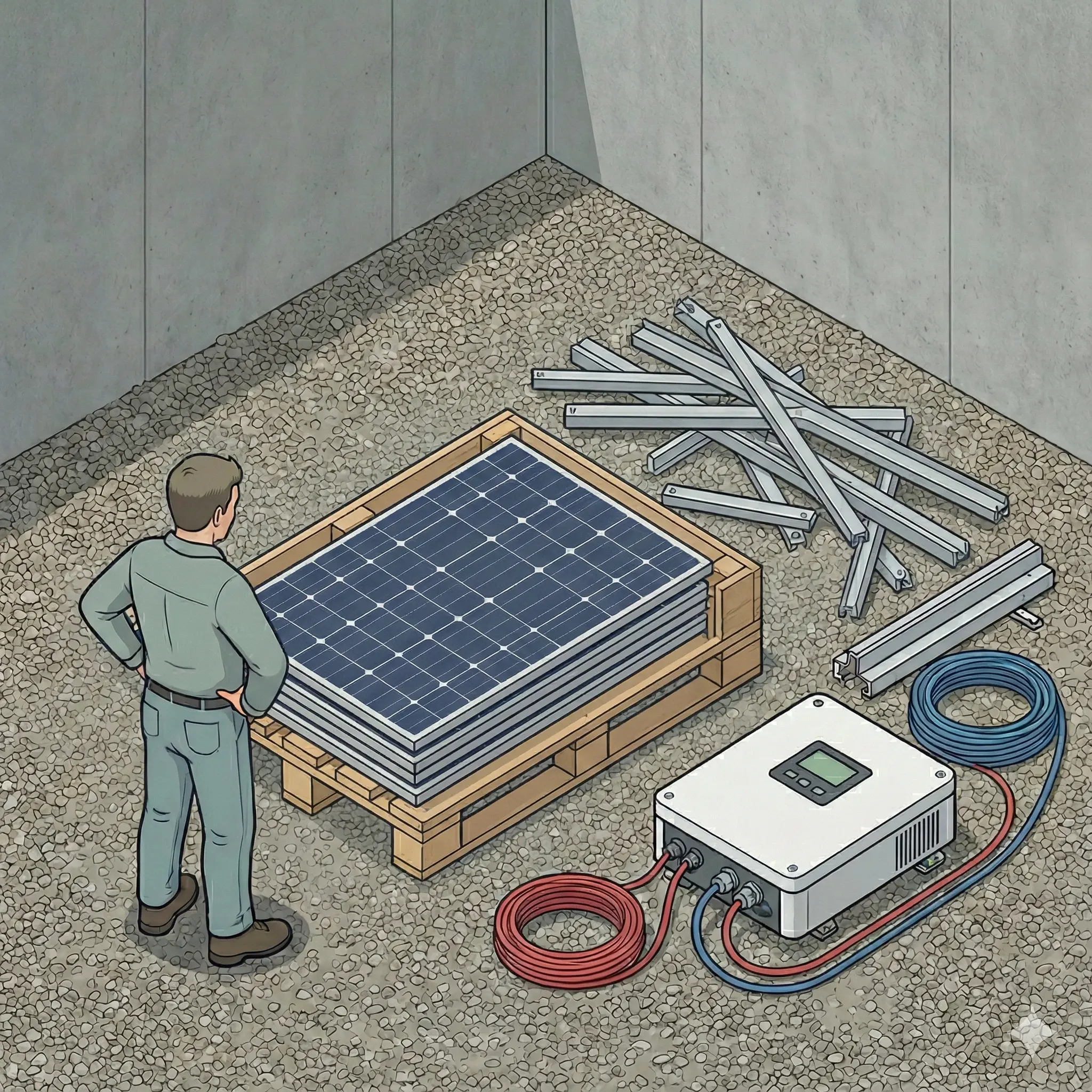
The United States residential solar market stands at a critical inflection point in 2025. For two decades, the industry has been defined by a "third-party ownership" and professional installation model, driven largely by federal incentives and the complexity of grid interconnection. However, a convergence of economic, legislative, and technological factors is currently dismantling this status quo, thrusting the concept of "Do-It-Yourself" (DIY) solar photovoltaic (PV) installation from the fringes of the off-grid enthusiast community into the mainstream financial planning of grid-tied homeowners.
This report provides an exhaustive, expert-level analysis of the feasibility and practicality of DIY solar panel purchase and installation. The assessment is grounded in the shifting legislative landscape precipitated by the "One Big Beautiful Bill Act" (OBBBA) of July 2025, which mandates the abrupt expiration of the Section 25D Residential Clean Energy Credit at the end of the year. This legislative cliff, combined with the persistent escalation of grid electricity prices and the maturation of "plug-and-play" solar technologies, has fundamentally altered the return on investment (ROI) calculus.
Our analysis reveals that while the financial arbitrage of DIY solar remains substantial—offering potential cost reductions of 40% to 50% by eliminating soft costs—the path is fraught with escalating technical and regulatory friction. The adoption of the 2023 National Electrical Code (NEC) has introduced rigorous safety standards regarding rapid shutdown and emergency disconnects that challenge the non-professional installer. Furthermore, utility interconnection protocols have hardened, and manufacturer warranty terms have become increasingly restrictive regarding labor reimbursement.
This document serves as a definitive guide for homeowners and industry stakeholders, dissecting the economic, technical, regulatory, and risk management dimensions of self-installed solar. It offers a sober evaluation of the "Hybrid" installation model as a pragmatic middle ground and provides detailed, state-specific insights into incentive eligibility, insurance coverage, and permitting feasibility.
1. The New Economic Reality of Residential Solar
To truly comprehend the driver behind the DIY solar movement, one must first deconstruct the bloated cost structure of the professional residential solar industry. The widening chasm between the commoditized cost of photovoltaic hardware and the retail price of an installed system represents the primary economic opportunity for the self-installer.
1.1 Structural Decomposition of System Costs
In the professional solar market of 2025, the average residential solar panel system commands a retail price between $25,000 and $45,000 before incentives.1 A granular analysis of this pricing reveals a startling inefficiency: the actual hardware—the solar panels, inverters, racking, and balance of system (BOS) components that generate electricity—accounts for less than half of the total expenditure.
Industry data indicates that hardware typically constitutes approximately 46% of the total system price charged to the consumer.2 The remaining 54% is comprised of "soft costs," a catch-all term for the non-hardware expenses that have resisted cost-reduction trends. These include:
- Customer Acquisition Costs (CAC): The cost of finding a customer—through door-knocking, aggressive telemarketing, and lead generation—is notoriously high, often accounting for 18% to 20% of the final invoice.2
- Overhead and Corporate Profit: Installer margins, administrative salaries, insurance, and fleet maintenance consume another 20% to 30%.2
- Permitting and Interconnection: The administrative burden of navigating municipal bureaucracies and utility monopolies adds roughly 8% to the cost stack.2
- Direct Labor: Contrary to popular belief, the wages paid to the crew on the roof represent a relatively minor fraction, estimated at 7% to 10% of the total cost.2
For the DIY homeowner, the economic logic is predicated on the surgical removal of the CAC, overhead, and profit wedges. By sourcing equipment directly from wholesale distributors or specialized DIY retailers, a homeowner can procure a Tier-1 hardware package for $1.30 to $1.60 per watt, compared to the $3.00 to $4.00 per watt charged by turnkey providers.3
Table 1: Cost Structure Comparison: Professional vs. DIY (10kW System)
| Cost Component | Professional Install (Avg) | DIY Install (Est) | Potential Savings |
|---|---|---|---|
| Solar Panels | $12,000 | $5,000 - $7,000 | ~$5,000 |
| Inverters | $4,500 | $3,000 - $4,000 | ~$1,000 |
| Racking & Mounting | $2,500 | $1,500 - $2,000 | ~$500 |
| BOS (Wire, Conduit, Breakers) | $2,000 | $1,000 - $1,500 | ~$500 |
| Sales & Marketing | $7,000 | $0 | $7,000 |
| Overhead & Profit | $8,000 | $0 | $8,000 |
| Permitting/Design Fees | $1,500 | $500 - $800 | ~$700 |
| Labor | $3,500 | $0 (Sweat Equity) | $3,500 |
| Total System Cost | $41,000 | $11,000 - $15,300 | ~$25,000 |
Data synthesized from EnergySage, EcoFlow, and Paradise Solar Energy market reports.1
This table illustrates a potential gross savings of nearly $25,000. Even after factoring in the cost of specialized tools and potential mistakes, the DIYer is effectively paying themselves a tax-free wage of hundreds of dollars per hour for their labor and administrative effort.
1.2 The Legislative Shock: OBBBA and the Tax Credit Cliff
The financial feasibility analysis is currently dominated by a singular legislative event: the passage of the "One Big Beautiful Bill Act" (OBBBA) in July 2025.5
The OBBBA explicitly terminates the Section 25D Residential Clean Energy Credit for all expenditures made after December 31, 2025.6 Unlike previous legislative iterations that included a multi-year phase-down schedule (e.g., 30% to 26% to 22%), the OBBBA imposes a strict cliff. The credit drops from 30% to 0% for homeowner-owned systems on January 1, 2026.8
This deadline introduces a binary outcome for DIY projects:
- Success: The system is "placed in service"—fully installed and capable of producing power—by 11:59 PM on December 31, 2025. The homeowner claims the 30% credit on their final eligible tax return, effectively reducing the net cost of a $15,000 hardware kit to $10,500.
- Failure: Delays in permitting, shipping, or inspection push the completion date into January 2026. The tax credit eligibility vanishes, and the net cost remains $15,000.
The "placed in service" definition is critical. The IRS guidance (Notice 2018-59) clarifies that equipment must be ready and available for its specific use.10 While full utility "Permission to Operate" (PTO) is the most defensible standard, many tax professionals argue that a completed installation awaiting final utility witness testing may still qualify, provided the system is mechanically and electrically complete. However, for a DIYer navigating this without a corporate legal team, the risk of audit or disqualification is elevated.
1.3 Post-2026 Economics: The Avoided Cost Paradigm
Starting in 2026, the absence of federal subsidies shifts the ROI calculation entirely to the "avoided cost" of energy. In this new era, the DIY approach gains even greater strategic importance.
As professional installers struggle to compress their soft costs in a subsidy-free environment, the retail price of solar may stabilize or even rise due to inflationary pressures on labor and marketing.11 Meanwhile, utility rates in major markets like California, Massachusetts, and New York continue to climb, driven by grid modernization costs and wildfire mitigation surcharges.12
In a scenario where grid electricity costs $0.35/kWh and rising, a professionally installed system at $3.50/watt may have a payback period extending beyond 10 years without the ITC. Conversely, a DIY system installed at $1.50/watt retains a compelling payback period of 4-6 years, purely based on electricity savings. Thus, DIY solar may transition from a "thrifty alternative" to the "only viable path" for middle-income households in the post-subsidy landscape.
2. The Regulatory Labyrinth: Permitting and Bureaucracy
While the physical act of bolting panels to a roof is demanding, seasoned DIYers consistently report that the administrative phase—permitting and bureaucracy—is the true crucible of the project. Solar installation is a heavily regulated construction activity, subject to a patchwork of local, state, and federal codes that can bewilder the uninitiated.
3.1 The Permit Packet: Engineering as a Barrier to Entry
Before a homeowner can purchase equipment, they must secure a building and electrical permit from their local Authority Having Jurisdiction (AHJ). There are over 20,000 distinct AHJs in the United States, each with unique interpretations of the code.13
A simple hand-drawn sketch is rarely sufficient. Most building departments demand a professional "Plan Set" that includes:
- Site Plan: A to-scale drawing of the property showing property lines, the home's footprint, array location, and critical fire setbacks (typically 18" to 36" from the ridge and eaves) to allow firefighter access.14
- Structural Analysis: Engineering calculations proving the roof trusses can support the additional "dead load" (3-4 lbs/sq ft) of the panels and racking, as well as local "live loads" (snow and wind uplift).16
- Electrical Diagrams: A rigorous "Three-Line Diagram" detailing every conductor size, conduit fill calculation, overcurrent protection device (OCPD) rating, and grounding path, all referenced to specific NEC articles.14
The Engineering Stamp Requirement:
Many jurisdictions, particularly in high-wind or seismic zones (e.g., Florida, California), require these plans to be stamped and signed by a state-licensed Professional Engineer (PE).17 This requirement effectively bars the average homeowner from self-drafting plans. Consequently, the DIYer must engage a third-party "Solar Design Service" or "Permit Runner."
Companies like GreenLancer, Solar Permit Services, and DIY Solar Assist have emerged to fill this niche. These services typically charge between $300 and $600 for a permit-ready plan set with PE stamps.18 Utilizing these services is not an optional luxury for the DIYer; it is often a prerequisite for a complete application.
3.2 The SolarAPP+ Paradox
To address permitting bottlenecks, the National Renewable Energy Laboratory (NREL) developed SolarAPP+ (Solar Automated Permit Processing), a web-based platform that automates code compliance checks and issues instant permits.21 While this tool has revolutionized the industry for professionals, it presents a significant hurdle for homeowners.
In many jurisdictions that have adopted SolarAPP+—including major solar markets like Tucson, AZ, and various California cities—access to the platform is restricted strictly to licensed contractors.21 The terms of service often explicitly prohibit owner-builders from using the automated workflow.
Implications for DIY:
- The Slow Lane: While a pro can get a permit in 15 minutes via SolarAPP+, a DIYer is often forced into the traditional manual review queue. This process can take 2 to 8 weeks, depending on the backlog at the building department.24
- Timeline Risk: In the context of the December 31, 2025 tax credit expiration, this delay is existential. A DIYer applying for a permit in November 2025 via the manual route risks not receiving approval in time to commence construction before the incentives vanish.
3.3 Permit Expediting Services
Given the high stakes of the 2025 deadline, some DIYers are turning to professional permit expediting services. Companies like Scout Services, Swift Permits, and Alliance Permitting specialize in navigating the bureaucratic maze.26
These "runners" physically visit building departments, manage revisions, and leverage relationships with plan reviewers to accelerate approval. While traditionally B2B services for commercial contractors, some have opened their doors to owner-builders. The cost for full-service expediting can range from $500 to over $1,000, eroding some of the DIY savings but potentially salvaging the 30% tax credit eligibility.
4. The Interconnection Gauntlet
Securing a building permit allows you to build; securing an Interconnection Agreement allows you to turn the system on. This distinction is vital. The interconnection process involves a contractual relationship with the local utility monopoly, an entity that has historically viewed distributed generation with skepticism or outright hostility.
4.1 The "Qualified Person" Barrier
The 2023 NEC Article 690.4(C) states that PV systems "shall be installed and maintained by qualified persons".29 While municipal building codes often have "owner-builder" exemptions allowing homeowners to perform electrical work on their primary residence, utility interconnection standards are separate and often stricter.
Some utilities—particularly investor-owned utilities (IOUs) and rural cooperatives—may refuse to approve an interconnection application that does not carry the signature and license number of a master electrician.30
- United Power (Colorado): Explicitly warns that systems connected without proper notification will result in service termination and notes the importance of meeting safety requirements, often implying professional oversight.31
- Eversource (Northeast): Requires the installer to be an electrician licensed to conduct business in the state because interconnection is a "highly specialized process".32
Strategic Necessity: Before purchasing a single solar panel, a prospective DIYer must contact their utility's Distributed Generation (DG) coordinator and ask a specific question: "Do you accept interconnection applications from homeowner-installers, or is a licensed electrician required to sign off?" If the answer is the latter, the project is not feasible as a pure DIY endeavor.
4.2 The Witness Test
Once the system is installed and the municipal inspection is passed, the utility may require a "Witness Test." This is an on-site inspection where a utility engineer observes the system's operation to verify compliance with IEEE 1547 standards, specifically the anti-islanding capability.33
Checklist for a Successful Witness Test:
The DIYer must be prepared to demonstrate the following to the utility engineer 33:
- Anti-Islanding Simulation: The utility will pull the meter or open the main disconnect to simulate a grid failure. The inverter must detect this and cease power production within 2 seconds.
- Ramp Rates: Verification that the inverter ramps up power slowly upon reconnection to avoid grid shock.
- Visual Compliance: Confirming the AC disconnect is visible, accessible, and lockable (if required), and that all placards match the approved single-line diagram.
- Inverter Settings: Verifying the correct grid profile (e.g., Rule 21 in CA, HECO Rule 14H in HI) is uploaded to the inverters.
Failure at this stage results in a denial of Permission to Operate (PTO), leaving the homeowner with a "stranded asset" on their roof—panels that are technically functional but legally prohibited from generating power.
5. Technical Deep Dive: System Design & Equipment
The technical feasibility of DIY solar hinges on the selection of appropriate equipment. The market offers a dichotomy between "string inverter" systems (cheaper, higher voltage, more complex) and "Module Level Power Electronics" (MLPE) like microinverters (modular, safer, more expensive).
5.1 Inverter Topologies: Why MLPE Wins for DIY
For the self-installer, microinverters (specifically Enphase IQ8 series) are overwhelmingly the superior choice over string inverters (like Fronius or SMA) or optimized string systems (SolarEdge).
- Safety (AC vs. DC): String inverters require running high-voltage DC (up to 600V) across the roof and down into the home. This presents a lethal shock hazard and requires complex DC conduit work, specialized disconnects, and strict arc-fault protection.35
- Rapid Shutdown Compliance: NEC 690.12 requires rapid shutdown of PV conductors inside the array boundary. Microinverters inherently meet this requirement. String inverters require the installation of additional remote shutdown boxes or module-level optimizers, adding layers of complexity and failure points.37
- Expandability: A microinverter system can be expanded one panel at a time. A DIYer can start with a small 4kW system to test their skills and budget, then add more later. String inverters have strict minimum string lengths and voltage windows that make incremental expansion difficult.
5.2 Sourcing Strategy: The Distribution Gap
Major solar equipment distributors (CED Greentech, BayWa r.e.) operate on a B2B model and generally refuse to sell to the public. However, a robust secondary market has emerged to serve the DIY demographic.
- DIY-Friendly Retailers: Companies like Project Solar, Unbound Solar, and GoGreenSolar act as intermediaries.4 They purchase in bulk from manufacturers and resell complete "kits" to homeowners. These kits typically include:
- Panels: Tier-1 modules from manufacturers like Qcells, REC, or Canadian Solar.
- Inverters: Enphase IQ8 microinverters or SolarEdge optimizers.
- Racking: IronRidge or Unirac rail systems.
- Plans: A generic or custom permit packet.
- The Markup: While cheaper than a turnkey install, these retailers do add a margin. A pure "wholesale" price might be $0.90/watt, but a DIY kit often retails for $1.30-$1.60/watt. This premium pays for the customer support and system design assistance that is crucial for a first-time installer.
5.3 Racking Systems: Rail vs. Rail-less
The physical interface with the roof is critical.
- Rail-Based Systems (IronRidge XR): The industry standard. Rails are bolted to the roof, and panels are clamped to the rails. This is forgiving of roof irregularities and easy to level. It is highly recommended for DIYers due to its ubiquity and abundance of training resources.39
- Rail-less Systems (Zep, Quick Mount): These systems attach panels directly to roof mounts, using the panel frames as the structure. While aesthetically sleeker and lower shipping weight, they require extreme precision. If the roof is not perfectly flat, or the layout is slightly off, the panels won't interlock. Proprietary tools (like the "Zep Tool") are often required and restricted to certified installers.40 DIYers should avoid proprietary rail-less systems due to the high skill floor and lack of component availability.
6. The Construction Phase: Best Practices & Pitfalls
The transition from design to construction is where theory meets the harsh reality of working at heights.
6.1 Tools of the Trade
A DIY solar installation is not a project for a basic homeowner tool kit. Specific, specialized tools are required to ensure code compliance and structural integrity.
Table 2: Essential Tool Inventory for DIY Solar
| Tool Category | Specific Tool | Purpose | Source |
|---|---|---|---|
| Safety | Fall Protection Kit | OSHA-compliant harness, lanyard, and roof anchor. | 42 |
| Structural | Digital Stud Finder / Mallet | Locating rafters through roof decking (critical). | 43 |
| Electrical | Digital Multimeter (Cat III/IV) | Verifying voltage, polarity, and continuity. | 38 |
| Electrical | Torque Wrench (in-lbs) | tightening electrical lugs and racking bolts to spec. | 45 |
| Conduit | Conduit Bender (1/2" & 3/4") | Bending EMT conduit for wire runs. | 38 |
| Wiring | MC4 Crimping Tool | Creating custom PV wire extensions. | 35 |
| General | Impact Driver & Drill | Driving lag bolts and drilling pilot holes. | 46 |
| Roofing | Flat Pry Bar | Lifting shingles to slide flashing underneath. | 38 |
| Lifting | Ladder Hoist / Panel Lift | Safely moving 50lb panels to the roof. | 42 |
6.2 Common DIY Mistakes and Their Consequences
Analysis of inspection failure data and installer forums highlights recurring errors made by self-installers 35:
- Missed Rafters ("Shiners"): Failing to center the lag bolt in the rafter significantly reduces the pull-out strength of the racking. In a high wind event, this can lead to catastrophic array detachment.
- Improper Flashing: Installing flashing on top of shingles rather than sliding it under the upper course. This creates a "reverse lap" that channels water into the penetration, guaranteeing leaks.
- Torque Non-Compliance: Guessing the tightness of bolts. Racking systems rely on specific torque values (e.g., 250 in-lbs for IronRidge rail lugs) to maintain bonding conductivity. Under-torquing leads to loose connections and arc faults; over-torquing strips threads.45
- Wire Management: Leaving wires resting on the abrasive roof surface. Codes require wires to be supported and secured (typically every 4.5 feet). Expansion and contraction will eventually abrade the insulation of unsecured wires, causing ground faults.48
- Wrong Wire Type: Using standard building wire (THHN) in exposed outdoor locations on the roof. UV-rated "PV Wire" or "USE-2" is mandatory for all un-conduited runs under the array.35
7. Electrical Compliance and NEC 2023
The 2023 edition of the National Electrical Code (NEC) governs most new installations. It is a dense, technical document that is unforgiving of ignorance.
7.1 Rapid Shutdown (Section 690.12)
This is the single most common stumbling block for DIYers attempting to use older or second-hand equipment. The code mandates that PV system circuits on buildings must reduce voltage to 30 volts or less within 30 seconds of initiation.49
- Implication: You generally cannot just string panels together in series and run high-voltage DC to a central inverter anymore. You must use MLPE (microinverters or optimizers) that are UL-listed for rapid shutdown.
7.2 Emergency Disconnects (Section 690.13)
A PV system disconnect must be installed in a "readily accessible" location outside the building. This allows first responders to cut power without entering the structure.
- The Trap: The disconnect must be lockable in the "open" (off) position and clearly labeled. Many DIYers fail inspection because they mount the disconnect behind a locked fence or too high on the wall.50
7.3 Grounding and Bonding (Section 690.43)
The racking system, panels, and inverters must all be bonded together to form a continuous grounding path.
- Integrated Grounding: Modern racking (IronRidge UFO clamps) uses "bonding pins" that pierce the anodized aluminum coating of the panel frame to establish a ground connection. DIYers often mistakenly remove these pins or use incompatible clamps, breaking the ground path and creating a shock hazard.51
8. The Financial Ecosystem: Incentives, SRECs, and ROI
The value of a solar system is not just in the electricity it offsets, but in the incentives it generates. DIY status can jeopardize some of these revenue streams.
8.1 State-Specific Incentive Nuances
- Illinois (Illinois Shines/Solar for All): Illinois has a lucrative SREC program that pays system owners for the renewable attributes of their power. However, participation generally requires working with an "Approved Vendor." While some aggregators work with DIYers, the process is complex, and the "Solar for All" low-income program is effectively closed to self-installers due to prevailing wage and warranty requirements.52
- New York (NY-Sun): The NY-Sun "Megawatt Block" rebate is paid directly to participating contractors. It is extremely difficult for a DIYer to claim this rebate ($0.20-$0.40/watt) without being a registered contractor in the program.54 However, the State Tax Credit (25% up to $5,000) is generally claimable via tax filing form IT-255, provided the system is code-compliant.55
- California (SGIP): The Self-Generation Incentive Program offers massive rebates for batteries. However, accessing these funds requires submitting an application through a registered "Developer." While a homeowner can technically register as a Developer, the administrative burden involves strict database management and reporting that deters most individuals.56
8.2 The SREC Market
In states like New Jersey, Massachusetts, Maryland, and DC, Solar Renewable Energy Credits (SRECs) are a tradable commodity.
- Value: In DC, an SREC can be worth over $400. In NJ, around $170.57
- DIY Access: To sell SRECs, the system must be registered with the PJM GATS or NEPOOL GIS tracking systems. This requires precise documentation of the system's "revenue grade" meter. DIYers can access this market, but usually must sign up with an aggregator (like SRECTrade or Sol Systems) who will take a commission (3-7%) to manage the trading.58
9. Risk Management: Insurance, Warranties, and Liability
A DIY solar project is a 25-year infrastructure investment. Protecting that investment requires navigating a minefield of fine print.
9.1 The Warranty Void
The most pervasive myth in DIY solar is that the "25-year warranty" protects the homeowner.
- Enphase Energy: While Enphase provides a 25-year product warranty, their terms explicitly state that labor reimbursement for warranty replacement is available only to certified installers.59 If a microinverter fails on the roof in Year 5, Enphase will ship a replacement unit, but the DIYer is responsible for the labor to get onto the roof, remove the panel, swap the unit, and re-commission it.
- Workmanship: In a professional install, the company guarantees their work (no leaks, no loose wires) for 10-25 years. In a DIY install, you are the warranty provider. If the roof leaks and ruins the drywall in the master bedroom, the financial liability is 100% yours.
9.2 Insurance Hostility
- Carrier Policies: Major insurers like Progressive and Allstate generally cover solar panels, but policies vary by state.60
- The Unpermitted Work Clause: Virtually all homeowner policies exclude coverage for damages resulting from illegal or unpermitted work. If a fire starts at the inverter tie-in, and the insurance investigator discovers the work was never inspected by the city, the claim will likely be denied in full.
- Policy Dropping: There are reports of insurers in high-risk areas (FL, CA) non-renewing policies for homes with DIY solar if the homeowner cannot provide a "wind mitigation report" or proof of professional installation.62
9.3 Surety Bonds
While typically a commercial requirement, some jurisdictions or HOAs may require a Performance Bond or Decommissioning Bond to ensure the project is completed or removed at end-of-life.63 For a DIYer, obtaining a surety bond is difficult as underwriters assess "capacity" and "character," usually requiring a track record of successful construction projects which a homeowner lacks.64
10. Strategic Recommendation: The Hybrid Model
Given the convergence of high electrical risk, physical danger, and regulatory hurdles, a "Hybrid" approach has emerged as the gold standard for feasibility.
10.1 The "Owner-Builder" + Electrician Partnership
In this model, the homeowner acts as the General Contractor and performs the low-skill, high-labor tasks, while outsourcing the high-skill, high-risk tasks.
- Homeowner Responsibilities:
- Sourcing equipment (saving the markup).
- Hiring a permit service (GreenLancer/SolarPermitServices) to generate plans.
- Installing the racking and panels (mechanical labor).
- Running the DC wires/trunk cables on the roof.
- Licensed Electrician Responsibilities:
- Installing the conduit from the roof to the main panel.
- Installing the AC disconnect and junction boxes.
- Performing the final tie-in to the main service panel.
- Signing the interconnection application.
10.2 Why This Works
- Interconnection Success: Utilities rarely reject applications signed by a licensed electrician.
- Safety: The most dangerous part (240V grid tie-in) is handled by a pro.
- Cost Retention: The homeowner still saves the ~40% soft cost wedge associated with sales, marketing, and corporate overhead, paying the electrician only for time and materials (typically $1,500 - $2,500).
11. Conclusion
Is DIY solar feasible? Yes.
Is it practical? Only for a specific demographic.
The expiration of the federal ITC in 2026 creates an urgent, fleeting window of opportunity. For the homeowner who possesses construction competence, patience for bureaucracy, and the prudence to hire an electrician for the final mile, DIY solar offers an unrivaled return on investment—potentially generating tax-free savings of $25,000 or more over the life of the system.
However, for the uninitiated, the risks are asymmetric. A single roof leak, a denied insurance claim, or a rejected interconnection application can erase years of energy savings. The modern solar landscape is no longer a wild west of experimentation; it is a mature, regulated construction trade. Success requires respecting it as such.
Final Recommendation: If you cannot start your project by September 1, 2025, the risk of missing the tax credit deadline is severe. In that scenario, pivoting to the Hybrid model or waiting for post-2026 market adjustments may be the only rational course.
Works cited
- How Much Does a Home Solar System Really Cost in 2025? – EcoFlow, accessed December 3, 2025, https://www.ecoflow.com/us/blog/how-much-does-home-solar-system-cost-2025
- Solar Panel Cost In 2025: It May Be Lower Than You Think | EnergySage, accessed December 3, 2025, https://www.energysage.com/local-data/solar-panel-cost/
- How Much Do Solar Panels Cost to Install in 2025? Complete Pricing Guide, accessed December 3, 2025, https://www.paradisesolarenergy.com/blog/how-much-do-solar-panels-cost/
- Project Solar – Best Priced Solar Company in America, accessed December 3, 2025, https://projectsolar.com/
- One Big Beautiful Bill Act – Wikipedia, accessed December 3, 2025, https://en.wikipedia.org/wiki/One_Big_Beautiful_Bill_Act
- The History & Future of the Solar Tax Credit in 2025 – GreenLancer, accessed December 3, 2025, https://www.greenlancer.com/post/solar-energy-tax-credit-2025
- FAQs for modification of sections 25C, 25D, 25E, 30C, 30D, 45L, 45W, AND 179D under Public Law 119-21, 139 Stat. 72 (July 4, 2025), commonly known as the One, Big, Beautiful Bill (OBBB) | Internal Revenue Service, accessed December 3, 2025, https://www.irs.gov/newsroom/faqs-for-modification-of-sections-25c-25d-25e-30c-30d-45l-45w-and-179d-under-public-law-119-21-139-stat-72-july-4-2025-commonly-known-as-the-one-big-beautiful-bill-obbb
- Federal Solar Tax Credit In 2025: How Does it Work? – EnergySage, accessed December 3, 2025, https://www.energysage.com/solar/solar-tax-credit-explained/
- Expiring solar tax credits shine a light on benefit inequities – Dallasfed.org, accessed December 3, 2025, https://www.dallasfed.org/research/economics/2025/1120-barrett-solar
- Residential Solar Tax Credit Going Away In US After 2025 – GreenLancer, accessed December 3, 2025, https://www.greenlancer.com/post/solar-tax-credit-ending
- Everything About Residential Solar is Changing! Here's What You Need to Know., accessed December 3, 2025, https://convert-solar.com/everything-about-residential-solar-is-changing/
- Are Solar Panels Worth It in 2026 and Beyond? Rising Electricity Prices Say Yes, accessed December 3, 2025, https://www.solarreviews.com/blog/are-solar-panels-worth-it-2026
- Solar Permitting, Inspection, and Interconnection Timelines – NREL, accessed December 3, 2025, https://www.nrel.gov/solar/market-research-analysis/permitting-inspection-interconnection-timelines
- Solar Panel Permit Requirements | Quick & Easy Guide – Radiant Energy, accessed December 3, 2025, https://radiantenergysolar.com/solar-panel-permit-requirements/
- Residential Solar Panel Requirements – NFPA, accessed December 3, 2025, https://www.nfpa.org/news-blogs-and-articles/blogs/2024/02/29/residential-solar-panel-requirements
- DIY Solar Panel Installation: What Homeowners Can (and Can't) Legally Do, accessed December 3, 2025, https://www.residentialsolarpanels.org/homeowner-empowerment/diy-solar-panel-installation-what-homeowners-can-and-cant-legally-do/
- Permit process : r/SolarDIY – Reddit, accessed December 3, 2025, https://www.reddit.com/r/SolarDIY/comments/1nkj1fv/permit_process/
- Book a Consultation – DIY Solar, accessed December 3, 2025, https://www.diysolarassist.com/bookaconsultation
- Solar Permit Design Service – GreenLancer, accessed December 3, 2025, https://www.greenlancer.com/solar-permit-design
- Greenlancer Residential Solar-Only Permit Planset – Portable Sun LLC, accessed December 3, 2025, https://www.portable-sun.com/products/solar-only-permit-planset
- SolarAPP+ | Rancho Palos Verdes, CA – Official Website, accessed December 3, 2025, https://www.rpvca.gov/1767/SolarAPP
- SolarAPP+ | City of Santa Clara, accessed December 3, 2025, https://www.santaclaraca.gov/our-city/departments-a-f/community-development/building-division/solarapp
- What licenses do I need to submit a project in SolarAPP+?, accessed December 3, 2025, https://help.gosolarapp.org/article/121-what-licenses-do-i-need-to-submit-a-project-in-solarapp
- Residential Solar Permits – City of Tucson, accessed December 3, 2025, https://www.tucsonaz.gov/Departments/Planning-Development-Services/Permits/Residential-Solar-Permits
- average permit and interconnection times by state – Anern Store, accessed December 3, 2025, https://www.anernstore.com/blogs/diy-solar-guides/permit-interconnection-times-state
- Solar – Nationwide Permit Expediter – Scout Services, accessed December 3, 2025, https://www.scoutservices.com/commercial-building-permits/solar-permit-services/
- Swift Permits: Permit Expediting Services – Fast & Easy, accessed December 3, 2025, https://swift-permits.com/
- Florida Building Permits Expediter – Alliance Permitting, accessed December 3, 2025, https://alliancepermitting.com/florida/
- My AHJ says I am not allowed to DIY install my own solar system : r/SolarDIY – Reddit, accessed December 3, 2025, https://www.reddit.com/r/SolarDIY/comments/1o5ofuc/my_ahj_says_i_am_not_allowed_to_diy_install_my/
- Is it legal to install your own solar panels? – PowerOutage.us, accessed December 3, 2025, https://poweroutage.us/solar/diy-solar-panels/legal
- Solar & Storage Connection Requirements – United Power, accessed December 3, 2025, https://www.unitedpower.com/connect-your-solar
- Understanding Solar Interconnection – Eversource, accessed December 3, 2025, https://www.eversource.com/residential/save-money-energy/clean-energy-options/solar-energy/interconnection
- What happens during utility witness tests? A beginner's guide – Anern Store, accessed December 3, 2025, https://www.anernstore.com/blogs/diy-solar-guides/utility-witness-test-beginners-guide
- Solar Panel Inspection Checklist, accessed December 3, 2025, https://content.civicplus.com/api/assets/e06a4752-9321-4881-8b79-a921d6faeb00
- 9 DIY Solar Wiring Mistakes and the Safe Fix for Each – Anern Store, accessed December 3, 2025, https://www.anernstore.com/blogs/off-grid-solar-solutions/diy-solar-wiring-mistakes-safe-fixes
- Enphase Energy System warranties, accessed December 3, 2025, https://enphase.com/learn/home-energy/using-your-system/enphase-energy-system-warranties
- NEC Solar Code 2023 & Local AHJ Codes: Enhancing Solar Safety at a Cost, accessed December 3, 2025, https://solarsme.com/nec-solar-code-2023/
- 10 Essential Tools for DIY Solar Installation, accessed December 3, 2025, https://unboundsolar.com/blog/10-essential-tools-for-diy-solar-installation
- IronRidge Racking – Roof Mount – DIY Solar Installation for Homes – GoGreenSolar.com, accessed December 3, 2025, https://www.gogreensolar.com/pages/ironridge-racking-roof-mount
- Zep Solar ZS Trap Installation | RENVU.com – YouTube, accessed December 3, 2025, https://www.youtube.com/watch?v=u9rmF1DdGuE
- Zep System II: Installation Manual – Amazon S3, accessed December 3, 2025, https://s3.amazonaws.com/ecodirect_docs/ZEP/Zep_System_II_Manual.pdf
- Top 25 Tools You Need for Installing Solar Panels, accessed December 3, 2025, https://solarx.pro/top-25-tools-you-need-for-installing-solar-panels/
- How to Install Solar Panel Racking: Iron Ridge Racking – WARE Solar, accessed December 3, 2025, https://ware.solar/pages/how-to-install-solar-racking-ironridge-racking
- 8 Essential Tools for Solar Technicians | Jonard Tools, accessed December 3, 2025, https://jonard.com/blogs/essential-solar-technicians-tools
- Ironridge Tilt Mount Installation Guide.pdf – LA County Public Works, accessed December 3, 2025, https://pw.lacounty.gov/bsd/lib/fp/SmallResidentialRooftopSolarSystems/LACountyRecognizedUL2703RackingSystems/IronridgeTiltMountInstallationGuide.pdf
- What Tools Do I Need For a DIY Solar Installation? – EcoFlow, accessed December 3, 2025, https://www.ecoflow.com/za/blog/tools-for-diy-solar-installation
- 5 Mistakes to Avoid When Installing DIY Solar Panels – Ecuip Engineering, accessed December 3, 2025, https://ecuip.com/5-mistakes-to-avoid-when-installing-diy-solar-panels/
- Top Solar Installation Mistakes & How to Avoid Them – Enact Systems, accessed December 3, 2025, https://enact.solar/top-solar-installation-mistakes/
- Understanding the 2023 National Electrical Code (NEC), Its Adoption in Michigan, and the Impact on Solar Photovoltaic (PV) System Installations, accessed December 3, 2025, https://michigansolarsolutions.com/understanding-the-2023-national-electrical-code-nec-its-adoption-in-michigan-and-the-impact-on-solar-photovoltaic-pv-system-installations/
- Solar, Part 3, based on the 2023 NEC – Mike Holt, accessed December 3, 2025, https://www.mikeholt.com/newsletters.php?action=display&letterID=2819
- How to Install the IronRidge Racking System – YouTube, accessed December 3, 2025, https://www.youtube.com/watch?v=5a2mc-LrQlY
- Illinois Solar Incentives, Tax Credits & Rebates 2025 – EnergySage, accessed December 3, 2025, https://www.energysage.com/local-data/solar-rebates-incentives/il/
- For Homeowners – Illinois Solar Energy Association, accessed December 3, 2025, https://illinoissolar.org/Homeowner-Resources
- New York Solar Incentives, Tax Credits & Rebates 2025 | EnergySage, accessed December 3, 2025, https://www.energysage.com/local-data/solar-rebates-incentives/ny/
- 2025 New York Solar Incentives Guide (Tax Credits, Rebates & More) – EcoWatch, accessed December 3, 2025, https://www.ecowatch.com/solar/incentives/ny
- SGIP |, accessed December 3, 2025, https://www.selfgenca.com/
- NJSREC.com: Home, accessed December 3, 2025, https://www.njsrec.com/
- Solar Renewable Energy Credits (SRECs) 2025 – Switch Together Blog, accessed December 3, 2025, https://switchtogether.com/en/solar/blog/solar-renewable-energy-credits-srecs-2025/
- Labor Protection Program for extended comfort and savings Services – Enphase, accessed December 3, 2025, https://enphase.com/installers/services/lpp
- Does Home Insurance Cover Solar Panels? – Progressive, accessed December 3, 2025, https://www.progressive.com/answers/does-home-insurance-cover-solar-panels/
- Are Solar Panels Covered by Homeowners Insurance? – Allstate, accessed December 3, 2025, https://www.allstate.com/resources/home-insurance/solar-panels
- Which Florida Insurance Companies Cover Solar Panels | Axia by Qcells, accessed December 3, 2025, https://axiasolarusa.com/locations/florida/which-florida-insurance-companies-cover-solar-panels/
- A Guide to Solar Surety Bonds, accessed December 3, 2025, https://www.suretybondprofessionals.com/solar-surety-bonds/
- Solar Performance Bonds – Surety Bonds by Axcess, accessed December 3, 2025, https://axcess-surety.com/performance-bonds/solar-performance-bonds/