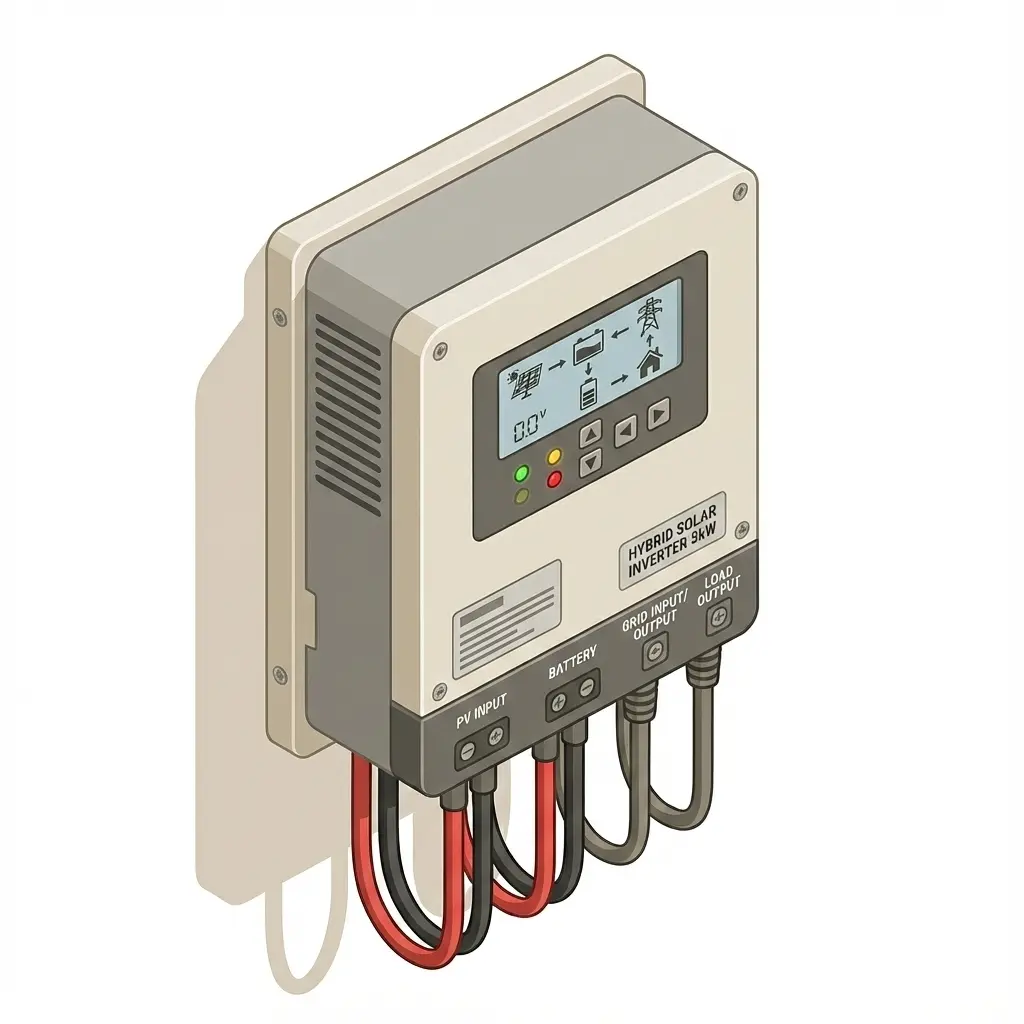
The United States residential energy sector is currently navigating its most significant transformation since the electrification of the early 20th century. For the past two decades, the dominant paradigm for residential solar has been "net metering," a simple billing mechanism where the electric grid effectively served as a free, infinite battery for solar homeowners. Solar panels generated excess energy during the day, which was exported to the grid to spin the meter backward, and homeowners drew that energy back at night. This model allowed for simple, relatively inexpensive "grid-tied" or "string" inverters that prioritized cost and simplicity over capability. However, this era is rapidly drawing to a close. The convergence of three macro-trends—the destabilization of the electrical grid due to extreme weather, the erosion of favorable net metering policies (exemplified by California’s NEM 3.0), and the proliferation of Time-of-Use (TOU) utility rates—has rendered the traditional solar-only system increasingly obsolete.
In this new landscape, the hybrid solar inverter has emerged as the central nervous system of the modern energy-independent home. Far more than a simple power converter, the modern hybrid inverter is a sophisticated energy computer capable of managing simultaneous inputs from photovoltaic (PV) arrays, battery energy storage systems (BESS), backup generators, and the utility grid. It creates a local microgrid capable of sustaining a home through multi-day blackouts, intelligently arbitraging energy rates to minimize bills, and even generating revenue by aggregating with neighbors to form Virtual Power Plants (VPPs).
This comprehensive report provides an exhaustive, expert-level analysis of hybrid solar inverters for the U.S. residential market in 2025. It synthesizes technical architectures, regulatory standards like UL 1741 SB, installation logistics, and financial incentives to provide homeowners with the actionable intelligence required to make a multi-decade infrastructure investment. By examining the physics of DC-coupled versus AC-coupled systems, the nuances of warranty throughput clauses, and the operational realities of "smart" grid support functions, this document aims to demystify the complex machinery that is redefining American home ownership.
---
1. The Paradigm Shift: From Passive Generation to Active Management
To fully appreciate the necessity of the hybrid inverter, one must first dissect the limitations of the legacy technologies that preceded it. The solar industry's technological maturation can be categorized into three distinct generations, each defined by the relationship between the distributed energy resource (DER) and the centralized utility grid.
1.1 The Legacy of Grid-Tied (String) Inverters
The "grid-tied" or "grid-following" inverter was the standard-bearer for the solar industry from roughly 2000 to 2020. Its engineering objective was singular: convert high-voltage Direct Current (DC) from solar panels into grid-compliant Alternating Current (AC) as efficiently and cheaply as possible.1 These devices rely on the utility grid to provide the voltage and frequency reference waveform (60 Hz in the US). They essentially "ride" the grid's signal.
However, this reliance creates a critical vulnerability known as the "solar paradox." For safety reasons—specifically to prevent islanding, where a solar array pumps electricity into a downed power line, potentially electrocuting utility workers repairing the grid—standard grid-tied inverters are mandated by code (IEEE 1547) to shut down milliseconds after detecting a grid outage.3 This leads to the frustrating reality for millions of solar owners: during a sunny day with a grid outage, their solar panels sit idle, generating zero power while the home remains dark. The hardware physically lacks the capability to generate its own grid reference or regulate voltage independent of the utility.3
1.2 The Off-Grid Divergence
Parallel to the grid-tied market, a niche "off-grid" industry developed to serve remote cabins, telecommunications towers, and RVs. Off-grid inverters were designed with the opposite philosophy: they are "grid-forming" devices. They create their own 60 Hz AC waveform and regulate voltage based on load demand.2 They excel at battery charging and operating independently.
However, traditional off-grid inverters were historically poor at interacting with the utility grid. They often lacked the synchronization electronics to feed energy back to the grid (net metering) or operated in a clunky, binary fashion—using a mechanical transfer switch to toggle between "grid mode" and "inverter mode," often causing lights to flicker or clocks to reset during the transition.6 They were incapable of the sophisticated bidirectional flow required for modern smart homes.
1.3 The Hybrid Convergence
The modern hybrid solar inverter (also known as a multi-mode inverter) represents the convergence of these two lineages. It fuses the grid-interactive precision of a string inverter with the robust, islanding capability of an off-grid battery inverter.
Key capabilities that differentiate a hybrid inverter include:
- Bidirectional Inversion: The ability to invert DC from solar/batteries to AC for the home/grid, and rectifying AC from the grid/generator to DC to charge batteries.8
- Seamless Transfer: Utilizing solid-state electronics or fast-acting relays to disconnect from the grid and form a local island in less than 20 milliseconds (often <10ms for UPS-grade units), effectively keeping computers and Wi-Fi routers online without interruption.6
- DC Coupling: Integrating high-voltage MPPT solar charge controllers directly into the unit, allowing solar energy to charge batteries with higher efficiency by avoiding multiple conversion steps.8
- Smart Energy Management: Integrated software that utilizes current transformers (CTs) to monitor home consumption in real-time, deciding millisecond-by-millisecond whether to send solar power to the load, the battery, or the grid based on economic programming (e.g., TOU rate avoidance).12
In 2025, the hybrid inverter is not merely an optional upgrade; it is the fundamental enabler of energy resilience. For homeowners in Texas facing grid collapse from ice storms, or in California facing Public Safety Power Shutoffs (PSPS) due to wildfire risk, the hybrid inverter transforms the home from a passive consumer of electricity into an autonomous microgrid.14
---
2. Technical Architecture: The Battle of AC vs. DC Coupling
When designing a residential microgrid, the most fundamental engineering decision is the "coupling" architecture—defined by where the battery storage connects relative to the solar generation and the inverter. While marketing materials often gloss over this distinction, the choice between AC-coupled and DC-coupled architectures has profound implications for system efficiency, installation complexity, and long-term expandability.
2.1 DC-Coupled Architectures: The Efficiency Champion
In a DC-coupled system, the solar photovoltaic (PV) panels and the battery storage system share a common Direct Current (DC) bus inside or connected to the hybrid inverter. This is the "native" language of both solar panels and batteries, which both operate in DC.
Operational Mechanism:
- Generation: Solar panels produce high-voltage DC electricity (e.g., 300-500V DC).
- Regulation: The hybrid inverter's built-in Maximum Power Point Tracking (MPPT) controllers optimize this voltage for maximum harvest.16
- Storage: Energy destined for storage is routed directly from the MPPT bus to the battery via a DC-to-DC converter. It remains DC throughout this process.
- Inversion: Only when the energy is needed by the home loads or the grid is it inverted from DC to AC.8
Efficiency Advantage:
The primary argument for DC coupling is thermodynamic efficiency. Because solar energy does not need to be inverted to AC and then rectified back to DC to fill the battery, DC-coupled systems avoid the "triple conversion" penalty found in AC-coupled counterparts.
- Data Point: Industry analysis suggests DC coupling typically achieves round-trip efficiencies (Solar -> Battery -> Home) in the 94-98% range, compared to 85-90% for AC-coupled systems.17 Over the 25-year life of a system, this 5-10% efficiency delta represents thousands of kilowatt-hours (kWh) of recovered energy.
The "Clipping" Recapture Benefit:
A unique advantage of DC-coupled hybrid inverters is the ability to recapture energy that would otherwise be "clipped." In standard systems, the inverter is often undersized relative to the solar array (e.g., 10kW of panels on a 7.6kW inverter) to maximize production during low-light hours. During peak sun, any power above 7.6kW is lost. However, a DC-coupled hybrid inverter can direct that excess DC power directly into the battery before the AC inversion stage limit is reached. A 7.6kW hybrid inverter with a 10kW array could simultaneously output 7.6kW to the home/grid while dumping the remaining 2.4kW into the battery, effectively harvesting 100% of the available solar energy.19
Target Application:
DC coupling is overwhelmingly the superior choice for new installations where the homeowner is installing solar and batteries simultaneously. It reduces equipment redundancy (one inverter instead of two) and maximizes physical efficiency.8
2.2 AC-Coupled Architectures: The Retrofit King
AC coupling involves adding a battery with its own dedicated multimode inverter to a home that already has an existing grid-tied solar system. The two systems connect electrically at the home's AC main panel or a subpanel.
Operational Mechanism:
- Generation: Solar panels produce DC.
- Inversion 1: The existing solar inverter (String or Microinverter) converts DC to AC to power home loads.
- Rectification: Excess AC power flows to the battery's inverter, which rectifies it back to DC to charge the chemical cells.
- Inversion 2: When the home draws power at night, the battery inverter converts the stored DC back to AC.11
The Retrofit Logic:
The dominance of AC coupling in the retrofit market is driven by logistics, not physics. For a homeowner with an existing Enphase microinverter system or an older SMA string inverter, converting to DC coupling would require ripping out the existing functional inverter, rewiring the solar array (often on the roof), and installing a new hybrid unit. This labor is cost-prohibitive. AC coupling allows the installer to simply "bolt on" a battery (like a Tesla Powerwall or Enphase IQ Battery) to the main panel without touching the existing solar equipment.20
Frequency Shift Power Control (Frequency-Watt):
A critical technical nuance of AC-coupled systems appears during a grid outage. When the grid fails, the battery inverter creates the local 60 Hz microgrid. The existing solar inverters "see" this waveform and wake up, producing power. However, if the solar production exceeds the home's consumption and the battery becomes full, there is nowhere for the excess energy to go.
To prevent overcharging the battery, the battery inverter shifts the microgrid frequency (e.g., from 60 Hz to 62 Hz). The solar inverters detect this frequency shift and, following UL 1741 standards, interpret it as a signal to curtail production or shut down entirely. This "frequency shift signaling" is the only way the two independent inverters can communicate without a hardwired data cable. While effective, it can sometimes cause flickering in sensitive LED lights or instability in clocks and UPS devices inside the home.23
2.3 Synthesis: The Decision Matrix
The choice between AC and DC coupling is rarely a matter of preference but a consequence of the homeowner's starting point:
- Greenfield (New Build): DC-coupled hybrid inverters (e.g., Sol-Ark, EG4, SolarEdge Energy Hub) offer superior efficiency, lower hardware costs (fewer inverters), and integrated management.
- Brownfield (Retrofit): AC-coupled solutions (e.g., Tesla Powerwall, Enphase IQ Battery) are the economic choice, avoiding the sunk cost of replacing functioning solar gear. The efficiency penalty is the "tax" paid for the flexibility of retrofitting.8
---
3. The Grid Interface: UL 1741 SB and the Era of Smart Inverters
The most profound shift in the 2025 solar landscape is regulatory. The inverter is no longer just a power conversion device; it is a grid support asset. This shift is codified in the transition from UL 1741 Supplement A (SA) to UL 1741 Supplement B (SB), a certification standard that ensures compliance with the IEEE 1547-2018 standard for Distributed Energy Resources (DERs). For US homeowners, understanding this is critical, as installing non-compliant equipment can lead to interconnection denial by the utility.
3.1 The "Dumb" Inverter Problem
Historically, inverters were programmed to be hypersensitive. If grid voltage dipped slightly or frequency wobbled (common events on hot summer days), the inverter would instantly disconnect to protect itself.
In the early days of solar, this didn't matter. But today, with gigawatts of residential solar on the grid, this behavior is dangerous. If a minor grid fault causes 500,000 homes to disconnect their solar simultaneously, the sudden loss of generation can cause a cascading blackout. The grid effectively loses its "inertia."
3.2 The UL 1741 SB Solution: Smart Functionality
UL 1741 SB certifies that an inverter has the intelligence to "ride through" these minor disturbances and actively help stabilize the grid. It transforms the inverter from a "grid-following" device to a "grid-supporting" device.4
3.2.1 Voltage and Frequency Ride-Through (L/HVRT & L/HFRT)
- Mechanism: Instead of tripping offline when voltage sags (e.g., during a distant lightning strike) or swells, the smart inverter remains connected for a mandated duration (seconds or minutes), waiting for the grid to stabilize.
- Homeowner Benefit: Increased Uptime. Homeowners with older inverters often complain of systems shutting down randomly on sunny days due to "grid instability." UL 1741 SB inverters stay online, capturing more solar energy and maintaining home power reliability.4
3.2.2 Volt-VAR (Voltage-Reactive Power) Mode
- Mechanism: This function allows the inverter to act like a grid capacitor or inductor. It injects or absorbs reactive power (VARs) to counteract local voltage fluctuations. If the grid voltage at the home rises too high (a common issue in neighborhoods with lots of solar), the inverter absorbs VARs to pull the voltage down. If voltage sags, it injects VARs to prop it up.29
- Consumer Impact: There is a persistent myth that Volt-VAR mode costs the homeowner money. This is generally false. Residential electric meters typically measure "Real Power" (Watts), not "Reactive Power" (VARs). While the inverter uses some of its capacity (kVA) to manage VARs, it does not significantly reduce the Real Power (kWh) generation unless the inverter is operating at absolute maximum capacity. In fact, by preventing high-voltage tripping errors, Volt-VAR often increases total energy yield by keeping the system online longer.30
3.2.3 Volt-Watt and Frequency-Watt: The Curtailment Risks
- Mechanism: These are aggressive stabilization modes. If Volt-VAR is insufficient and grid voltage/frequency rises to unsafe levels, the inverter will deliberately curtail (throttle) Real Power (Watt) production.
- Consumer Impact: This is where homeowners can lose money. In a "Volt-Watt" event, a 10kW system might be throttled down to 5kW to prevent the local line voltage from exceeding ANSI limits (e.g., 258V on a 240V service). While this reduces solar savings, it is a necessary evil. Without Volt-Watt, the same high voltage would cause the inverter to trip offline completely, resulting in zero production. Throttled production is mathematically superior to zero production. Furthermore, properly configured hybrid systems can direct this "curtailed" energy into the battery instead of losing it, mitigating the financial loss.30
3.3 The Compliance Reality
As of 2025, UL 1741 SB is mandatory for new interconnections in California (Rule 21), Hawaii, Massachusetts, and parts of New York and Maryland. Homeowners in these regions must verify that their chosen equipment is on the utility's "Qualified Equipment List" (like the CEC list in California). Installing a cheaper, non-SB certified inverter bought online will result in a failed inspection and a refusal of Permission to Operate (PTO).29
---
4. Installation Topologies: Wiring the Nervous System
The theoretical capabilities of hybrid inverters collide with the hard reality of National Electrical Code (NEC) wiring in the installation phase. The physical wiring topology dictates the system's backup capability, installation cost, and complexity.
4.1 Topology A: Critical Loads Subpanel (Partial Backup)
This has been the historical standard for battery retrofits due to lower hardware costs.
- Wiring: The electrician installs a new electrical panel (Subpanel) next to the main service panel. Physical wires for "critical" circuits (fridge, internet, lights, furnace fan) are removed from the main panel and rerouted to this subpanel. The hybrid inverter is wired between the main panel and this subpanel.
- Grid Operation: The main panel powers heavy loads (AC, Oven, EV) and feeds the inverter.
- Outage Operation: The main panel dies. The inverter opens its internal transfer switch, disconnecting from the main panel, and powers only the critical loads subpanel.
- Pros: Allows for a smaller, cheaper inverter and battery (e.g., 5kW output). Lower equipment cost.
- Cons: High Labor Cost. Moving circuits is time-consuming and expensive. "Critical" needs change; homeowners often regret not backing up the microwave or a bedroom outlet. No backup for Central AC or EV charging.37
4.2 Topology B: Whole Home Backup (Service Entrance Interception)
This is the modern standard for premium installations, enabled by larger inverters (10kW+) and "Gateway" devices.
- Wiring: The system is installed between the Utility Meter and the Main Service Panel. This often requires a "Service Rated" disconnect or Gateway.
- Operation: The system backs up the entire main breaker panel.
- Pros: Seamless experience. No need to choose circuits. Simplified wiring inside the house (no subpanel relocation).
- Cons: High Power Requirement. Backing up a whole home requires an inverter with massive surge capacity to start air conditioners (LRA). It often requires a Soft Start device on HVAC units. It may trigger code requirements to upgrade the existing meter base or service entrance, adding $2,000-$5,000 to installation costs.37
4.3 The "Gateway" vs. Integrated Transfer Switch
A crucial distinction in 2025 hardware is whether the grid isolation hardware (Transfer Switch) is internal or external.
4.3.1 Integrated Transfer Switch (e.g., Sol-Ark 15K, EG4 18KPV)
- Design: These units contain a 200A automatic transfer switch inside the inverter chassis.
- Wiring: The grid lines go straight into the inverter's "Grid" lugs, and the home loads come out of the "Load" lugs.
- Advantage: Simplicity & Cost. Removes the need for a separate $1,500 external gateway box. Cleaner wall aesthetics.
- Limitation: Pass-through Limits. The Sol-Ark 15K, for instance, has a 200A pass-through limit. If a home has a 400A service (common in large modern homes), utilizing the internal switch becomes complex or impossible without splitting the service, limiting its application to 200A homes or requiring external switchgear.41
4.3.2 External Gateway (e.g., Tesla Powerwall 3, Enphase System Controller)
- Design: The inverter is separate. A dedicated "Gateway" or "System Controller" box is installed at the meter.
- Wiring: The Gateway intercepts the grid connection. The batteries and solar inverters are wired downstream of the Gateway.
- Advantage: Flexibility. The batteries can be located in a garage 50 feet away from the meter. The Gateway handles the high-amperage switching.
- Disadvantage: Cost & Clutter. The Tesla Gateway 3 adds ~$1,000+ to the BOM. The Enphase System Controller 3 is similarly expensive. It adds another large gray box to the exterior of the home.42
---
5. Performance Metrics: Decoding the Spec Sheet
For homeowners, comparing spec sheets can be bewildering. However, three specific metrics dictate the real-world performance of a hybrid system during an outage: Surge Power, Transfer Time, and Battery Voltage.
5.1 The LRA Trap: Continuous vs. Surge Power
Marketing materials highlight "Total Capacity" (kWh), but Surge Power (kW) is what keeps the lights on when the air conditioner kicks in.
- The Physics: Electric motors (compressors in AC units, pumps in wells) require a massive spike of current to start spinning from a dead stop. This is the Locked Rotor Amps (LRA) rating. A 4-ton central AC unit might have a running wattage of 4,000W but an LRA surge of 15,000W-20,000W for a split second.45
- The Failure Mode: If the hybrid inverter's surge rating is lower than the appliance's LRA, the inverter will detect a short-circuit condition and instantly trip offline to protect its transistors. The house goes dark immediately.
- The Fix: Homeowners with whole-home backup aspirations must install a Soft Start kit on their AC units. This $300 device reduces the LRA by up to 70%, bringing the surge requirement within the range of standard hybrid inverters (e.g., reducing a 70A surge to 25A).45
5.2 Transfer Time: UPS vs. EPS
Not all backup is created equal.
- UPS (Uninterruptible Power Supply) Class: Transfer time < 10ms (milliseconds). This is faster than one AC cycle (16ms). Desktop computers, Wi-Fi routers, and digital clocks will stay on without blinking. High-end inverters like Sol-Ark and Victron typically achieve this.6
- EPS (Emergency Power Supply) Class: Transfer time > 20ms (sometimes up to 2-5 seconds). The transfer switch relies on mechanical relays that take time to physically move. Lights will flicker, computers will crash, and internet modems will reboot (taking 5 minutes to reconnect). Many cheaper AC-coupled systems or retrofit gateways fall into this category. For remote workers, this distinction is vital.6
5.3 The Battery Voltage Debate: 48V vs. High Voltage (HV)
The industry is bifurcated between two battery architectures.
- Low Voltage (48V): The "Open Source" Standard. Used by Sol-Ark, EG4, Victron.
- Pros: Massive Compatibility. You can plug almost any 48V battery (Server Rack, Fortress, HomeGrid) into a Sol-Ark inverter. This creates a competitive market for batteries, driving prices down to $250-$350/kWh. Safe to work on (touch safe voltage).
- Cons: Heavy Cabling. To move 12kW at 48V, you need 250 Amps of current. This requires massive 4/0 copper cables that are expensive and hard to bend.41
- High Voltage (300V-500V): The "Appliance" Standard. Used by Tesla, SolarEdge, LG.
- Pros: Efficiency & Ease. Higher voltage means lower current. Wires are thin and easy to run. Conversion efficiency is slightly higher as the battery voltage is closer to the grid voltage.
- Cons: Proprietary Lock-in. You generally cannot mix brands. A SolarEdge inverter needs a SolarEdge (or approved LG) battery. Expansion is expensive ($800-$1,000/kWh).48
---
6. Financial Landscape 2025: Stacking Value Streams
The economic justification for hybrid inverters has shifted from simple "payback capability" to "value stacking"—combining tax incentives, resilience value, and active grid service revenue.
6.1 Federal Investment Tax Credit (ITC)
Under the Inflation Reduction Act, the 30% ITC is available for standalone battery storage (3kWh+) until 2032.
- Implication: A homeowner can install a hybrid inverter and battery today, even if they installed solar panels 5 years ago, and claim 30% of the total project cost (equipment + labor) as a tax credit. This effectively discounts the system by nearly a third.49
6.2 The Rise of Virtual Power Plants (VPPs)
State-level programs are turning home batteries into revenue-generating assets.
- Massachusetts (ConnectedSolutions): The gold standard of VPPs. Utilities (National Grid/Eversource) pay homeowners to discharge batteries during summer peak hours. Payouts average $275 per kW of discharge. A single Tesla Powerwall (5kW) can earn ~$1,375/year, achieving a simple payback of 5-7 years on the battery alone.52
- Texas (ADER & Grid Services): The "Wild West" of grid services. Aggregated Distributed Energy Resource (ADER) pilots allow Tesla Powerwalls to bid into the ERCOT market. During grid stress events where wholesale prices hit the $5,000/MWh cap, homeowners can earn massive credits. Programs like the Solrite/Sonnen VPP even offer "free" batteries in exchange for control of the asset.55
- California (DSGS & SGIP): With SGIP funds drying up, the Demand Side Grid Support (DSGS) program is the new frontier. It incentivizes exports during "net peak" hours (evening ramp), helping homeowners offset the harsh economics of NEM 3.0.58
- New York (VDER): The Value of Distributed Energy Resources (VDER) tariff compensates exports based on location and timing, offering stackable incentives for storage in congested areas like Long Island.60
---
7. Comparative Analysis: The "Big Three" Ecosystems
In 2025, the U.S. hybrid inverter market is dominated by three distinct technological philosophies.
7.1 The "Apple" Approach: Tesla Powerwall 3
- Architecture: Integrated Hybrid (Inverter + Battery in one unit). High Voltage.
- Installation: Requires external "Gateway 3" ($1,000+).
- Pros: Simplicity & Software. The Tesla app is the industry benchmark for user experience. The Powerwall 3 has a massive 11.5kW continuous power output, capable of backing up most homes single-handedly. Integrated solar inverter simplifies the BOM for new installs.
- Cons: Walled Garden. You cannot use third-party batteries. Repairability is low (unit swap). Generator integration is poor/non-existent compared to competitors (Powerwall cannot charge from a generator). Customer service is notoriously difficult to reach.
- Verdict: Best for homeowners who want a "set it and forget it" appliance and prioritize aesthetics/software over flexibility.42
7.2 The "Swiss Army Knife": Sol-Ark 15K (and EG4 18KPV)
- Architecture: DC-Coupled Low Voltage (48V).
- Installation: Integrated 200A Transfer Switch (no external gateway needed for 200A service).
- Pros: Ultimate Flexibility. Battery agnostic (works with cheap rack batteries). Superior Generator support (can auto-start a generator, power the home, and charge batteries simultaneously). Massive surge capacity (24kW for 10s). EMP hardened options available.
- Cons: Complexity. The unit is a large industrial box. The software interface is dense with hundreds of settings ("Android" style). 48V wiring requires massive cables.
- Verdict: Best for DIYers, rural homeowners with generators, or anyone prioritizing maximum power and long-term repairability/expandability.41
7.3 The "Distributed" Approach: Enphase IQ System
- Architecture: AC-Coupled Microinverters + AC Batteries.
- Installation: Requires "System Controller 3" (Gateway).
- Pros: Reliability & Safety. No single point of failure; if one battery module dies, the others keep working. No high-voltage DC on the roof. Excellent shade handling. Modular expansion (start small).
- Cons: Cost. Typically the most expensive option per kWh. Lower round-trip efficiency due to AC coupling. Communication relies on Power Line Carrier (PLC) which can be susceptible to noise interference.
- Verdict: Best for safety-conscious homeowners, complicated roofs with shading, or those wanting to expand their system incrementally over years.44
---
8. Reliability, Warranties, and the "Throughput" Trap
A standard 10-year warranty is industry table stakes, but the fine print reveals a potential trap for VPP participants.
8.1 The Throughput Clause
Many warranties include a "Throughput Limit"—a cap on the total energy (MWh) cycled through the battery.
- The Trap: A warranty might read "10 Years or 30 MWh throughput." If a homeowner joins a VPP like MA's ConnectedSolutions and cycles their battery daily to earn revenue, they might hit the 30 MWh limit in Year 7. The warranty effectively expires before the 10-year mark.
- The Solution: Homeowners intending to participate in aggressive daily cycling or VPPs should seek "Unlimited Cycle" warranties (offered by Tesla and some premium brands like Enphase) or calculate their projected cycling carefully against the throughput cap.66
8.2 Hardware Failure Points
- Cooling: Inverters generate heat. Units with active cooling (fans) have a mechanical failure point. If the fan dies, the inverter overheats and derates (throttles power). Passive cooling (massive heatsinks) is more reliable but results in heavier, larger units.
- Capacitors: Electrolytic capacitors are the "tires" of the inverter world; they wear out with heat. Installing an inverter in direct sunlight (especially in AZ or TX) can cut its lifespan in half compared to a garage install.70
---
9. Conclusion: The Path to Energy Autonomy
The hybrid solar inverter has matured from a niche enthusiast product into the cornerstone of residential energy resilience. In 2025, the question for US homeowners is no longer if they should choose a hybrid system, but which architecture fits their reality.
- Retrofitters should lean toward AC-Coupled systems (Tesla/Enphase) to preserve existing solar investments, accepting slightly lower efficiency for ease of installation.
- New Builders and resilience-focused homeowners should prioritize DC-Coupled systems (Sol-Ark/EG4) for their superior efficiency, generator integration, and battery flexibility.
As the grid becomes smarter with UL 1741 SB, and VPPs monetize distributed storage, the hybrid inverter effectively pays for itself—not just in saved kilowatt-hours, but in the priceless currency of security during the storm.
---
10. Glossary of Terms
- AC-Coupling: Architecture where solar and batteries connect via the home's AC wiring; standard for retrofits.
- DC-Coupling: Architecture where solar charges batteries directly on a shared DC bus; standard for high efficiency.
- Islanding: The ability of an inverter to disconnect from the grid and power the home independently during an outage.
- LRA (Locked Rotor Amps): The high surge current required to start an electric motor (e.g., AC compressor).
- MPPT (Maximum Power Point Tracking): Algorithm ensuring solar panels operate at optimal voltage for maximum harvest.
- Pass-Through Current: The maximum amperage an inverter's internal transfer switch can handle from the grid (e.g., 200A).
- PTO (Permission to Operate): Utility approval required to activate a grid-tied system.
- Soft Start: Device installed on AC units to reduce LRA surge, allowing smaller inverters to start them.
- UL 1741 SB: The safety standard certifying "smart" inverters capable of active grid support functions.
- VPP (Virtual Power Plant): Network of home batteries aggregated by a utility to provide grid services for payment.
Analysis of Sources: 1
Works cited
- Inverters | energy.gov.au, accessed December 3, 2025, https://www.energy.gov.au/solar/get-know-solar-technology/inverters
- The Complete Guide to Solar Inverters - EcoFlow, accessed December 3, 2025, https://www.ecoflow.com/za/blog/the-complete-guide-to-solar-inverters
- Solar Integration: Inverters and Grid Services Basics | Department of Energy, accessed December 3, 2025, https://www.energy.gov/eere/solar/solar-integration-inverters-and-grid-services-basics
- FAQ: UL 1741 SB, IEEE 1547, IEC 62109 for Hybrid ESS Inverters, accessed December 3, 2025, https://www.anernstore.com/blogs/diy-solar-guides/faq-ul1741sb-ieee1547-iec62109-ess
- Top Benefits & Guide to Solar Hybrid Inverters for Your Home ... - Afore, accessed December 3, 2025, https://www.aforeenergy.com/top-benefits-guide-to-solar-hybrid-inverters-for-your-home/
- UPS vs. EPS: What's the Difference? - Renew-Able Solutions, accessed December 3, 2025, https://www.renew-able.co.uk/ups-vs-eps-whats-the-difference/
- UPS vs EPS Choosing the Right Backup Power Solution-Shenzhen ZLPOWER Electronics Co., Ltd., accessed December 3, 2025, https://www.china-inverter.com/industry-information/ups-vs-eps-choosing-the-right-backup-power-solution.html
- What is a Hybrid Inverter: Principle, Types - Shielden, accessed December 3, 2025, https://www.shieldenchannel.com/blogs/portable-power-station/hybrid-solar-inverters
- Hybrid inverter: Definition, Principle, Function, Types - ETEK Solar, accessed December 3, 2025, https://www.eteksolar.com/blog/hybrid-inverter-definition-principle-function-and-types
- Understanding UPS and EPS Functions in Portable Solar Power Stations - OUPES, accessed December 3, 2025, https://oupes.com/blogs/blogs/understanding-ups-and-eps-functions-in-portable-solar-power-stations
- Differences Between AC Coupled and DC Coupled Hybrid Inverters - Sunplus, accessed December 3, 2025, https://www.sunplusnenergy.com/resources/differences-between-ac-coupled-and-dc-coupled-hybrid-inverters.html
- Pros & Cons: Hybrid Solar Inverter vs Off-grid Inverter - SRNE, accessed December 3, 2025, https://www.srnesolar.com/articledetail/pros-cons-hybrid-solar-inverter-vs-off-grid-inverter.html
- Hybrid Solar Inverter Advantages and Disadvantages | Mingch, accessed December 3, 2025, https://www.mingchele.com/blog/inverter/hybrid-solar-inverter-advantages-and-disadvantages/
- Advantages and disadvantages of hybrid solar energy systems, accessed December 3, 2025, https://solartechnologies.com/advantages-disadvantages-hybrid-solar-energy-systems/
- Pros and Cons of Hybrid Inverters Your Complete Guide to Smarter Energy Choices, accessed December 3, 2025, https://www.raisunpower.com/pros-and-cons-of-hybrid-inverters-your-complete-guide-to-smarter-energy-choices.html
- AC-Coupled vs. Hybrid Inverters – A Deep Dive by Batterlution, accessed December 3, 2025, https://batterlution.com/ac-coupled-vs-hybrid-inverters-a-deep-dive-by-batterlution/
- AC vs DC Coupled: Which Solar Battery Storage is Best? - Anern Store, accessed December 3, 2025, https://www.anernstore.com/blogs/diy-solar-guides/ac-vs-dc-coupled-solar-battery
- DC Coupled vs AC Coupled Battery – What's The Difference? - Horan & Bird Solar, accessed December 3, 2025, https://horanandbirdsolar.com.au/news/dc-coupled-vs-ac-coupled-battery/
- How to Size a Hybrid Inverter for Your Home Energy Needs? - Innotinum, accessed December 3, 2025, https://innotinum.com/blogs/how-to-size-a-hybrid-inverter-for-your-home-energy-needs
- Solar Battery Storage: AC-Coupled vs Hybrid Inverters – Which Is Right for You?, accessed December 3, 2025, https://www.ukgei.co.uk/blog/solar-battery-storage-with-or-without-inverters-which-is-right-for-you
- Is a Hybrid Inverter Right for Your Existing AC Coupled System? - Anern Store, accessed December 3, 2025, https://www.anernstore.com/blogs/diy-solar-guides/hybrid-inverter-existing-ac-system
- AC Coupled Lithium Battery Storage: Myth vs. Reality, accessed December 3, 2025, https://www.anernstore.com/blogs/diy-solar-guides/ac-coupled-lithium-battery-myth-reality
- Off-grid backup power using hybrid inverters? | DIY Solar Power Forum, accessed December 3, 2025, https://diysolarforum.com/threads/off-grid-backup-power-using-hybrid-inverters.46783/
- Tesla powerwall2 AC coupled to solark 15 k | DIY Solar Power Forum, accessed December 3, 2025, https://diysolarforum.com/threads/tesla-powerwall2-ac-coupled-to-solark-15-k.63333/
- Enphase systems and Tesla PowerWall 2 with backup (EPS), accessed December 3, 2025, https://enphase.com/media/7616
- Sol-Ark 12K + Enphase IQ8 microinverters | Page 11 - DIY Solar Power Forum, accessed December 3, 2025, https://diysolarforum.com/threads/sol-ark-12k-enphase-iq8-microinverters.36815/page-11
- How to Certify Hybrid Inverters under UL 1741 SB, IEEE 1547 - Anern Store, accessed December 3, 2025, https://www.anernstore.com/blogs/diy-solar-guides/certify-hybrid-inverters-ul1741sb-ieee1547
- UL 1741 SA & SB: Enhancing DER Grid Connectivity | Circuitenergy, accessed December 3, 2025, https://circuitenergy.ca/ul-1741-and-its-sa-and-sb-supplements-empowering-distributed-energy-resources-der-grid-connectivity/
- UL 1741 SB Certification, accessed December 3, 2025, https://gridforce.my.site.com/servlet/servlet.FileDownload?file=0156T00000GBZAx
- How to implement Volt-VAR and Volt-Watt in hybrid inverters - Anern Store, accessed December 3, 2025, https://www.anernstore.com/blogs/diy-solar-guides/implement-volt-var-volt-watt-hybrid-inverters
- Unlock Grid Support: Volt-VAR Friendly MPPT Controller Tuning - Anern Store, accessed December 3, 2025, https://www.anernstore.com/blogs/diy-solar-guides/volt-var-mppt-controller-tuning
- REGULATING VOLTAGE: RECOMMENDATIONS FOR SMART INVERTERS - GridLab, accessed December 3, 2025, https://gridlab.org/wp-content/uploads/2019/09/GridLab_Regulating-Voltage-report.pdf
- Smart Inverters - Interstate Renewable Energy Council (IREC), accessed December 3, 2025, https://irecusa.org/our-work/smart-inverters/
- 2210-20 IEEE 1547-2018 Adoption- Impacts of Voltage-based Grid Support Functions on DER Energy Production, accessed December 3, 2025, https://dps.ny.gov/2210-20-ieee-1547-2018-adoption-impacts-voltage-based-grid-support-functions-der-energy-production
- Changes to Inverter and Energy Storage System Listing Requirements for UL 1741 Supplement SB Safety Standards, accessed December 3, 2025, https://www.energy.ca.gov/sites/default/files/2022-03/Addition_of_UL_1741_3rd_Ed_Supplement_SB_to_the_Solar_Equipment_Lists_ADA.pdf
- Smart PV inverter overview: IEEE 1547-2018 and UL 1741 ..., accessed December 3, 2025, https://solarbuildermag.com/inverters/smart-pv-inverter-overview-ieee-1547-2018-and-ul-1741-explained/
- Battery Backup: Whole House VS Essential Loads - SunWatts, accessed December 3, 2025, https://sunwatts.com/battery-backup-whole-house-vs-essential-loads/
- Whole Home vs Critical Load: Which Battery Backup Is Best? - EcoFlow, accessed December 3, 2025, https://www.ecoflow.com/us/blog/whole-home-vs-critical-load-battery
- Partial vs. Whole Home Backup: Sizing Your LiFePO4 System - Anern Store, accessed December 3, 2025, https://www.anernstore.com/blogs/diy-solar-guides/partial-vs-whole-home-backup-sizing
- Whole Home backup with Hybrid inverter: load panel? : r/SolarDIY - Reddit, accessed December 3, 2025, https://www.reddit.com/r/SolarDIY/comments/1oe5dvt/whole_home_backup_with_hybrid_inverter_load_panel/
- Hybrid System Builder - Off-grid Solar Made Easy!, accessed December 3, 2025, https://www.mobile-solarpower.com/code-compliant-48v-offgrid-system.html
- The Best Power Backup for Homes: Sol-Ark® vs. The Competition ..., accessed December 3, 2025, https://www.sol-ark.com/solark-vs-tesla-powerwall-eg4-solar-compare/
- Gateway vs transfer switch for PW 3 - Powerwall - Reddit, accessed December 3, 2025, https://www.reddit.com/r/Powerwall/comments/1lwv733/gateway_vs_transfer_switch_for_pw_3/
- Enphase vs. Sol-Ark Battery Systems Comparison - Hufft Solar, accessed December 3, 2025, https://hufftsolar.com/enphase-advantage/
- What Happens If you Overload a Hybrid Inverter? - SRNE, accessed December 3, 2025, https://www.srnesolar.com/articledetail/what-happens-if-you-overload-a-hybrid-inverter.html
- What Is Surge Power in an Inverter?, accessed December 3, 2025, https://www.voltworks.cc/blog/surgepower
- Sol-ark vs Tesla : r/solar - Reddit, accessed December 3, 2025, https://www.reddit.com/r/solar/comments/1lvrudx/solark_vs_tesla/
- Best Hybrid Inverters 2025 - Clean Energy Reviews, accessed December 3, 2025, https://www.cleanenergyreviews.info/blog/best-hybrid-solar-inverters
- Federal 25D battery storage tax credit - Rewiring America, accessed December 3, 2025, https://homes.rewiringamerica.org/federal-incentives/25d-battery-storage-tax-credit
- How the Federal Solar Tax Credit Works In 2025 - Paradise Energy Solutions, accessed December 3, 2025, https://www.paradisesolarenergy.com/blog/how-does-the-solar-tax-credit-work/
- Do Solar Batteries Qualify for a Tax Credit in 2025? - SouthFace Solar Electric, accessed December 3, 2025, https://southfacesolar.com/solar-blog/do-solar-batteries-qualify-for-tax-credits/
- Battery Program - National Grid, accessed December 3, 2025, https://www.nationalgridus.com/MA-Home/Connected-Solutions/BatteryProgram
- Residential Rebates and Incentives | Enroll My Battery - Cape Light Compact, accessed December 3, 2025, https://www.capelightcompact.org/program/enroll-my-battery/
- Battery Storage - Mass Save, accessed December 3, 2025, https://www.masssave.com/residential/rebates-offers-services/battery-storage-and-evs/batteries
- Texas, the 'Wild West' of grid services, lands a new VPA - pv magazine USA, accessed December 3, 2025, https://pv-magazine-usa.com/2025/01/16/texas-the-wild-west-of-grid-services-lands-a-new-vpa/
- Sonnen, Solrite to offer free batteries and solar to Texas homeowners - Canary Media, accessed December 3, 2025, https://www.canarymedia.com/articles/virtual-power-plants/sonnen-solrite-to-offer-free-batteries-and-solar-to-texas-homeowners
- As Texas' energy demand soars, a pilot program looks to bolster grid with “virtual power plants” fueled by people's homes, accessed December 3, 2025, https://www.texastribune.org/2025/02/18/texas-electricity-grid-virtual-power-plants-bandera-coop/
- SGIP 2025 Guide: Get Rebates for Home Battery & Solar for CA - EcoFlow, accessed December 3, 2025, https://www.ecoflow.com/us/blog/sgip-california-rebate-guide
- Self Generation Incentive Program (SGIP) - SCE, accessed December 3, 2025, https://www.sce.com/clean-energy-efficiency/solar-generating-your-own-power/billing-incentives/self-generation-incentive
- NYSERDA Residential and Retail Energy Storage Incentive Program - DSIRE, accessed December 3, 2025, https://programs.dsireusa.org/system/program/detail/22098
- Residential and Retail Energy Storage Market Acceleration Incentives Programs (PON 6004) - NYSERDA Partner Portal, accessed December 3, 2025, https://portal.nyserda.ny.gov/CORE_Solicitation_Detail_Page?SolicitationId=a0rcr00000NEwgbAAD
- The Best Tesla Powerwall 3 Alternatives in 2025 - Virtue Solar, accessed December 3, 2025, https://www.virtuesolar.com/2025/02/17/tesla-powerwall-3-alternatives/
- Tesla Powerwall 3 vs. Enphase IQ10C Batteries Review in 2026 - Solar Topps, accessed December 3, 2025, https://www.solartopps.com/blog/tesla-powerwall-3-vs-enphase-iq10c-batteries/
- Powerwall 3 or Sol-Ark 15K? : r/solar - Reddit, accessed December 3, 2025, https://www.reddit.com/r/solar/comments/1e0vk5p/powerwall_3_or_solark_15k/
- Tesla Solar vs Enphase : r/solar - Reddit, accessed December 3, 2025, https://www.reddit.com/r/solar/comments/1e87wj3/tesla_solar_vs_enphase/
- Virtual Power Plant Pros & Cons in Australia - Solar National, accessed December 3, 2025, https://www.solarnational.com.au/virtual-power-plant-pros-cons/
- Guide to Battery Warranties: Understanding Lifespan, Cycles, Throughput & Fine Print, accessed December 3, 2025, https://www.stagelectrical.com.au/blog/battery-warranties-guide
- Everything You Need to Know About Your Solar Battery's Warranty - CNET, accessed December 3, 2025, https://www.cnet.com/home/solar/everything-you-need-to-know-about-your-solar-batterys-warranty/
- Battery warranties: What to know - EnergySage, accessed December 3, 2025, https://www.energysage.com/energy-storage/battery-warranties-overview/
- Common Solar Inverter Problems and How to Fix Them - Aforeenergy, accessed December 3, 2025, https://www.aforeenergy.com/common-solar-inverter-problems-and-how-to-fix-them/
- Common Solar Inverter Problems & Failures - Fallon Solutions, accessed December 3, 2025, https://fallonsolutions.com.au/solar/information/why-do-solar-inverters-fail/
- solar battery tax credit 2025, accessed December 3, 2025, https://kokosingsolar.com/solar-battery-tax-credit-2025/
- (PDF) Efficiency Comparison of DC and AC Coupling Solutions for Large-Scale PV+BESS Power Plants - ResearchGate, accessed December 3, 2025, https://www.researchgate.net/publication/353774152_Efficiency_Comparison_of_DC_and_AC_Coupling_Solutions_for_Large-Scale_PVBESS_Power_Plants
- 10 Common Solar Inverter Problems & How to Fix Them - Volts energies, accessed December 3, 2025, https://volts.ca/blogs/educational/10-common-solar-inverter-problems-how-to-fix-them
- sonnenConnect Texas | sonnen, accessed December 3, 2025, https://www.sonnenusa.com/virtual-power-plant/sonnenconnect-texas
- NYSERDA Battery Incentive 2025 | Save with GreenSpark, accessed December 3, 2025, https://greensparksolar.com/2025/05/05/nyserdas-new-residential-battery-storage-incentive-charge-up-save-big/
- ConnectedSolutions Program: What Should You Know? - EnergySage, accessed December 3, 2025, https://www.energysage.com/energy-storage/bring-your-own-battery-programs/the-connectedsolutions-program/
- Tesla vs. Sol-Ark | Page 2 | DIY Solar Power Forum, accessed December 3, 2025, https://diysolarforum.com/threads/tesla-vs-sol-ark.52769/page-2
- AC Bypass mode - Sol-Ark_15k vs EG4_18kpv vs Tesla Powerwall_3, accessed December 3, 2025, https://diysolarforum.com/threads/ac-bypass-mode-sol-ark_15k-vs-eg4_18kpv-vs-tesla-powerwall_3.86968/
- Advanced Inverter Voltage Controls: Simulation and Field Pilot Findings - NREL, accessed December 3, 2025, https://docs.nrel.gov/docs/fy19osti/72298.pdf
- Combining Systems with Powerwall | Tesla Support, accessed December 3, 2025, https://www.tesla.com/support/energy/powerwall/learn/combining-systems
- Enphase Solar Only systems and Tesla Powerwall 2 with backup (EPS), accessed December 3, 2025, https://enphase.com/en-au/download/tesla-powerwall-2-backup-eps-and-enphase-systems
- Critical Load Panels: What Should You Know? - EnergySage, accessed December 3, 2025, https://www.energysage.com/energy-storage/what-are-critical-load-panels/
- All-in-One Solar Inverters vs. Traditional Systems: Cost, Complexity and ROI - Sigenergy, accessed December 3, 2025, https://www.sigenergy.com/en/news/info/2482.com