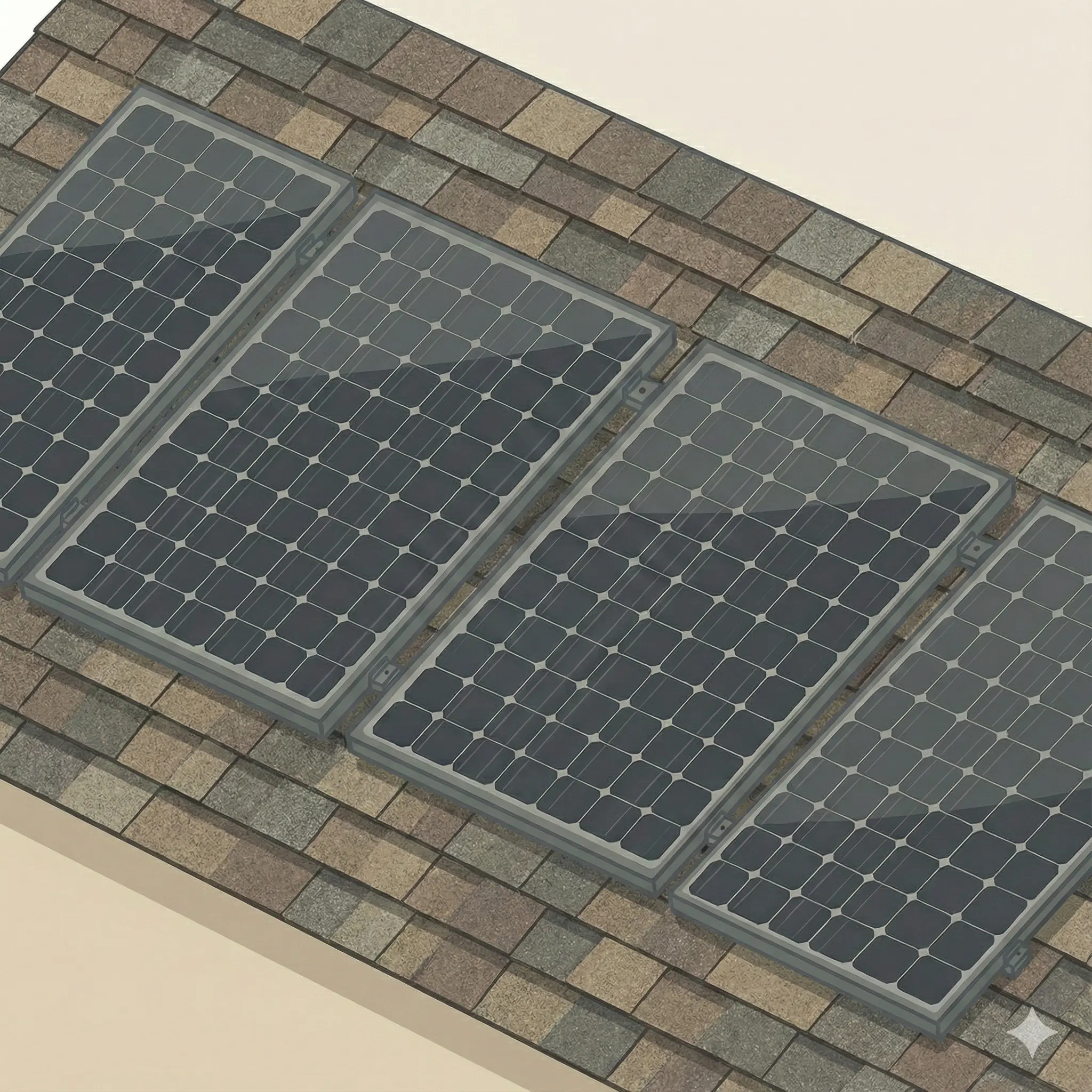
The widespread adoption of residential solar photovoltaic (PV) systems in the United States has fundamentally altered the roofing landscape. No longer merely a weatherproofing shield, the roof has become a revenue-generating asset and a platform for complex industrial equipment. For the American homeowner, the decision to install solar panels on an asphalt shingle roof—the most ubiquitous roofing material in North America—represents a critical intersection of electrical ambition and structural reality. This report provides an exhaustive, evidence-based analysis of this integration, moving beyond superficial marketing claims to examine the physics of attachment, the chemistry of waterproofing, the economics of liability, and the long-term operational risks that define the ownership experience.
The investigation reveals a dichotomy in the solar industry: a tension between the drive for installation speed and cost reduction, and the immutable requirements of roofing integrity. While solar technology itself—the silicon cells and inverters—has achieved high reliability, the physical interface between the array and the roof remains the primary vector for failure. The shift toward "rail-less" and "flashing-less" mounting systems, driven by labor economics, has introduced new variables in water intrusion risk that property owners must navigate with diligence. 1 Furthermore, the financial ecosystem surrounding these installations, particularly regarding insurance coverage for "detach and reset" procedures during reroofing events, presents a significant, often undisclosed, long-term liability. 4
This report is structured to guide the stakeholder through the entire lifecycle of a roof-mounted solar system, from the granular composition of the shingle substrate to the eventual decommissioning and recycling of the hardware.
---
Part 1: The Substrate Analysis – Asphalt Shingle Compatibility and Lifespan Dynamics
1.1 The Asphalt Shingle Composition and Solar Interaction
To understand the risks of solar installation, one must first understand the substrate. The modern asphalt shingle is a composite material consisting of a fiberglass mat coated in asphalt and surfaced with ceramic granules. These granules are not merely aesthetic; they serve as the primary shield against ultraviolet (UV) radiation, which otherwise degrades the asphalt, causing it to become brittle and crack.
The installation of a solar array fundamentally alters the environmental conditions experienced by the roof deck. By shading the shingles, solar panels block UV radiation, which can theoretically extend the life of the shingles directly beneath them. Studies indicate that the reduced daily variability in rooftop surface temperature under a PV array reduces thermal stresses on the roof materials. 6 However, this benefit is counterbalanced by the installation process itself and the microclimate created between the panel and the roof.
Granule Loss and Installation Trauma
The most immediate threat to a shingle roof occurs during the installation phase. Asphalt shingles are thermoplastic; they soften significantly in high ambient temperatures. During summer installations, particularly in high-heat regions like Tennessee or the Southwest, the foot traffic of a solar crew can be destructive. The friction from work boots can scuff, smear, or tear the softened asphalt, dislodging the protective ceramic granules. 7 Once these granules are lost, the underlying asphalt is exposed to UV radiation (where sunlight penetrates the gaps between panels) and premature aging accelerates. Experienced installers mitigate this risk by working during cooler morning hours or using foam cushions to distribute weight, but "heavy-footed" crews can reduce the roof's effective waterproofing life before the system is even energized. 8
1.2 The Lifespan Mismatch Dilemma
A critical failure in project planning frequently occurs when the lifespan of the PV system is not synchronized with the remaining service life of the roofing substrate. Solar arrays are typically warranted for power production for 25 years and can function effectively for 30 years or more. 9 In contrast, asphalt shingle roofs typically have a functional lifespan of 15 to 30 years, heavily dependent on climate, ventilation, and material quality. 11
Industry best practices suggest that installing solar panels on a roof that is more than five years old—or has less than 10 years of remaining life—introduces a high probability that the roof will fail while the solar panels are still productive. 10 This necessitates a "detach and reset" procedure: the complete electrical disconnection, removal, and safe storage of the solar array, followed by the replacement of the roof, and finally the re-installation of the solar system.
This desynchronization is not merely a logistical nuisance; it is a profound financial hazard. The cost to detach and reset a residential solar array is not trivial. Data indicates that labor for this process can range from $150 to $300 per panel. For a standard 20-30 panel system, a homeowner may face an unexpected expense of $3,000 to $9,000 or more—a cost rarely factored into the initial Return on Investment (ROI) calculations provided by solar sales representatives. 4
Table 1: The Financial Implication of Lifespan Desynchronization
| Component | Estimated Functional Lifespan | Degradation Rate | Implications of Failure |
|---|---|---|---|
| Solar PV Modules | 25–30+ Years | <0.5% output loss / year | Durable asset; rarely requires removal unless for roof work. |
| String Inverter | 10–15 Years | Binary failure (electronic) | Requires replacement, usually covered by warranty, simple swap. |
| Asphalt Shingles | 15–30 Years | Gradual embrittlement | Requires full tear-off. If under solar, necessitates "Detach and Reset". |
| The Risk Scenario | Mid-Cycle Failure | Year 12 | If the roof fails at year 12 of a 25-year solar loan, the homeowner must finance the roof plus ~$6,000 in solar labor. 4 |
1.3 Thermal Dynamics and the "Cool Roof" Effect
The interaction between the solar array and the attic temperature is a subject of significant building science research. A study by UC San Diego Jacobs School of Engineering quantified the "cool roof" effect of solar panels. Using thermal imaging, researchers determined that during the day, a building's ceiling was 5 degrees Fahrenheit cooler under solar panels than under an exposed roof. 14 This passive cooling effect reduces the cooling load on the HVAC system, amounting to a net energy saving equivalent to a 5% discount on the solar panel price over the system's lifetime. 14
However, this benefit relies on proper airflow. The air gap between the panel and the roof surface—typically 3 to 6 inches in railed systems—allows for convective cooling that dissipates the heat absorbed by the dark panels. If this gap is restricted, as is the case with some "low-profile" or aesthetic-focused installations, heat can build up. This heat can transfer radiatively to the shingles, potentially accelerating the aging of the asphalt through volatilization of oils. 15 Thus, the engineering of the racking height is a compromise between aesthetics (flush look) and thermodynamics (airflow).
---
Part 2: The Critical Junction – Mounting Systems and Waterproofing Architectures
2.1 Traditional Flashing Methods: The Mechanical Standard
The traditional standard for waterproofing roof penetrations, endorsed by the National Roofing Contractors Association (NRCA), involves the principle of lapping. Water flows down a roof due to gravity; waterproofing is achieved by sliding a material underneath the upslope shingle and over the downslope shingle, creating a continuous drainage plane.
The Mechanism of Flashed Mounts (e.g., IronRidge FlashFoot2, QuickMount PV)
In a flashed system, the installer locates a structural rafter and drills a pilot hole. A lag bolt is driven into the rafter, but crucial to the waterproofing is the installation of a metal flashing sheet—often aluminum or galvanized steel. This sheet is inserted under the second or third course of shingles above the penetration. A "puck" or standoff rises through a raised collar in the flashing. The seal is formed around this elevated standoff, often using a rubber grommet and a secondary cap. 1
- Engineering Advantage: The primary water barrier is mechanical. Even if the rubber seal degrades over 20 years, water running down the roof is diverted around the penetration by the metal flashing, just as it is around a plumbing vent or chimney.
- Installation Challenge: This method is labor-intensive. It requires the installer to carefully pry up existing shingles to slide the flashing in. On older, brittle roofs, this prying can tear the shingles, creating immediate damage. 19
2.2 The Rise of "Flashing-Less" and Deck-Mounted Systems
Driven by a desire to reduce "time on roof" and labor costs—which constitute a significant portion of the total system price—manufacturers have introduced top-mounted or "over-the-shingle" systems. These include products like the IronRidge HUG (Halo UltraGrip), QuickMount PV QuickBOLT, and Unirac Flashloc. 20
The "HUG" and Chemical Compression Concept
Systems like the IronRidge HUG utilize a multi-tiered rubberized boot and a butyl mastic foundation. The fastener is driven directly through the shingle and into the rafter (or deck). The waterproofing relies entirely on the compression of the butyl pad against the granular surface of the shingle and the seal around the washer head. 18
Unirac Flashloc: The Triple Seal
The Flashloc system takes a different approach, often utilizing a "chemically injection" method. After the mount is secured, a high-grade sealant is injected into a chamber within the mount, creating a permanent pressure seal that encapsulates the penetration point. Unirac markets this as "triple seal technology" that preserves the roof by eliminating the need to disturb (pry up) the surrounding shingles. 21
Critical Analysis of Chemical Reliance
While these systems undeniably accelerate installation, roofing forensic analysts express concern regarding their long-term reliance on chemical bonds over mechanical shedding. Asphalt shingles expand and contract with thermal cycles. Over a 25-year period, this movement can fatigue the bond between the butyl/sealant and the granule surface. If the chemical seal fails, there is no secondary metal barrier to divert water. Water can then track down the shaft of the screw, leading to slow leaks that may rot the roof deck before they are detected inside the attic. 2
Table 2: Comparative Analysis of Mounting Technologies
| Feature | Traditional Flashed Mount (e.g., IronRidge FlashFoot2) | Integrated Top-Mount (e.g., IronRidge HUG, Unirac Flashloc) |
|---|---|---|
| Waterproofing Principle | Mechanical Overlap (Gravity/Shedding) + Elevated Seal | Chemical Adhesion + Compression (Butyl/Sealant) |
| Dependence on Sealant | Low (Sealant is a secondary backup) | Critical (Sealant is the primary barrier) |
| Rafter Requirement | Typically Required (Structural Pilot holes) | Flexible (Some are Direct-to-Deck) |
| Installation Risk | High (Tearing shingles during flashing insertion) | Low (No prying of shingles required) |
| Long-Term Risk | Low (Metal flashing is permanent) | Moderate/Unknown (Material fatigue of sealant) |
| Industry Perception | "Gold Standard" for waterproofing | "Standard for Speed and Cost" |
2.3 Rafter vs. Deck Attachment: Structural Integrity
The structural integrity of the array—its ability to resist wind uplift during a hurricane—depends on where the fasteners anchor.
-
Rafter Mounting: This is the historical standard. Lag bolts penetrate the structural truss or rafter (the 2x4 or 2x6 lumber framing). This offers maximum pull-out strength. However, locating a 1.5-inch wide rafter through layers of shingles and decking is difficult, leading to "shiners" (missed pilot holes) that must be sealed. 24
-
Deck Mounting: Newer systems are rated for attachment directly to the roof deck (the plywood or OSB sheathing). Because plywood is thinner than a rafter, these systems typically require more attachment points to distribute the load. While engineering data supports deck mounting, it relies heavily on the condition of the sheathing. If the plywood has any prior moisture damage or dry rot, the pull-out strength is severely compromised, posing a risk in high-wind events. 3
---
Part 3: Chemical Sealants – The Unsung Heroes (and Potential Villains)
In modern solar installations, particularly those minimizing metal flashing, the chemical composition of the sealant becomes the single point of failure. The choice of sealant is not trivial; it determines whether a roof remains watertight through decades of freeze-thaw cycles.
3.1 The Chemistry of Longevity
Not all "caulk" is created equal. The solar industry relies on specific chemistries designed for extreme environments.
-
Butyl Rubber: A synthetic rubber often used in tape or pad form (e.g., in the HUG mount base). Butyl offers excellent initial tack and flexibility, allowing it to move with the roof. However, its longevity on a hot roof (150°F+) is a subject of debate. Unirac and other manufacturers have "brought butyl back" into their product lines, citing improved formulations that resist drying out. 26
-
Polyether and Scypolymer (e.g., ChemLink M1, Geocel 4500): These are moisture-curing sealants often used to fill pilot holes or seal flashing perimeters.
- Geocel 4500: A scypolymer sealant designed to bond to asphalt and metal even in damp conditions. It is widely used for its ability to adhere to almost any construction surface. 27
- ChemLink M1: A polyether sealant known for being 100% solids, meaning it contains no solvents and will not shrink as it cures. Shrinkage is the enemy of waterproofing, as it pulls the sealant away from the bond line. M1 is often cited by installers as the preferred choice for penetrations due to this non-shrink property. 28
-
Roof Cement/Mastic: Strictly Prohibited. Standard bituminous roof cement ("tar") hardens, cracks, and becomes brittle over time. While cheap and available at any hardware store, it should never be used as the primary seal for solar penetrations. It is incompatible with the 25-year life of a solar system. 28
3.2 Compatibility and Chemical reactivity
A critical, often overlooked risk is chemical incompatibility. Using a solvent-based sealant on certain synthetic underlayments or TPO patches (sometimes used on flat sections of a shingle roof) can cause a chemical reaction that dissolves the roofing material. Major manufacturers like GAF explicitly require that any adhesive used on their roofs be approved to maintain warranty coverage. 30 For example, TPO membranes require specific primers before sealants like Geocel 4500 will bond effectively. 27
---
Part 4: The Warranty Ecosystem and Liability Structures
A pervasive myth among homeowners is that installing solar panels automatically "voids" the roof warranty. The reality is a complex legal landscape of "partitioned" liability that can leave the homeowner vulnerable if not properly managed.
4.1 The "Void" Nuance vs. Partitioned Coverage
Major shingle manufacturers, including GAF and Owens Corning, state that solar installations do not automatically void the warranty of the shingles themselves. 10 However, the warranty is effectively suspended for the specific area covered by the array regarding leaks or damage caused by the installation.
- GAF's Stance: GAF explicitly states that if the solar installation damages the shingles (e.g., foot traffic tearing the mat, improper drilling), GAF is not liable. Crucially, if a leak occurs, the homeowner must pay to remove the panels to allow GAF to inspect the shingles. If the inspection reveals the leak is due to the solar install, the roof warranty provides no coverage for the repair. 10
- Owens Corning's Stance: This manufacturer offers a more integrated approach through their "Solar PROtect" warranty. This warranty extends workmanship coverage to the roof and the solar mounts, but there is a catch: the system must be installed by a "Platinum Preferred Solar PRO Contractor". 32 A generic solar installer does not trigger this protection, leaving the homeowner with standard partitioned coverage.
4.2 The "Blame Game" Scenario
The partitioned warranty creates a liability gap. Consider a scenario where a leak occurs three years post-installation:
- The Roofer's Defense: "I didn't drill those holes. The solar crew compromised the waterproofing. Call them."
- The Solar Company's Defense: "We used industry-standard mounts and sealed them. The leak is due to the age of the shingles or a pre-existing defect. Call the roofer."
- The Manufacturer's Defense: "We cover manufacturing defects in the shingle. This looks like an installation error. We deny the claim."
Strategic Recommendation: To close this gap, homeowners should seek an integrated warranty product. For example, GAF's "Golden Pledge" warranty, when combined with a GAF Energy solar system installed by a Master Elite Roofer, creates a single point of accountability. 9 Alternatively, homeowners should demand a comprehensive "penetration warranty" from their solar installer that explicitly covers water intrusion for at least 10–25 years, matching the duration of the roof warranty.
---
Part 5: Operational Risks – Environmental and Biological Factors
Once the system is installed, the operational reality of maintaining a solar array on a shingle roof involves managing the interactions between the hardware and the local environment.
5.1 The Squirrel Threat and Critter Guard Necessity
One of the most underestimated operational risks is wildlife. The gap between the solar panels and the roof (typically 3–5 inches) creates a sheltered, warm environment that is ideal for nesting squirrels and birds. 35
- The Mechanism of Damage: Rodents, particularly squirrels, have a biological imperative to gnaw to sharpen their teeth. PV wiring, with its durable insulation, is an attractive target. Squirrels often chew through the insulation of the DC conductors, leading to arc faults, system shutdowns, and in extreme cases, roof fires. 35
- The Prevention: "Critter guards"—a rigid wire mesh screen installed around the perimeter of the array—are the only effective defense.
- Cost Analysis: Professional installation of critter guards ranges from $12 to $35 per linear foot. For a typical residential system, this adds $500 to $2,500 to the initial cost. 37
5.2 Vegetation, Moss, and Maintenance
In damp climates such as the Pacific Northwest or the Northeast, the shaded area under the panels creates a microclimate that promotes moss and algae growth. While the panels protect the shingles from rain impact, they also prevent the sun from drying the roof deck, trapping humidity. Moss can grow into the slots of the shingles, lifting them and allowing water to track sideways. 40
Cleaning this area is challenging. Using a pressure washer is strictly advised against, as it strips granules from the shingles. 41 Chemical treatments (such as zinc sulfate or bleach solutions) must be applied with extreme caution; chlorine bleach can corrode the aluminum frames of the solar panels and potentially void the panel warranty. 42 The installation of a preventative zinc strip at the roof ridge before solar installation is a proactive measure that can inhibit moss growth through the gradual release of zinc ions during rain. 42
---
Part 6: Financial & Insurance Complexities – The "Detach and Reset" Trap
Perhaps the significant hidden cost of solar ownership is the financial exposure during a roof replacement claim. This is an issue of insurance policy language and labor market rates.
6.1 The Detach and Reset Cost Gap
If a home requires a new roof due to hail or wind damage, the solar panels must be removed to allow the roofers to work, and then reinstalled. This is known as a "detach and reset."
- Market Rates: Specialized solar labor is expensive. The cost to detach and reset a system typically ranges from $150 to $300 per panel. For a 30-panel system, the invoice will be between $4,500 and $9,000. 4
- Insurance Reality: Standard homeowner insurance policies (HO-3) cover the structure ("Dwelling"). While they theoretically cover the cost to return the home to its pre-loss condition, insurance adjusters often estimate "detach and reset" costs using standardized software tables (e.g., Xactimate) that may lag behind current market labor rates. An adjuster might allow $150 per panel, while local contractors charge $250.
- The Gap: In this scenario, the homeowner is liable for the difference—potentially thousands of dollars out of pocket even on a "fully covered" claim. 5
6.2 Policy Exclusions and "ACV" vs. "RCV"
The classification of the solar system is critical.
- Dwelling vs. Separate Structure: If the panels are permanently attached to the roof, they usually fall under "Dwelling" coverage. However, some insurers may classify them differently, or exclude wind/hail coverage for the panels themselves unless a specific rider is added. 43
- ACV Trap: If the policy covers the roof at "Replacement Cost Value" (RCV) but the solar system is older, the insurer might attempt to pay "Actual Cash Value" (ACV) for the solar labor or components, depreciating the payout based on the system's age.
- Recommendation: Homeowners must explicitly ask their agent: "Does my replacement cost coverage include the full labor cost for solar detach and reset?" and "Is there a separate deductible for the solar array?" It is often prudent to increase the total dwelling coverage limit to account for the value of the solar system.
---
Part 7: Structural Aesthetics and Code Compliance
The visual impact of solar is a primary concern for homeowners and Homeowners Associations (HOAs). Modern installation practices offer solutions to mitigate "curb appeal" penalties.
7.1 Vent Pipe Relocation
Plumbing vents (ABS pipes protruding from the roof) are major obstructions. Installers often design arrays around them, resulting in "gap-toothed" layouts that look cluttered and reduce system capacity.
- The Solution: Rerouting vents. A plumber can often combine vents in the attic or reroute them to a less visible roof plane. Alternatively, low-profile diversion products like the "Solar Roof Jack" allow panels to be placed directly over the vent. 45
7.2 Conduit Runs and "Stealth" Installs
The routing of the electrical conduit (EMT) from the array to the inverter has a massive impact on aesthetics.
- Roof Run: The conduit runs over the top of the roof and down the side of the house. This is the cheapest method but the most visible ("industrial look").
- Attic Run: The conduit penetrates the roof immediately under the array and runs through the attic space to the inverter. This renders the wiring invisible from the street.
- Trade-off: Attic runs require an additional roof penetration (a potential leak point) and higher labor costs due to working in a cramped, hot attic. 47
7.3 International Residential Code (IRC) and Fire Setbacks
Homeowners often wish to cover their entire roof with panels, but fire safety codes strictly limit density. The International Residential Code (IRC) Section R324.6 mandates "setbacks" to allow firefighters access to the ridge for smoke ventilation operations.
- The Rule: Typically, a 36-inch clear pathway is required from the eave to the ridge. If the array covers less than 33% of the roof area, this setback may be reduced to 18 inches.
- Sprinkler Exception: Homes equipped with automatic fire sprinkler systems may have relaxed setback requirements, allowing for greater roof coverage. 49
7.4 Black-on-Black Aesthetics
The trend toward "all-black" modules (black frame, black backsheet, black cells) is dominant in the residential market. While aesthetically superior on dark shingle roofs, there is a thermodynamic penalty. Black backsheets absorb more heat than white backsheets, leading to slightly higher operating cell temperatures and a marginal reduction in efficiency. 52 However, the market consensus is that the curb appeal benefits of a sleek, uniform look outweigh the minor efficiency loss (~0.5-1%).
---
Part 8: Regulatory & Legal – HOAs and Solar Rights
The conflict between homeowner rights and HOA aesthetic restrictions is a frequent legal battleground.
8.1 Solar Rights Acts
Many states (e.g., California, Florida) have enacted "Solar Rights Acts" that limit an HOA's ability to ban solar panels.
- Reasonable Restrictions: While an HOA cannot ban solar, they can impose "reasonable restrictions." In California, a restriction is considered unreasonable if it increases the system cost by more than $1,000 or decreases efficiency by more than 10%. 54
- Aesthetic Controls: HOAs can often still demand that panels be flush-mounted, that wiring be hidden (attic runs), or that frames be black, provided these demands do not violate the cost/efficiency caps mentioned above. 55
---
Part 9: End-of-Life and Recycling – The Looming Waste Stream
The final phase of the solar lifecycle presents an emerging environmental and financial challenge that is currently unregulated in most jurisdictions.
9.1 The Economics of Disposal
As of 2025, there is no federal mandate for free solar recycling in the United States. While panels contain valuable materials (silver, copper, aluminum, silicon), the cost to recover them currently exceeds the value of the materials.
- The Cost Burden: The cost to recycle a solar panel ranges from $15 to $45 per unit. In contrast, dumping a panel in a landfill costs $1 to $5. 57
- Homeowner Liability: For a typical 25-panel system, environmentally responsible disposal could cost the homeowner over $1,000, plus transportation fees.
- Future Outlook: While Washington state has implemented manufacturer take-back programs, most US homeowners should anticipate this future liability. It is prudent to inquire if the manufacturer (e.g., First Solar, SunPower) has a voluntary take-back program. 58
---
Part 10: Conclusion and Strategic Recommendations
The integration of solar photovoltaics on asphalt shingle roofs is a mature, viable technology that offers significant energy independence. However, the industry's commoditization of the installation process has obscured the significant construction risks involved. A solar installation is not an appliance purchase; it is a major renovation of the building envelope.
The Verdict on Risk Mitigation:
The evidence suggests that the structural, waterproofing, and financial risks are manageable, but only if the homeowner actively manages the scope of work rather than accepting the lowest bid.
Key Recommendations for the Homeowner:
- The 15-Year Rule: Never install solar on a roof with less than 15 years of certified remaining life. If in doubt, reroof first.
- Demand Mechanical Flashing: While chemical-only mounts (HUG, Flashloc) are faster, traditional metal flashing (FlashFoot2) provides a permanent mechanical water barrier that does not rely on the 25-year integrity of a rubber seal.
- Mandate Critter Guards: Treat this as a required component in the initial contract. The risk of wiring damage is too high to ignore.
- Close the Insurance Gap: secure written confirmation from your insurer regarding "detach and reset" coverage and specific deductibles.
- Audit the Warranty: Prioritize installers who offer a "penetration warranty" that matches the roof's remaining life, or seek integrated roofing/solar warranties (e.g., GAF Golden Pledge) to eliminate the liability gap between trades.
Works cited
- How to Mount Solar Panels to the Roof: Complete Installation Guide – SolarTech, accessed December 2, 2025, https://solartechonline.com/blog/how-to-mount-solar-panels-roof-installation-guide/
- L feet for shingles – Mike Holt's Forum, accessed December 2, 2025, https://forums.mikeholt.com/threads/l-feet-for-shingles.2586457/
- How new solar mounts reduce install risks and roof time, accessed December 2, 2025, https://solarbuildermag.com/mounting-solutions-guide/how-new-solar-mounts-reduce-install-risks-and-roof-time/
- Solar Panel Removal Cost Guide 2025: $200-$500 Per Panel – A1 Solar Store, accessed December 2, 2025, https://a1solarstore.com/blog/how-much-does-solar-panel-removal-cost-complete-guide.html
- Insurance replacing roof. Solar company had a pricing error in their agreement with me for removal. Insurance wants to hold them to the mistaken price. – Reddit, accessed December 2, 2025, https://www.reddit.com/r/Insurance/comments/180xku8/insurance_replacing_roof_solar_company_had_a/
- (PDF) Effects of solar photovoltaic panels on roof heat transfer – ResearchGate, accessed December 2, 2025, https://www.researchgate.net/publication/251496714_Effects_of_solar_photovoltaic_panels_on_roof_heat_transfer
- How The Light Group USA Protects Your Roof and Shingles During Solar Panel Removal – The Light Group USA, accessed December 2, 2025, https://www.thelightgroupusa.com/solar-blog/how-we-protect-your-roof-and-shingles-during-solar-panel-removal
- Roofer said hot weather caused shingles to "slip" when solar crew was doing their installation. Solar company says its roof workmanship issue : r/Roofing – Reddit, accessed December 2, 2025, https://www.reddit.com/r/Roofing/comments/14tmct5/roofer_said_hot_weather_caused_shingles_to_slip/
- Solar Plus Limited Warranty Addendum | GAF, accessed December 2, 2025, https://www.gaf.com/en-us/document-library/documents/warranties/solar-plus-limited-warranty-addendum-sm516.pdf
- Installation of Solar PV Panels Over A GAF Shingle Roof – GAF, accessed December 2, 2025, https://www.gaf.com/en-us/document-library/documents/technical-bulletins-&-notes/r-131-installation-of-solar-pv-panels-over-a-gaf-shingle-roof.pdf
- Solar Panel Roof Replacement: How Much Will It Really Cost You? – Sunergy Solutions, accessed December 2, 2025, https://sunergysolutionsllc.com/cost-to-replace-roof-with-solar-panels/
- Shingles vs. Metal Roof Cost (2025 Guide) – This Old House, accessed December 2, 2025, https://www.thisoldhouse.com/roofing/shingles-vs-metal-roof-cost
- Insurance coverage for roof replacement – r/solar, accessed December 2, 2025, https://www.reddit.com/r/solar/comments/1cskqab/insurance_coverage_for_roof_replacement/
- Solar Panels Keep Buildings Cool – Jacobs School of Engineering, accessed December 2, 2025, https://jacobsschool.ucsd.edu/news/release/1094?id=1094
- How Solar Panels Become Your Roof's Ultimate Shield Against Extreme Heat & UV Damage – Sunsent, accessed December 2, 2025, https://www.sunsent.com/how-solar-panels-become-your-roof-s-ultimate-shield-against-extreme-heat-uv-damage
- Natural Ventilation and Effect of Temperature on Solar Roofs – Solarstone, accessed December 2, 2025, https://solarstone.com/blog/natural-ventilation-and-effect-of-temperature-on-solar-roofs
- Solar Panel Roof Leaks Prevention Flashing Tips – Austin Hi-Tech Restoration, accessed December 2, 2025, https://www.austinhi-tech.com/solar-panel-roof-leaks-prevention-flashing-tips/
- The BEST WAY To Attach Solar Panels To A Shingle Roof – YouTube, accessed December 2, 2025, https://www.youtube.com/watch?v=CzUK7EB1YRs
- Mount flashing on new shingle roof install? – Solar Panel Talk, accessed December 2, 2025, https://www.solarpaneltalk.com/forum/solar-panels-for-home/solar-panels-for-your-home/394203-mount-flashing-on-new-shingle-roof-install
- Please explain how HUG mounts are better than flashing mounts on roof – r/solar, accessed December 2, 2025, https://www.reddit.com/r/solar/comments/1msodww/please_explain_hug_mounts_are_better_than/
- tile replacement | flashkit tr – Unirac, accessed December 2, 2025, https://unirac.com/wp-content/uploads/2023/09/Attachments-Poster-2023-With-Bleeds-V2.pdf
- Would you install them? IronRidge HUG & SnapnRack TopSpeed – DIY Solar Power Forum, accessed December 2, 2025, https://diysolarforum.com/threads/would-you-install-them-ironridge-hug-snapnrack-topspeed.97800/
- Unirac flashloc-comp mounts – Solar Panel Talk, accessed December 2, 2025, https://www.solarpaneltalk.com/forum/solar-panels-for-home/solar-panel-system-equipment/442567-unirac-flashloc-comp-mounts
- Penetrations – The Rafter or The Decking? – r/solar, accessed December 2, 2025, https://www.reddit.com/r/solar/comments/2eo5p9/penetrations_the_rafter_or_the_decking/
- Best Roof for Solar Panels: Roof Types & Solar Compatibility – GreenLancer, accessed December 2, 2025, https://www.greenlancer.com/post/best-roofing-for-solar-panels
- Bringing Butyl Back – Unirac, accessed December 2, 2025, https://unirac.com/bringing-butyl-back/
- GEOCEL 4500® ROOF BONDING SEALANT – Geocelusa, accessed December 2, 2025, https://www.geocelusa.com/product/geocel-4500-roof-bonding-sealant/
- ROOF PENETRATION SEAL SYSTEM – ChemLink, accessed December 2, 2025, https://chemlink.com/wp-content/uploads/2022/09/SOLAR-Sell-Sheet_220915.pdf
- Resi Installers – What sealant are y'all using these days? – r/solar, accessed December 2, 2025, https://www.reddit.com/r/solar/comments/11ejam8/resi_installers_what_sealant_are_yall_using_these/
- Solar Installations & GAF Guaranteed Roofing Systems Guidelines – GAF, accessed December 2, 2025, https://www.gaf.com/en-us/document-library/documents/technical-bulletins-&-notes/c-01-solar-installations-and-gaf-guaranteed-roofing-systems-guidelines.pdf
- Do Solar Panels Damage Roofing? Myths vs. Facts Homeowners Should Know – hbowa, accessed December 2, 2025, https://www.pretapower.com/do-solar-panels-damage-roofing-myths-vs-facts-homeowners-should-know/
- solar resources for roofing contractors – Owens Corning, accessed December 2, 2025, https://www.owenscorning.com/en-us/roofing/solar-resources
- PLATINUM SOLAR PROTECT™ LIMITED LIFETIME WARRANTY – Cloudfront.net, accessed December 2, 2025, https://dcpd6wotaa0mb.cloudfront.net/mdms/dms/Roofing/10026809/10026809-2023-Platinum-Solar-PROtect-Limited-Warranty.pdf?v=1706729350000
- Solar Plus Limited Warranty Addendum | GAF Energy – GAF Energy, accessed December 2, 2025, https://www.gaf.energy/wp-content/uploads/2021/12/Solar-Plus-Limited-Warranty-Addendum.pdf
- Solar Panel Critter Guard Installation in NJ & NY – Solarmedix, accessed December 2, 2025, https://solarmedix.com/critter-guard/
- The Value of a Critter Guard in Solar System Maintenance – Huston Solar, accessed December 2, 2025, https://hustonsolar.com/the-value-of-a-critter-guard-in-solar-system-maintenance/
- Cost Sanity Check: Critter Guard $12.65 per linear foot installed, simple array shape? – r/solar, accessed December 2, 2025, https://www.reddit.com/r/solar/comments/141khua/cost_sanity_check_critter_guard_1265_per_linear/
- Critter Guard Installation Cost – Is It Worth It? – Sunshine Scrubbers, accessed December 2, 2025, https://sunshinescrubbers.com/blogs/news/critter-guard-installation-cost-is-it-worth-it
- Solar Panels and Home Owners Insurance Coverage – Reddit, accessed December 2, 2025, https://www.reddit.com/r/solar/comments/1lxaj05/solar_panels_and_home_owners_insurance_coverage/
- Roof Moss on Areas Shaded by Solar Panels – Solar Panel Talk, accessed December 2, 2025, https://www.solarpaneltalk.com/forum/solar-panels-for-home/solar-panels-for-your-home/428599-roof-moss-on-areas-shaded-by-solar-panels
- How To Remove Moss From a Roof – This Old House, accessed December 2, 2025, https://www.thisoldhouse.com/roofing/how-to-remove-moss-from-roof
- How to Clean Moss Off Your Roof and Solar Panels – Fire Mountain Solar, accessed December 2, 2025, https://firemountainsolar.com/how-to-clean-moss-off-roof-and-solar-panels/
- Does Home Insurance Cover Solar Panels? – Progressive, accessed December 2, 2025, https://www.progressive.com/answers/does-home-insurance-cover-solar-panels/
- Do people who add solar do any updates for home insurance – Reddit, accessed December 2, 2025, https://www.reddit.com/r/solar/comments/1iixdaw/do_people_who_add_solar_do_any_updates_for_home/
- Details on a code change that allows for solar panels above plumbing vent pipes – Solar Roof Jack, accessed December 2, 2025, https://solarroofjack.com/details-on-a-code-change-that-allows-for-solar-panels-above-plumbing-vent-pipes/
- How Much Does Rerouting a Plumbing Vent Cost? – Angi, accessed December 2, 2025, https://www.angi.com/articles/cost-and-feasibility-moving-plumbing-vent-pipe.htm
- Should a Solar Conduit Run Through the Attic or on the Roof? – Solar Conduits, accessed December 2, 2025, https://www.solarconduits.com/should-a-solar-conduit-run-through-the-attic-or-on-the-roof.html
- Are there any benefits to running conduit out of site from exterior vs running conduit on the exterior? – r/solar, accessed December 2, 2025, https://www.reddit.com/r/solar/comments/153e9xr/are_there_any_benefits_to_running_conduit_out_of/
- Residential Solar Panel Requirements – NFPA, accessed December 2, 2025, https://www.nfpa.org/news-blogs-and-articles/blogs/2024/02/29/residential-solar-panel-requirements
- RESIDENTIAL SOLAR ARRAY ROOF LAYOUT – Larimer County, accessed December 2, 2025, https://www.larimer.gov/sites/default/files/uploads/2022/solar_array_roof_layout_residential.pdf
- 2021 International Residential Code (IRC) – R324.6.2 Setback at ridge – accessed December 2, 2025, https://codes.iccsafe.org/s/IRC2021P3/part-iii-building-planning-and-construction/IRC2021P3-Pt03-Ch03-SecR324.6.2
- Black or grey roof with solar panels? – Solar Panel Talk, accessed December 2, 2025, https://www.solarpaneltalk.com/forum/solar/the-pros-and-cons-of-solar-energy/434674-black-or-grey-roof-with-solar-panels
- The most black, most aesthetically appealing solar panel… What it is? – Solar Panel Talk, accessed December 2, 2025, https://www.solarpaneltalk.com/forum/solar-panels-for-home/solar-panels-for-your-home/17762-the-most-black-most-aesthetically-appealing-solar-panel-what-it-is
- Solar Panels on Common Area Roofs; Have a Policy Yet? – HOA Lawyer Blog, accessed December 2, 2025, https://hoalaw.tinnellylaw.com/solar-panels-common-area-roofs-policy-yet/
- HOA SOLAR ACTION GUIDE – MACOG, accessed December 2, 2025, http://macog.com/docs/sustainability/solar_energy/2021/SUN_HOA-Guide.pdf
- HOA Restrictions & Guidelines for Solar Panels – GreenLancer, accessed December 2, 2025, https://www.greenlancer.com/post/hoas-and-solar-panels
- 2025 Outlook: Solar Module Recycling Costs and Yields – Anern Store, accessed December 2, 2025, https://www.anernstore.com/blogs/diy-solar-guides/2025-solar-module-recycling-costs-yields
- Tax Benefits and Rebates for Solar Panel Recycling – ERI, accessed December 2, 2025, https://eridirect.com/blog/2024/07/tax-benefits-and-rebates-for-solar-panel-recycling/
- accessed December 2, 2025 – https://solartechonline.com/blog/recycle-solar-panels-arizona-guide/#:~:text=Material Recovery Creates Significant Value,to %241-3 landfill disposal.