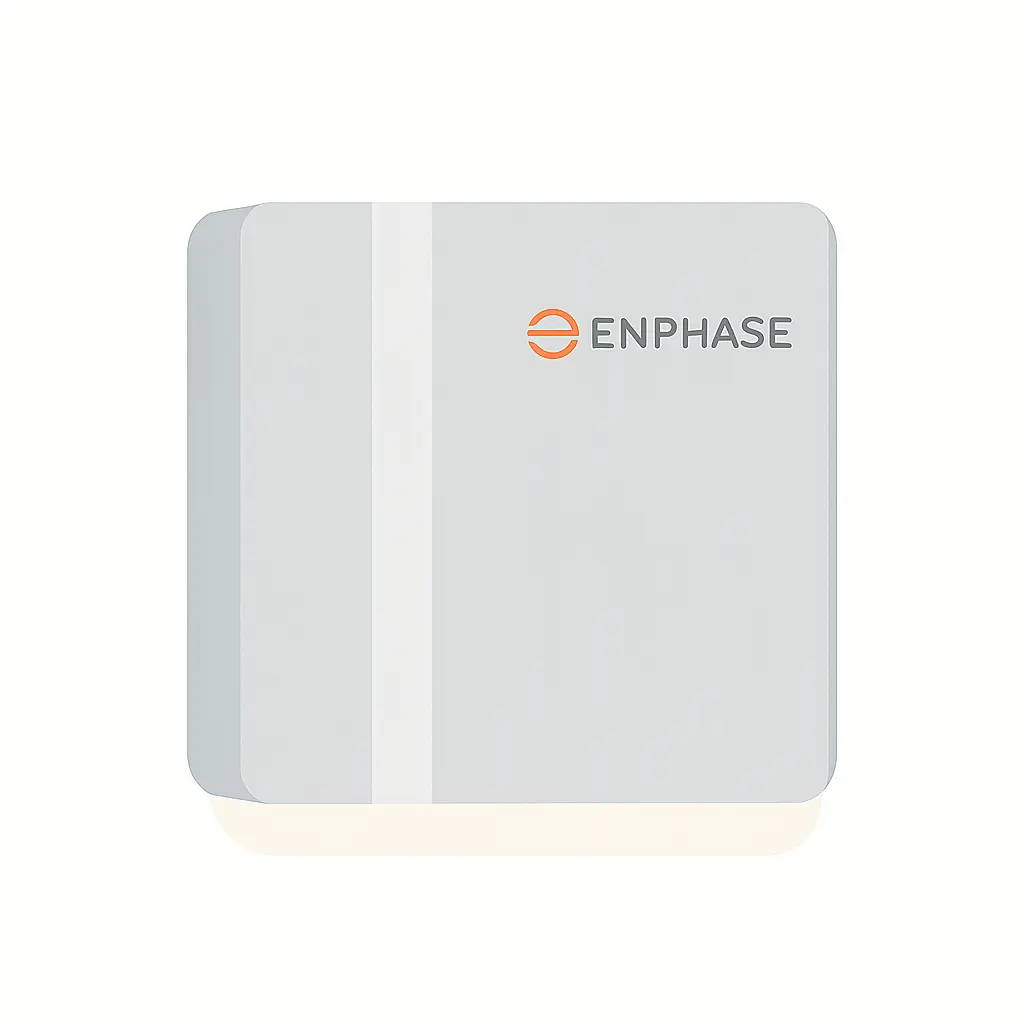
The United States residential energy market is currently undergoing a structural transformation, driven by a confluence of grid instability, rising utility rates, and regulatory shifts such as California’s Net Energy Metering (NEM) 3.0. In this evolving landscape, the home battery has graduated from a niche luxury for off-grid enthusiasts to a central component of the modern smart home. Among the myriad competitors vying for dominance in this space, Enphase Energy stands out for its distinctive architectural philosophy: the distributed energy system based on microinverters.
This report offers an exhaustive, investigative analysis of Enphase’s home battery ecosystem, specifically focusing on the third-generation IQ Battery 5P, the forthcoming IQ Battery 10C, and the legacy IQ Battery 10T/3T models. Through a rigorous examination of technical specifications, installation manuals, installer feedback, and verified user reports, we aim to provide US homeowners with a granular understanding of the system's capabilities, limitations, and economic viability.
Our analysis reveals a complex picture. Enphase has successfully engineered a highly integrated, safety-focused ecosystem that leverages Lithium Iron Phosphate (LFP) chemistry and modular redundancy to mitigate catastrophic failure risks. The transition from the second-generation’s wireless Zigbee communication to the third-generation’s hardwired Control Area Network (CAN) bus represents a critical maturation of the platform, directly addressing the connectivity reliability issues that plagued earlier deployments. However, the system faces stiff competition regarding raw power density and price-per-kilowatt-hour (kWh). When juxtaposed against monolithic, DC-coupled alternatives like the Tesla Powerwall 3 or the battery-agnostic FranklinWH aPower, the Enphase architecture often requires a higher upfront investment to achieve comparable continuous power output for whole-home backup scenarios.
Furthermore, the software-defined nature of modern storage systems introduces new variables into the ownership experience. From "AI Optimization" algorithms designed to navigate complex utility tariffs to over-the-air (OTA) firmware updates that have occasionally disrupted service, the Enphase battery is not merely a passive storage tank but an active grid participant requiring robust internet connectivity and careful configuration. This report dissects these elements, offering a neutral, evidence-based guide to navigating the Enphase storage landscape in 2025.
1. Introduction: The Paradigm Shift in Residential Energy
To fully appreciate the value proposition and the limitations of the Enphase battery system, one must first understand the macroeconomic and technical context of the US residential energy sector. The era of the passive utility customer—who simply consumes power and pays a monthly bill—is ending. It is being replaced by the era of the "prosumer," a homeowner who generates, stores, and manages energy.
1.1 The Drivers of Storage Adoption
Several distinct factors are accelerating the adoption of home batteries:
- Grid Instability and Resilience: Aging infrastructure and extreme weather events have normalized power outages in many US regions. In California, Public Safety Power Shutoffs (PSPS) have made backup power a necessity for millions.
- Regulatory Economics (NEM 3.0): The implementation of NEM 3.0 in California has fundamentally altered the economics of solar. Under previous net metering rules (NEM 2.0), the grid acted as a free virtual battery, crediting homeowners at retail rates for exported solar power. Under NEM 3.0, export compensation has plummeted by approximately 75%, effectively destroying the value of solar-only systems. This has forced a pivot to "self-consumption," where solar energy is stored in a battery for use during the evening, rather than sold back to the utility.1
- Time-of-Use (TOU) Arbitrage: Utilities across the country are adopting aggressive TOU rate structures, where electricity is significantly more expensive during peak evening hours (e.g., 4 PM to 9 PM). Batteries allow homeowners to shift their consumption away from these expensive windows.
1.2 Enphase’s Architectural Philosophy: The Distributed Approach
Enphase Energy, founded in 2006, disrupted the solar industry by introducing the microinverter—a small device attached to each solar panel that converts Direct Current (DC) to Alternating Current (AC) at the source. This contrasted with the traditional "string inverter" approach, where all panels fed into a single central inverter.
Enphase has applied this same distributed logic to energy storage. Unlike most competitors that use a large central inverter for the battery (DC-coupled or hybrid), Enphase batteries are AC-coupled. Each battery unit contains multiple embedded microinverters.
- Redundancy: If one microinverter fails, the battery unit continues to operate at reduced capacity, rather than shutting down entirely.
- Modularity: Homeowners can stack multiple small battery units to achieve the exact capacity needed, rather than being forced into large 13+ kWh increments.
- Safety: The system avoids high-voltage DC running through the home, converting power to safer AC immediately.
This report will analyze whether this architectural philosophy translates to real-world benefits for the homeowner, or if the complexity and cost of distributed components outweigh the theoretical advantages.
2. Technical Architecture and Evolution
The Enphase battery lineup is not a monolith; it is a product line that has undergone significant iteration. Understanding the generational differences is crucial, as they dictate compatibility, reliability, and performance.
2.1 Second-Generation Architecture: The IQ Battery 10T and 3T
The second generation, often referred to as the "Encharge" series, consists of the IQ Battery 3T (3.36 kWh usable) and the IQ Battery 10T (10.08 kWh usable). The "10T" is physically composed of three "3T" base units housed under a single cover.3
Technical Specifications:
- Microinverters: The 10T utilizes twelve embedded IQ8X-BAT microinverters. This high component count provides significant redundancy.3
- Chemistry: It uses Lithium Iron Phosphate (LFP) chemistry, chosen for its thermal stability and safety compared to Nickel Manganese Cobalt (NMC) chemistries used by some competitors like LG or earlier Tesla models.4
- Form Factor: The units are relatively thin (approx. 7.4 inches deep) and wall-mountable, designed to be aesthetically unobtrusive.4
The Wireless Bottleneck (Zigbee):
The defining technical characteristic of the second generation—and the source of considerable controversy—is its reliance on Zigbee wireless communication. The battery communicates with the system controller and the gateway over a 2.4 GHz wireless mesh network.
- Design Rationale: Theoretically, wireless communication simplifies installation by eliminating the need to run dedicated control wires between the main panel and the battery location (often a garage).
- Real-World Friction: In practice, the 2.4 GHz band is heavily congested by residential Wi-Fi, microwaves, and other smart devices. Installers and users have extensively documented issues with signal interference, leading to "communication lost" errors where the battery becomes invisible to the system or fails to discharge during an outage.5
- Mitigation Efforts: Enphase released troubleshooting guides recommending the removal of aesthetic "sun shields" to improve signal propagation and the installation of Zigbee range extenders. However, user reports suggest that for many, the wireless link remained a weak point in an otherwise robust system.6
2.2 Third-Generation Architecture: The IQ Battery 5P
Recognizing the limitations of the Zigbee-based architecture and the need for higher power density to start air conditioners, Enphase released the IQ Battery 5P. This product represents a fundamental architectural pivot.
Key Technical Shifts:
- Wired Communication (CAN Bus): The 5P abandons Zigbee for a hardwired control connection using the Control Area Network (CAN) protocol. This change effectively eliminates the wireless interference issues, providing a stable, high-speed data link between the battery and the new System Controller 3.8
- Increased Power Density:
- IQ Battery 10T (Gen 2): 10 kWh capacity yielded 3.84 kW continuous power.
- IQ Battery 5P (Gen 3): 5 kWh capacity yields 3.84 kW continuous power.9
- Implication: The 5P effectively doubles the power-to-energy ratio (C-rate). A homeowner can now achieve the same power output with half the storage capacity, or double the power output for the same capacity. This addresses a major criticism of the Gen 2 system: its inability to start heavy loads without installing a massive bank of batteries.
- Enhanced Surge Capability: The 5P features "Power Start" technology, allowing a 3-second surge of up to 7.68 kVA per unit (48A LRA) to handle the inrush current of motors and pumps.8
2.3 Fourth-Generation: The IQ Battery 10C
Scheduled for broader rollout in 2025, the IQ Battery 10C is a compliance-focused evolution.
- Domestic Content: The "C" designation likely alludes to "Commercial" or "Compliance." The defining feature is the inclusion of US-manufactured components (domestic content) to qualify for the 10% bonus tax credit under the Inflation Reduction Act.10
- Compatibility Lock: The 10C is specifically noted to be compatible only with the IQ Combiner 6C. It cannot be retrofitted into systems utilizing older Combiner 4 or 5 boxes, nor does it support generator integration at launch.11 This creates a bifurcated product line where the newest battery technology is inaccessible to legacy system owners without significant hardware replacement.
Comparison of Enphase Battery Generations
| Feature | IQ Battery 10T (Gen 2) | IQ Battery 5P (Gen 3) | IQ Battery 10C (Gen 4) |
|---|---|---|---|
| Usable Capacity | 10.08 kWh | 5.0 kWh | 10.0 kWh |
| Continuous Power | 3.84 kVA | 3.84 kVA | 3.84 kVA |
| Peak Power (3 sec) | 5.76 kVA | 7.68 kVA | 5.76 kVA (Est.) |
| Communication | Wireless (Zigbee) | Wired (Control Wire) | Wired (Control Wire) |
| Generator Support | Yes (System Controller 2) | Yes (System Controller 3) | No (at launch) 11 |
| Domestic Content | No | Partial (Model dependent) | Yes (Bonus Credit Eligible) |
| Warranty | 10-15 Years | 15 Years | 15 Years |
3. Installation, Integration, and Hardware Ecosystem
The performance of a home battery system is inextricably linked to the quality of its installation and the ecosystem of hardware that supports it. For the Enphase system, this ecosystem is complex, consisting of multiple discrete boxes that must be mounted and wired by a certified professional.
3.1 The "Enphase Energy System" Components
Unlike the Tesla Powerwall, which often integrates the inverter, gateway, and battery management into fewer enclosures, the Enphase system is decentralized. A typical full-backup installation involves:
- IQ Microinverters: On the roof (generating AC power).
- IQ Combiner Box: Aggregates the solar circuits and houses the IQ Gateway.
- IQ System Controller: The "brain" of the backup system. It contains the Microgrid Interconnection Device (MID) that physically disconnects the home from the grid during an outage to form a microgrid.
- IQ Batteries: The storage units themselves.
- IQ Load Controllers: Optional boxes used to shed heavy loads during an outage to prevent system collapse.
Implications for Aesthetics and Space:
This multi-box approach requires significant wall space. Installers often refer to this as "wall acne." While the individual components are sleek, the cumulative footprint of a Controller, Combiner, Load Controller, and multiple Battery units can dominate a garage wall or the side of a house.
3.2 The Wired vs. Wireless Installation Debate
The shift from Gen 2 (Wireless) to Gen 3 (Wired) has profound implications for installation complexity, particularly for retrofits.
The Wireless Promise (Gen 2):
The 10T was marketed on ease of installation. Installers did not need to trench new wires between the main service panel and the battery location if they were separated. However, the reality of Zigbee interference often forced installers to return to the site to install wireless range extenders or move equipment, eroding the initial labor savings.7
The Wired Reality (Gen 3 & 5P):
The 5P requires a hardwired data connection.
- Conduit Requirements: While Enphase documentation permits various wiring methods, forum discussions among installers reveal that many Authorities Having Jurisdiction (AHJ) or local inspectors enforce strict conduit requirements. Some inspectors interpret the communication wiring as requiring physical protection (Rigid Metal Conduit or EMT) between batteries to ensure grounding continuity and safety.12
- Daisy-Chaining: The communication wire must be daisy-chained from battery to battery. Incorrect termination of this chain is a common source of setup failure, leading to "device not found" errors during commissioning.13
- Retrofit Difficulty: For a homeowner with an existing solar array on a detached garage and a main panel on the house, upgrading to a 5P system now requires running a physical communication wire between the two structures. This trenching or conduit run can add thousands of dollars to the installation cost compared to the theoretical wireless operation of the previous generation.
3.3 Generator Integration
For homeowners in regions prone to multi-day outages (e.g., hurricane zones), battery capacity is often insufficient, and a fossil-fuel generator is required for long-term resilience.
- Enphase's Approach: The System Controller 2 and 3 include dedicated ports for generator integration. The system can automatically start a compatible standby generator (like a Generac or Kohler) when the battery reaches a low state of charge (SoC), recharge the battery, and then shut the generator off.
- The 10C Gap: Notably, documentation suggests the new IQ Battery 10C combined with the IQ Combiner 6C does not support generator integration at launch. Enphase has indicated a future "IQ Smart Switch" will be released in 2026 to address this.11 This gap is a critical consideration: early adopters of the domestic-content-compliant 10C may lose the ability to integrate a generator until future hardware is released.
3.4 Incompatibility with Legacy Systems
A major friction point for the Enphase user base is the lack of backward compatibility.
- Mixing Batteries: A homeowner with an existing 10T system cannot expand their capacity by adding a 5P unit. The two generations use incompatible communication protocols (Zigbee vs. Wired CAN) and cannot coexist on the same System Controller.14 This forces users to hunt for discontinuing 10T stock if they wish to expand, or replace their entire battery bank.
- M-Series Microinverters: Legacy Enphase customers with M-series microinverters face significant hurdles. The M-series is incompatible with the new IQ Battery 5P when used with the System Controller 3M. These users are effectively locked out of the latest storage technology unless they perform a costly "re-roof" to upgrade their solar inverters to the IQ series.14
4. Performance: Power, Efficiency, and "Sunlight Backup"
Beyond the spec sheet, the real-world performance of the Enphase system is defined by its AC-coupled nature and its proprietary grid-forming capabilities.
4.1 Continuous Power vs. Peak Surge
A home battery's usefulness is often limited not by how much energy it holds (kWh), but by how much power it can release at once (kW).
The AC-Coupled Bottleneck:
Because the Enphase battery uses microinverters, its output is strictly limited by the capacity of those inverters.
- IQ Battery 5P: 3.84 kVA continuous output.
- Tesla Powerwall 3: 11.5 kW continuous output.
To match the continuous output of a single Tesla Powerwall 3, a homeowner would need to install three IQ Battery 5P units (Total: 11.52 kVA).
- Implication: For whole-home backup including central air conditioning, the Enphase system is often significantly more expensive because the homeowner must buy excess capacity (kWh) just to get the required power (kW).
Surge and "Power Start":
Enphase markets "Power Start" technology, which allows the 5P to surge to 48A (Locked Rotor Amps) for 3 seconds to start motors.8 While an improvement over the 10T, this still lags behind competitors like the FranklinWH aPower or Tesla Powerwall 3, which can handle LRA surges of ~185 A.16 Consequently, Enphase 5P owners with older, inefficient AC units usually require the installation of "Soft Start" kits on their HVAC systems to prevent the battery from tripping offline during compressor startup.
4.2 Efficiency Analysis
Efficiency is the hidden cost of a battery system.
- AC Coupling Penalty: In an Enphase system, energy is converted from DC (solar panel) to AC (microinverter), then back to DC (battery charger) to be stored, and finally back to AC (battery microinverter) to be used. Each conversion incurs a loss.
- Round Trip Efficiency: Enphase claims an AC Round Trip Efficiency of 90% for the 5P.9 While competitive, this is slightly lower than high-voltage DC-coupled systems which avoid multiple conversions.
- Thermal Derating: The 5P’s LFP chemistry is sensitive to temperature. Documentation notes a reduction in charging power at temperatures below 15°C (59°F) and above 45°C (113°F).8 For installations in unconditioned garages in Arizona or Minnesota, this derating can significantly throttle the system's performance, necessitating installation in climate-controlled areas or the addition of active cooling/heating solutions which are not native to the battery unit.
4.3 "Sunlight Backup": Innovation or Gimmick?
Enphase heavily markets a feature called "Sunlight Backup," which allows the system to form a microgrid and power the home during a daytime outage without a battery, using only IQ8 microinverters.
The Physics of Volatility:
While technically impressive, this feature is governed by the volatility of solar irradiance.
- Cloud Edge Effect: When a cloud passes over, solar production drops instantly. Conversely, the "Cloud Edge Effect" can cause a sudden spike in production as sunlight reflects off the edge of a cloud, momentarily overpowering the system.17
- Load Shedding is Mandatory: To manage this volatility, the system requires aggressive load shedding. If a cloud passes while a heavy load (like a microwave) is running, the system will collapse (blackout) unless it can instantly cut power to that load.
- User Experience: Real-world reports often describe Sunlight Backup as a "marketing gimmick." Users report that even with load controllers, the system is prone to collapsing during minor irradiance fluctuations. One user noted, "The one daytime power outage I've had... I could not get the sunlight backup to provide any power".18
- Cost-Benefit: Installing Sunlight Backup requires the expensive System Controller and Load Controllers. Installers argue that the cost of this hardware often approaches the cost of a small battery (like a 3T), which provides a far superior and more stable experience by acting as a buffer.19
5. Software, Control, and the User Experience
In 2025, a battery system is defined as much by its software as its chemistry. Enphase’s "Enlighten" platform and the underlying firmware architecture play a critical role in the user experience.
5.1 NEM 3.0 and "AI Optimization"
For California residents under NEM 3.0, the goal is no longer just backup; it is ROI optimization. The value of exporting energy to the grid can fluctuate from pennies to dollars per kWh depending on the exact hour and month (e.g., September evenings).
The AI Algorithm:
Enphase introduced an "AI Optimization" mode designed to ingest utility rate tables and predict solar production. The goal is to charge the battery from solar during low-value daytime hours and discharge it to the grid during high-value evening windows.2
User Frustrations:
User reports indicate that this AI is not always intelligent.
- Prediction Failures: Users have observed the system discharging the battery to the grid to capture export credits, only to leave the home with insufficient reserve for the night, forcing the homeowner to import expensive grid power later.20
- The "Self-Consumption" Fallback: Because of these inefficiencies, many knowledgeable users manually override the AI, defaulting to "Self-Consumption" mode. This mode prioritizes powering the home first and bans exports, ensuring energy independence and predictable bills, even if it theoretically leaves some arbitrage profit on the table.21
5.2 Firmware Updates and Reliability
Enphase systems are cloud-connected and receive Over-the-Air (OTA) firmware updates.
- Forced Resets: A troubling phenomenon reported by users involves the System Controller resetting during firmware updates. This causes the internal relays to cycle, resulting in a temporary power outage (approx. 15 minutes) for the home, even when the utility grid is active and stable.22 For a product sold primarily for reliability, unannounced power cuts during software updates undermine user confidence.
- Connectivity Dependency: The Enphase warranty includes a clause that can void coverage if the battery is disconnected from the internet for more than 45 days.23 This requirement allows Enphase to push firmware updates and diagnose health. However, for users in remote areas with unstable satellite internet, or vacation homes that are unoccupied for months, this clause presents a significant risk to their warranty status.
5.3 Third-Party Ecosystem Limitations
Enphase operates a "walled garden."
- API Restrictions: Advanced users and home automation enthusiasts (e.g., Home Assistant users) have long complained about Enphase restricting access to the local API on the Gateway. While integration is possible, it often requires workarounds or cloud polling, which has latency.24
- Aggregator Friction: Users combining Enphase solar with third-party batteries (like FranklinWH or Tesla) often face a fragmented app experience. The Enphase app will show solar production but cannot see the battery status, while the battery app sees the battery but has limited visibility into individual solar panel performance.25
6. Competitive Landscape: Enphase vs. The Market
Enphase is no longer competing in a vacuum. The residential storage market is crowded with mature, high-performance competitors.
6.1 Enphase 5P vs. Tesla Powerwall 3
Tesla remains the benchmark for the industry, particularly regarding cost-to-performance.
Tesla Advantages:
- Cost: The Powerwall 3 includes a built-in hybrid solar inverter. For a new install, this eliminates the need to buy separate microinverters, often resulting in a total system cost that is $2,000–$4,000 cheaper than an equivalent Enphase system.26
- Power Density: A single unit delivers 11.5 kW. Enphase requires three 5P units to match this.
- Simplicity: A single box on the wall versus the Enphase multi-box distributed system.
Enphase Advantages:
- Redundancy: If the Tesla inverter fails, the entire solar system goes down. If an Enphase microinverter fails, only one panel/battery module is affected. This decentralized risk is the primary argument for the Enphase premium.
- Shade Tolerance: Microinverters handle partial shading (from trees or chimneys) better than string inverters (even with optimizers), allowing for more complex roof layouts.
6.2 Enphase vs. FranklinWH
FranklinWH has emerged as a strong competitor for retrofit scenarios.
- The "Agnostic" Approach: Franklin’s aPower battery is designed to AC-couple with any existing solar system, including older Enphase M-series, SolarEdge, or SMA systems.
- Generator Management: The Franklin "aGate" is widely considered to have superior generator integration logic compared to the Enphase System Controller, capable of managing wider varieties of generators and loads.16
- Communication Mechanism: When a Franklin battery is full during an outage, it uses "Frequency Shifting" (raising the microgrid frequency from 60Hz to ~60.5Hz) to signal the solar inverters to curtail production. This is a universal standard, whereas Enphase uses proprietary digital communication for finer control. While Enphase's method is more precise, Franklin's method is universally compatible.27
Comparative Specs: Enphase vs. Competitors
| Feature | Enphase IQ Battery 5P | Tesla Powerwall 3 | FranklinWH aPower |
|---|---|---|---|
| Capacity | 5.0 kWh | 13.5 kWh | 13.6 kWh |
| Chemistry | LFP | LFP | LFP |
| Continuous Power | 3.84 kW | 11.5 kW | 10 kW |
| LRA (Surge) | 48 A | 185 A | 185 A |
| Inverter Type | Microinverters (AC) | String Hybrid (DC) | AC Coupled |
| Generator Support | Yes (with System Controller) | No | Yes (aGate) |
| Warranty | 15 Years / 6000 Cycles | 10 Years / Unlimited | 12 Years / 43 MWh |
7. Economic Analysis and ROI
The decision to invest in storage is as much financial as it is technical.
7.1 Installed Costs (2025 Estimates)
Pricing is highly regional and dependent on installer labor rates, but consistent patterns emerge from market analysis.
- IQ Battery 5P: The hardware retail cost is approximately $3,300–$4,000 per unit. However, the installed cost for the first unit typically ranges from $7,000 to $8,500 due to the cost of the System Controller, Combiner, permitting, and labor.28
- Scale Economies: Adding subsequent 5P units is cheaper, typically $4,000–$5,000 per additional unit, as they share the same Controller and Gateway infrastructure.
- System Price Comparison:
- Enphase (10 kWh): Two 5P units + Controller ≈ $14,000 - $16,000.
- Tesla PW3 (13.5 kWh): Single unit + Gateway ≈ $13,000 - $15,000.
- Conclusion: Enphase commands a premium price per kWh.
7.2 The Domestic Content Bonus (ITC)
A critical economic lever in 2025 is the Inflation Reduction Act's Domestic Content Bonus.
- The Incentive: Projects that meet specific thresholds for US-manufactured components are eligible for an additional 10% tax credit on top of the standard 30% Investment Tax Credit (ITC), totaling a 40% credit.
- Enphase Strategy: Enphase has aggressively localized manufacturing to meet these rules. The IQ Battery 10C and specific "DOM" microinverter SKUs are certified to meet the Safe Harbor tables.10
- Impact: On a $40,000 solar + battery project, the extra 10% credit equals $4,000. This incentive can effectively neutralize the price premium of Enphase hardware against non-domestic competitors (like Asian-manufactured batteries that do not qualify), making the "10C" a financially strategic choice for US homeowners.
7.3 ROI under NEM 3.0
In California, the ROI of a battery is driven by "avoided cost"—the money saved by not buying grid power at peak rates.
- Payback Period: Analysis suggests that a properly sized solar+battery system under NEM 3.0 has a payback period of 6–8 years when factoring in the ITC and high utility rates (e.g., PG&E, SCE).31
- Solar Only: By contrast, a solar-only system under NEM 3.0 may have a payback period exceeding 10–12 years, as exports are nearly worthless. This economic reality effectively mandates the inclusion of a battery for new installations.
8. Reliability, Support, and Warranty
Long-term ownership experience is defined by warranty terms and the quality of support when things break.
8.1 Warranty Analysis
Enphase offers one of the strongest warranties on paper.
- Duration: The 5P warranty covers 15 years, significantly longer than the industry standard 10 years offered by Tesla and LG.32
- Throughput/Cycles: The 5P warranty allows for 6,000 cycles, ensuring at least 60% capacity retention at year 15. This is robust, supporting daily cycling for arbitrage without fear of premature degradation.
- Exclusions: As noted, the connectivity requirement is a strict exclusion. The warranty may be voided if the battery is offline for 45 days. Additionally, the warranty covers the hardware but often does not cover the labor cost of replacement unless the installer is part of the Enphase Installer Network and certified for labor reimbursement.
8.2 Customer Support Ecosystem
Public perception of Enphase support is polarized.
- Installer vs. Homeowner: Enphase support is tiered. "Platinum" installers have access to dedicated priority lines and generally report good service. Homeowners calling the general support line often report long hold times and call centers that rely on basic scripts.34
- RMA Process: The Return Merchandise Authorization (RMA) process can be slow. User reports indicate that diagnosing a failed battery or controller can take weeks of back-and-forth data analysis before a replacement is shipped. During this time, if the System Controller is the failed part, the entire solar system may be inoperable.36
9. Future Roadmap: V2H and The EV Frontier
The future of home storage is likely on wheels. Electric Vehicles (EVs) contain batteries that are 5x to 10x larger than a typical home stationary battery (e.g., 80 kWh vs 10 kWh).
9.1 The Bidirectional Charger
Enphase has announced a roadmap for bidirectional EV charging, allowing the car to power the home (V2H) or the grid (V2G).
- IQ EV Charger 2: Expected in late 2025, this unit will support AC bidirectional charging.37
- Integration: The key value proposition is integration into the Enphase app. The EV effectively becomes another icon in the Enlighten dashboard, managed by the same AI algorithms that control the stationary batteries.
- Standardization: Enphase is aligning with the ISO 15118-20 standard. This is crucial, as proprietary V2H solutions (like Ford’s system requiring specific hardware) have struggled with adoption. By using an open standard, Enphase aims to support any compatible EV.
- Strategic implication: For a homeowner planning to buy an EV, investing in a large bank of stationary 5P batteries might be redundant. A smaller stationary battery (e.g., one or two 5P units) to handle instant backup, combined with a future V2H charger to tap into the car’s massive reserve for long-duration outages, represents the most capital-efficient long-term strategy.
10. Conclusion
The Enphase home battery system represents a premium, safety-focused approach to energy resilience. Its architectural philosophy prioritizes modularity, redundancy, and ecosystem integration over raw power density and lowest upfront cost.
The transition to the third-generation IQ Battery 5P marks a pivotal moment of maturity for the product line. By adopting wired CAN bus communication, Enphase has effectively resolved the reliability "Achilles' heel" of the Zigbee-based 10T generation. For any homeowner considering a new Enphase installation in 2025, the 5P (or the compliance-focused 10C) is the only logical choice; the legacy 10T/3T should be avoided for new projects due to its inherent communication limitations.
However, the system is not without significant trade-offs.
- For the "Power User": Homeowners seeking to back up an entire large home with central AC and pumps will find the Enphase solution expensive compared to the Tesla Powerwall 3. The need to stack multiple 5P units to achieve sufficient surge current drives up hardware and installation costs significantly.
- For the "Smart Home" Enthusiast: The software-defined nature of the system is a double-edged sword. While it offers advanced tariff optimization and OTA updates, it also introduces risks related to firmware bugs, connectivity requirements, and closed-garden limitations that frustrate integration with third-party tools.
- For the US Buyer: The "Domestic Content" bonus is a game-changer. The 10% tax credit adder available with the IQ Battery 10C can effectively discount the system by thousands of dollars, making it price-competitive with non-domestic rivals despite the premium hardware cost.
Final Verdict:
The Enphase Energy System is best suited for homeowners who value safety (LFP chemistry), reliability (microinverter redundancy), and a unified software experience above all else, and who are willing to pay a premium for it. It is an ideal fit for complex roofs where microinverters are already required, creating a seamless single-vendor ecosystem. However, for those prioritizing maximum backup power per dollar or "off-grid" style generator flexibility, centralized competitors like Tesla and FranklinWH remain formidable alternatives that warrant serious consideration.
Disclaimer: This article is based on publicly available information, user reports, technical documentation, and regulatory guidelines available as of late 2025. It reflects the author’s independent analysis and is not intended as legal, financial, or engineering advice. No company mentioned is accused of fraud, misconduct, or illegal activity. Installation requirements, tax incentives, and product specifications vary by jurisdiction and are subject to change.
Works cited
- Enphase IQ‑Battery vs Tesla Powerwall 3! Help me pick between bids for my cabin in the mountains - Reddit, accessed November 29, 2025, https://www.reddit.com/r/solar/comments/1mkktqc/enphase_iqbattery_vs_tesla_powerwall_3_help_me/
- FAQs: NEM 3.0 - Support | Enphase, accessed November 29, 2025, https://support.enphase.com/s/article/faqs-nem-3-0
- IQ Battery 10T - Enphase, accessed November 29, 2025, https://enphase.com/download/iq-battery-10t-data-sheet
- Compare IQ Batteries - Enphase, accessed November 29, 2025, https://enphase.com/installers/storage/comparison
- Enphase battery backup failed - help me understand why : r/solar - Reddit, accessed November 29, 2025, https://www.reddit.com/r/solar/comments/11h5icm/enphase_battery_backup_failed_help_me_understand/
- Battery losing communication every single day for nearly 2 months : r/enphase - Reddit, accessed November 29, 2025, https://www.reddit.com/r/enphase/comments/1ovbz85/battery_losing_communication_every_single_day_for/
- Extending the Zigbee Network on An Enphase Installation : r/solar - Reddit, accessed November 29, 2025, https://www.reddit.com/r/solar/comments/wg37if/extending_the_zigbee_network_on_an_enphase/
- IQ Battery 5P data sheet - Enphase, accessed November 29, 2025, https://enphase.com/en-in/download/iq-battery-5p-data-sheet
- IQ Battery 5P - Enphase, accessed November 29, 2025, https://enphase.com/store/storage/gen3/iq-battery-5p
- Enphase Energy Ships IQ Battery 10C with U.S. Domestic Content, Delivering Enhanced TPO Project Value, accessed November 29, 2025, https://investor.enphase.com/news-releases/news-release-details/enphase-energy-ships-iq-battery-10c-us-domestic-content
- IQ Combiner 6C - Documentation Center | Enphase, accessed November 29, 2025, https://enphase.com/installers/resources/documentation/storage?f%5B0%5D=document%3A218
- Am I correct in understanding that rigid metal conduit is required from 5P to 5P, but to system controller, load controller, combiner can use whatever is required by code? Could you help me understand the purpose of this requirement? - Enphase Support, accessed November 29, 2025, https://support.enphase.com/s/question/0D5Ps00000oVdv3KAC/am-i-correct-in-understanding-that-rigid-metal-conduit-is-required-from-5p-to-5p-but-to-system-controller-load-controller-combiner-can-use-whatever-is-required-by-code-could-you-help-me-understand-the-purpose-of-this-requirement
- Communication problems after IQ Gateway Reboot : r/enphase - Reddit, accessed November 29, 2025, https://www.reddit.com/r/enphase/comments/1az5lym/communication_problems_after_iq_gateway_reboot/
- Storage compatibility - Enphase, accessed November 29, 2025, https://enphase.com/installers/storage/compatibility
- IQ Microinverter compatibility calculator - Enphase, accessed November 29, 2025, https://enphase.com/installers/microinverters/calculator
- 2026 Battery Guide Comparing Powerwall 3, Enphase IQ and FranklinWH, accessed November 29, 2025, https://powerlutions.com/battery-storage/2026-battery-guide-comparing-powerwall-3-enphase-iq-and-franklinwh/
- a SPIKE in solar panel output! - Cloud Edge Effect - YouTube, accessed November 29, 2025, https://www.youtube.com/shorts/TLnF4zSnp-c
- Enphase Sunlight Backup rant : r/solar - Reddit, accessed November 29, 2025, https://www.reddit.com/r/solar/comments/1imelzc/enphase_sunlight_backup_rant/
- Enphase “Sunlight Backup” : r/solar - Reddit, accessed November 29, 2025, https://www.reddit.com/r/solar/comments/12c0j4d/enphase_sunlight_backup/
- NEM 3.0 self consumption or AI? I don't think my AI is the smartest. What do you prefer if you are NEM 3.0 : r/enphase - Reddit, accessed November 29, 2025, https://www.reddit.com/r/enphase/comments/1fjyuuw/nem_30_self_consumption_or_ai_i_dont_think_my_ai/
- Self-Consumption Mode or Savings Mode? : r/enphase - Reddit, accessed November 29, 2025, https://www.reddit.com/r/enphase/comments/1jvg6cf/selfconsumption_mode_or_savings_mode/
- Is it normal for a home to completely lose power every time an Enphase system downloads/installs a firmware update? : r/solar - Reddit, accessed November 29, 2025, https://www.reddit.com/r/solar/comments/1j4l4hq/is_it_normal_for_a_home_to_completely_lose_power/
- Enphase Energy IQ BATTERY Limited Warranty, accessed November 29, 2025, https://enphase.com/sites/default/files/2021-02/IQ-Battery-Limited-Warranty-EN-US-Effective-January-31-2021.pdf
- Anyone get SPAN to show solar production when using FranklinWH + Enphase IQ8 microinverters? - Reddit, accessed November 29, 2025, https://www.reddit.com/r/span/comments/1p6kckb/anyone_get_span_to_show_solar_production_when/
- Does anybody know if you can pair an Enphase battery with a FranklinWH A Gate unit?, accessed November 29, 2025, https://support.enphase.com/s/question/0D5Ps00000ygwYPKAY/does-anybody-know-if-you-can-pair-an-enphase-battery-with-a-franklinwh-a-gate-unit
- Tesla PW3 vs Enphase: installer wants $7,000 for home backup with Enphase : r/solar - Reddit, accessed November 29, 2025, https://www.reddit.com/r/solar/comments/1g4k2n5/tesla_pw3_vs_enphase_installer_wants_7000_for/
- Can IQ8 micro inverters work with Franklin WH battery? - Enphase Support, accessed November 29, 2025, https://support.enphase.com/s/question/0D53m00009UqO0gCAF/can-iq8-micro-inverters-work-with-franklin-wh-battery
- Enphase Battery 5p add-on : r/solar - Reddit, accessed November 29, 2025, https://www.reddit.com/r/solar/comments/1igen1a/enphase_battery_5p_addon/
- Home Solar Battery Backup 101: Tesla Powerwall 3 vs Enphase, accessed November 29, 2025, https://seed-solar.com/home-solar-battery-backup-101-tesla-powerwall-3-vs-enphase-5p-for-colorado-homes/
- Understanding domestic content for commercial solar projects | Enphase, accessed November 29, 2025, https://enphase.com/blog/commercial/understanding-domestic-content-commercial-solar-projects
- Unlock the full potential of NEM 3.0 with an Enphase Energy System, accessed November 29, 2025, https://enphase.com/installers/nem3
- WARRANTY - Enphase, accessed November 29, 2025, https://enphase.com/en-in/download/june-30-2025-iq-battery-5p-flexphase-warranty-india
- Top Tesla Powerwall Alternatives in 2025. Price & Specs Compared - A1 Solar Store, accessed November 29, 2025, https://a1solarstore.com/blog/top-tesla-powerwall-alternatives-price-and-specs-compared.html
- Enphase Energy Reviews 374 - Trustpilot, accessed November 29, 2025, https://nz.trustpilot.com/review/enphase.com?page=2
- Enphase Energy, Inc. | BBB Reviews | Better Business Bureau, accessed November 29, 2025, https://www.bbb.org/us/ca/petaluma/profile/solar-energy-equipment-dealers/enphase-energy-inc-1116-360280/customer-reviews
- Does anyone have Enphase RMA experiences? - Reddit, accessed November 29, 2025, https://www.reddit.com/r/enphase/comments/14tfvtc/does_anyone_have_enphase_rma_experiences/
- Enphase Bidirectional EV Charger, accessed November 29, 2025, https://enphase.com/ev-chargers/bidirectional