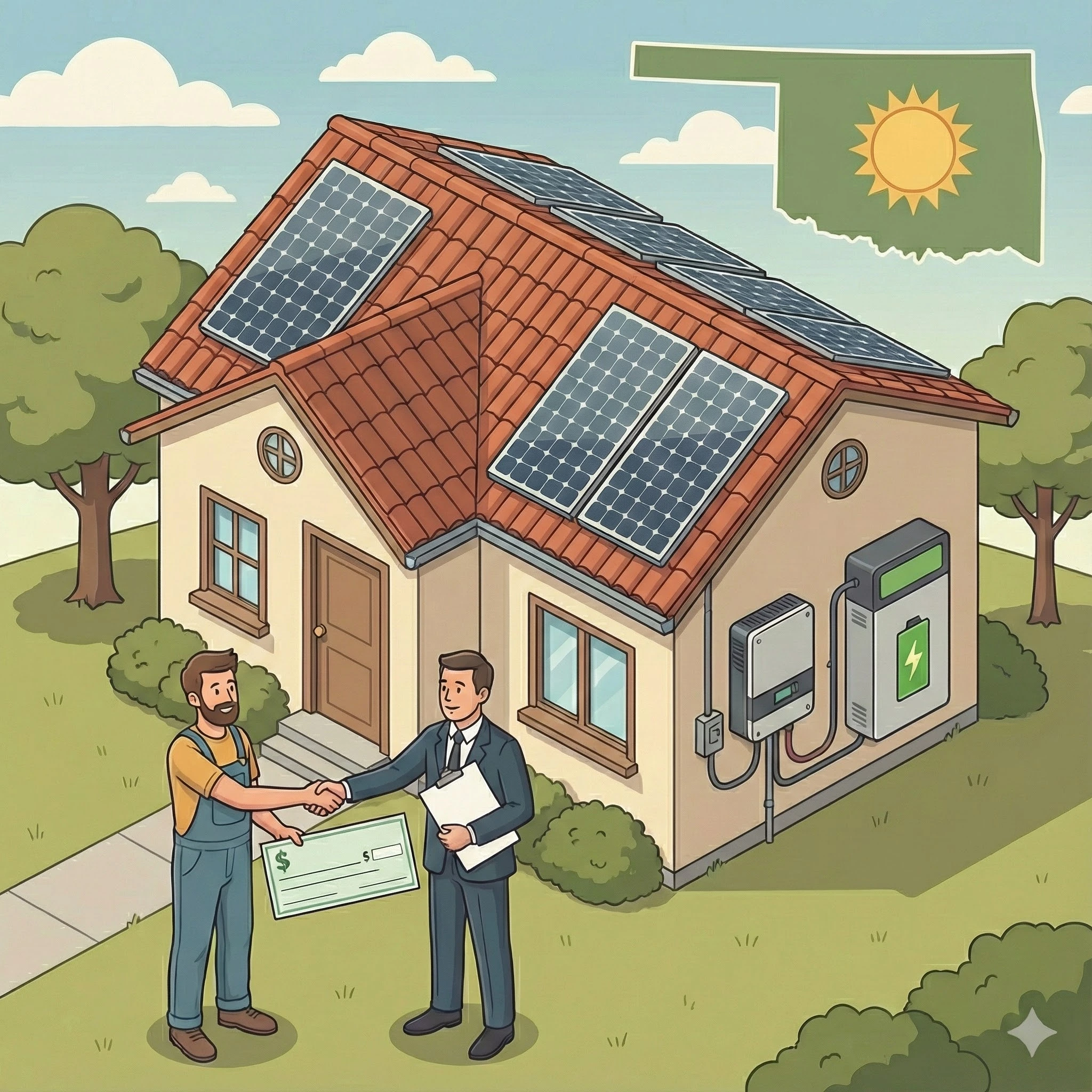
Welcome to the wild, sometimes confusing, but potentially rewarding world of solar power in the Sooner State. If you are reading this, chances are you’ve seen the ads on social media promising "free government programs" or you’ve watched your electric bill climb higher every summer and wondered if putting glass panels on your roof is the answer.
You want the truth. You want to know if solar energy actually makes sense for a homeowner in Oklahoma, a state famous for its oil and gas industry, cheap energy prices, and severe weather. You aren't looking for a sales pitch, and you certainly don't want to get scammed. You want a guide that speaks your language—friendly, direct, and honest.
This report is designed to be exactly that. We have dug through thousands of pages of tax codes, utility rate sheets, state statutes, and legal warnings so you don’t have to. We are going to break down every single incentive, rule, and "gotcha" that exists in Oklahoma today. We will talk about the federal tax credits that can save you thousands, the local utility rules that determine if you actually save money on your monthly bill, and the consumer protections you need to know to avoid bad actors.
This isn't just a quick blog post. This is a deep dive. We are going to explain why things are the way they are, how the math really works, and what you need to do to protect your investment. Whether you are in Oklahoma City dealing with OG&E, in Tulsa with PSO, or out in the country with a rural electric cooperative, this guide has the specific details you need.
TL;DR (Too Long; Didn't Read) - The Cheat Sheet
We know life is busy. If you only have two minutes right now, here is the high-level summary of everything you need to know about going solar in Oklahoma.
| Feature | The Reality in Oklahoma |
|---|---|
| Is Solar "Free"? | No. Absolutely not. Any ad claiming "no cost" or "free program" is likely misleading or a scam.1 |
| State Rebates | None. Oklahoma does not currently offer a state-level cash rebate or tax credit for residential solar.3 |
| Federal Incentive | Yes. The Federal Investment Tax Credit (ITC) covers 30% of your system cost, but it is a tax credit, not a check.4 |
| Net Metering | Complicated. Most utilities use "Net Billing." You buy power at retail price (~12¢) but sell excess back at a lower wholesale rate (~3¢).6 |
| Payback Period | 12–14 Years. Because electricity is relatively cheap here, it takes longer to break even compared to other states.8 |
| Batteries | Recommended. Essential for OG&E customers to avoid "Demand Charges" and for everyone else for backup power.3 |
| Scams | High Risk. Beware of aggressive door-to-door sales and "government partner" claims. The AG has issued specific warnings.10 |
---
Part 1: The Federal Foundation – The 30% Tax Credit
Since the State of Oklahoma isn't currently opening its checkbook to help you buy solar panels, the federal government becomes your most important financial partner. The bedrock of solar economics in the United States right now is the Federal Investment Tax Credit, often called the ITC.
This isn't just a small coupon; it is a massive discount that applies to almost everyone who pays federal income taxes. However, it is also one of the most misunderstood parts of buying solar. Let's break it down in detail so you know exactly what you are getting.
The Mechanics of the 30% Credit
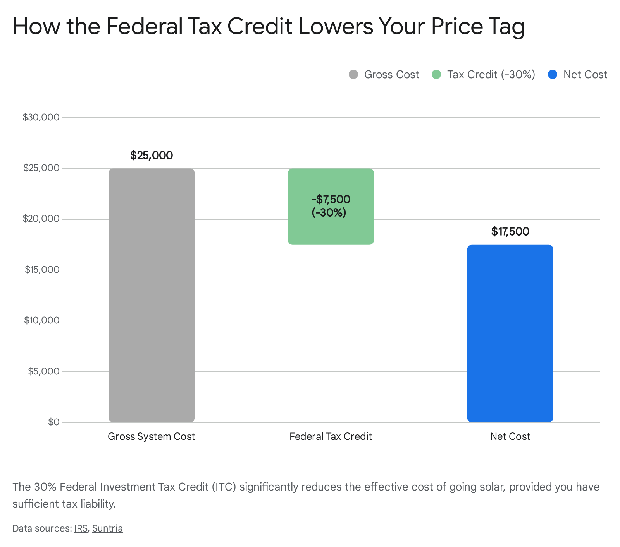
Under the Inflation Reduction Act, specifically the "Residential Clean Energy Credit," you are eligible for a tax credit equal to 30% of the total cost.4
This rate of 30% is locked in for systems placed in service between 2022 and 2032.4 That means you have a solid window of stability where you can plan your project without worrying that the incentive will disappear tomorrow.
What specific costs are included?
The IRS allows you to include a wide range of expenses in that 30% calculation. It’s not just the panels themselves.
- Solar Panels: The photovoltaic cells that generate the power.
- Labor Costs: This includes the money you pay for on-site preparation, assembly, and original installation. If you hire a contractor (which you should), their labor fee is part of the total.4
- Balance of System: This includes wiring, inverters (the box that turns DC power into AC power for your home), and mounting hardware.5
- Battery Storage: This is a crucial addition. If you install a battery storage system (like a Tesla Powerwall or similar) with a capacity of at least 3 kilowatt-hours (kWh), it also qualifies for the 30% credit. This applies even if you install the battery later, as long as it is installed in your home.5
What is NOT included?
You cannot use the tax credit to pay for a new roof just because you are putting solar on it. The IRS is strict about this. Unless the structural improvements are solely for the support of the solar panels (like reinforcing a beam), you cannot claim the cost of re‑shingling your entire house as part of the solar credit.12
Credit vs. Refund: The Crucial Distinction
This is the number one point of confusion for homeowners. The ITC is a non‑refundable tax credit, not a rebate check.
How a Rebate Works: You buy a toaster, mail in a form, and the company sends you a $10 check. It doesn't matter how much money you make or what taxes you pay.
How the Solar Tax Credit Works: You buy a solar system, and when you file your federal taxes the next year (using IRS Form 5695), you tell the IRS, "I spent $20,000 on solar." They say, "Okay, you have a $6,000 credit."
- This credit reduces the amount of income tax you owe dollar‑for‑dollar.12
- If you owe the IRS $8,000 for the year (which is usually taken out of your paycheck automatically), this credit wipes out $6,000 of that liability. Since you already paid the taxes via payroll deduction, the IRS will refund you that overpayment when you file.
The "Rollover" Rule
What happens if you don't owe enough taxes? Let's say you are retired, living on Social Security (which often isn't taxed), and your total federal tax liability for the year is only $1,000.
- You have a $6,000 credit.
- You use $1,000 to wipe out your taxes for this year.
- The remaining $5,000 does not disappear. It carries forward (rolls over) to the next tax year. This can take several years to fully realize.12
The Timeline for Action
While there is no need to panic‑buy today, it is helpful to know the long‑term schedule of this credit. Congress designed it to phase out slowly to encourage the industry to stand on its own feet.
- 2022 – 2032: 30% Credit
- 2033: 26% Credit
- 2034: 22% Credit
- 2035: Expires (0%) unless renewed by Congress.4
This decade‑long stability is rare in government incentives. It means you can plan your project for next year or the year after without fear of missing out, but waiting until the mid‑2030s will cost you money.
---
Part 2: The Oklahoma State Landscape
Now we turn our eyes to the local situation. This is where the rubber meets the road—or perhaps where the hail hits the roof. Oklahoma is a state with abundant sunshine (averaging over 5 peak sun hours per day)13, but its policy environment is very different from states like California or New York.
The "No Rebate" Reality
Let’s rip the band‑aid off quickly: Oklahoma does not have a state rebate.
If you search online, you might find websites listing generic "green energy incentives," but specific cash rebates for residential solar panels from the State of Oklahoma do not exist at this time.3
There is often confusion regarding the "Energy Efficient Home Improvement Credit," but that is largely focused on things like energy audits, windows, and heat pumps, not the solar panels themselves.5 For the core cost of your photovoltaic system, you are relying on the federal credit and your own electricity savings.
Property Taxes: The Gray Area
One of the most common questions homeowners ask is: "If I increase the value of my home by adding $20,000 worth of solar equipment, will the County Assessor raise my taxes?"
In many states, there is a clear law that says solar panels are exempt from property tax assessments. In Oklahoma, the situation is murky and varies by interpretation.
- The Law: Oklahoma statutes do not provide a specific, statewide property tax exemption for residential solar energy systems.14
- The Assessment Practice: In practice, many county assessors may not immediately re‑assess your home solely because you added panels. Solar panels are sometimes treated as personal property rather than real property improvements until the home is sold. However, technically, they are a home improvement that adds value.
- The Homestead Exemption: Oklahoma offers a "Homestead Exemption" that reduces the assessed value of your primary residence by $1,000. This is a general exemption, not specific to solar, but it helps lower your overall tax burden.16
The Strategy: Do not assume your property taxes will remain flat forever. If your county conducts a visual inspection or a market re‑evaluation, the added value of a high‑tech energy system could theoretically increase your assessed value. However, you are unlikely to receive a separate tax bill specifically for the solar panels. It gets rolled into your overall home valuation.
Sales Tax
Similarly, Oklahoma does not offer a sales tax exemption for the purchase of solar equipment.3 When you buy the system, you (or your installer) will likely pay state and local sales taxes on the hardware. This is a cost difference compared to some neighboring states that waive sales tax to encourage adoption.
---
Part 3: The Utility Maze – Net Metering vs. Net Billing
This is arguably the most important section of this entire report.
In Oklahoma, unless you spend a fortune on a massive battery bank to go completely "off‑grid" (which is rare and difficult), you will remain connected to the electric grid. This means your financial savings are determined not just by the sun, but by the rules of your specific utility company.
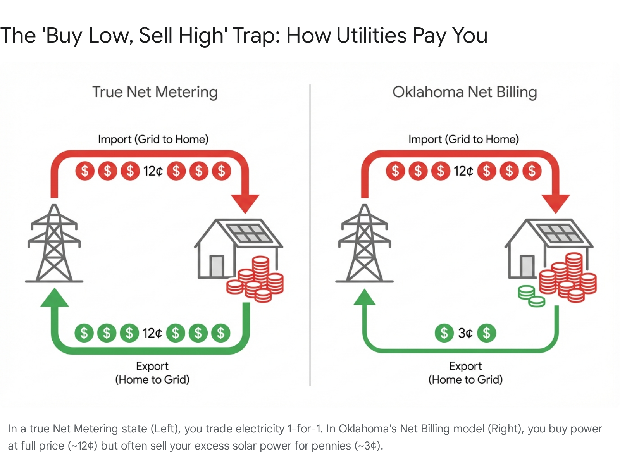
Oklahoma state law mandates that utilities offer net metering, but it does not mandate the price they must pay you for your power.8 This creates a massive loophole that utilities have used to shift from "Net Metering" to "Net Billing."
The Difference That Costs You Money
To understand why this matters, imagine your relationship with the electric company is like a trade.
Scenario A: True Net Metering (The Old Way)
- You buy an apple from the store for $1.00.
- Later, you sell an apple back to the store. They give you $1.00 credit.
- It is a fair 1‑for‑1 trade. This is how solar works in many pro‑solar states.
Scenario B: Net Billing (The Oklahoma Way)
- You buy an apple from the utility for $0.12 (Retail Rate).
- Later, you sell an apple back to the utility. They pay you $0.03 (Wholesale/Avoided Cost Rate).6
- You are buying high and selling low.
Most utilities in Oklahoma—including the big ones like OG&E and PSO—have moved or are moving toward Scenario B. This fundamentally changes how you should design your system. You no longer want to build a massive system that exports tons of power to the grid, because you get paid pennies for it. Instead, you want to build a system that covers your instant usage so you never have to buy that expensive 12‑cent power in the first place.
Utility Spotlight: OG&E (Oklahoma Gas & Electric)
If you live in the Oklahoma City metro area or surrounding regions, you are likely an OG&E customer. Their rules for solar are specific and have changed significantly in recent years.
The "Avoided Cost" Rate
OG&E currently credits excess solar generation at their "avoided cost," which fluctuates but typically hovers between 2.0 cents and 3.0 cents per kWh.6 Compare this to the residential retail rate you pay, which can range from 11 cents to over 30 cents depending on the time of year and plan.
- The Trap: If you export 1,000 kWh to OG&E, they might credit your bill $25.00. If you buy 1,000 kWh from them, they might charge you $120.00.
The Demand Charge: A Hidden Fee
Perhaps the most critical "gotcha" for OG&E solar customers is the Demand Charge associated with distributed generation rates.
- What is it? Most residential bills are based purely on volume (how much water you used). A "Demand Charge" is based on the pressure or speed of usage. It charges you for the single highest 15‑minute spike in usage during peak hours (typically 2 PM to 7 PM in summer).9
- Why it hurts solar: Solar panels produce great power at 2:00 PM. But at 6:30 PM, the sun is setting, your production drops, and your air conditioner kicks on full blast because you just got home from work. Your house pulls a massive spike of energy from the grid.
- The Cost: This specific rate (SmartHours or Solar TOU) can impose a charge of roughly $2.68 or more per kW for that spike. Even if you barely used grid power for the rest of the month, that one spike can trigger a substantial fee.
- The Fix: This is the primary reason solar homeowners in OG&E territory are buying batteries. A battery can be programmed to discharge heavily during that 2 PM – 7 PM window, keeping your grid usage flat and avoiding the demand charge spike.
Utility Spotlight: PSO (Public Service Company of Oklahoma)
For residents in Tulsa and eastern Oklahoma, PSO is the dominant provider. Their approach is slightly different but follows the same economic principles.
Net Energy Billing Option (NEBO)
PSO offers a tariff called NEBO for solar customers.
- The Rate: Like OG&E, PSO calculates the credit for your excess energy based on the "Avoided Energy Cost."
- The Numbers: Recent tariff documents show this rate fluctuating significantly. In late 2024 and projected into 2025, the avoided cost rate was listed in the range of $0.025 to $0.04 per kWh (2.5 to 4 cents).7
- Billing Mechanics: You are billed for your net usage. If you are a net consumer (you used more than you made), you pay the retail rate. If you are a net producer (you made more than you used), the excess kWh is credited at that low avoided cost rate. The credit carries forward to the next month if it exceeds your bill, but you are never cutting a profit.18
Interconnection
PSO requires an interconnection agreement before you turn your system on. They check to ensure your equipment (inverter) meets safety standards (IEEE 1547) so you don't backfeed dangerous electricity onto the grid when lines are down.18 This is a standard safety procedure but can add time to your installation process.
Utility Spotlight: Electric Cooperatives (OEC, VVEC, CVEC)
Rural Oklahoma is served by a patchwork of member‑owned Electric Cooperatives. Because these are governed by member‑elected boards rather than just the Corporation Commission, their rules vary wildly from one county to the next.
Oklahoma Electric Cooperative (OEC)
Serving the areas around Norman and central Oklahoma, OEC has specific rules for Distributed Generation (DG).
- Net Metering: OEC offers net metering where the meter "turns backward." If you produce more than you use in a billing period, the excess is credited at the avoided cost.19
- Service Charges: Be aware of "Service Availability Charges" or fixed monthly fees that apply regardless of how much power you generate. These ensure that even if your bill is $0 for energy, you still contribute to the cost of the poles and wires.19
Verdigris Valley Electric Cooperative (VVEC)
Located in northeastern Oklahoma, VVEC allows net metering for systems 25 kW and smaller.20 This is plenty for almost any residential home (a typical home needs 5 kW to 10 kW).
- The Cap: They limit the size to 125% of your peak load, meaning you can't build a massive solar farm on your residential roof just to sell power. It must be sized for your actual usage.20
Canadian Valley Electric Cooperative (CVEC)
CVEC is implementing new rate structures starting in late 2025.
- Demand Charge Introduction: They are introducing a demand charge for residential customers during peak windows (6 AM–9 AM and 3 PM–7 PM). While this lowers the per‑kWh energy charge, it adds a complexity similar to OG&E for solar owners.21
- Grandfathering: Existing solar systems (as of Nov 1, 2025) may be able to stay on the old rate structure for a period, typically five years.22 This makes acting sooner rather than later potentially advantageous if you are in CVEC territory.
---
Part 4: The Solar Economics – Will You Save Money?
We have talked about taxes and utility rules. Now let's do the math. Does this actually make financial sense for a middle‑class Oklahoma family?
The short answer is yes, but it is a "slow burn" investment, not a get‑rich‑quick scheme.
The Payback Period
In states with extremely high electricity prices (like Hawaii or California), a solar system pays for itself in 5 to 7 years. In Oklahoma, our electricity is relatively cheap.
- Average OK Rate: ~12–13 cents per kWh.
- National Average: ~16+ cents per kWh.6
Because our power is cheaper, the savings pile up more slowly.
- Estimated Payback: Most data suggests an average payback period of 12 to 14 years in Oklahoma.8
- System Life: Solar panels are typically warrantied for 25 years and can last 30+ years.
- The Verdict: You will likely spend the first 12 years paying off the system (via loan or recouping cash), and then enjoy 13+ years of essentially free electricity.
Why Do It If It Takes 12 Years?
If the payback is over a decade, why are thousands of Oklahomans still doing it?
- Inflation Hedge: Electricity rates are not static. Oklahoma rates increased roughly 21% from 2020 to 2024.13 By going solar, you lock in your cost of energy at today's price. If rates keep spiking, your payback period shrinks, and your savings grow.
- Home Value: Multiple studies, including data from Zillow, suggest that homes with owned solar panels sell for a premium—often around 4% more than comparable homes.24 (Note: This applies to owned systems. Leased systems can actually complicate a home sale.)
- Energy Independence: For many, the math is secondary to the security. In a state prone to ice storms and tornadoes, combining solar with a battery provides a level of security that the grid cannot match.
Cash vs. Loan vs. Lease
How you pay for the system changes the math dramatically.
1. Cash Purchase
- Pros: Lowest total cost. You get all the tax credits. Immediate savings on monthly bills.
- Cons: High upfront cost ($15,000 – $30,000).
- Best for: Maximizing long‑term ROI.
2. Solar Loan
- Pros: $0 down. Swap your electric bill for a loan payment.
- Cons: Dealer Fees. This is a hidden trap. To offer you a "low interest rate" (like 3.99% when market rates are 8%), lenders often add a massive fee (20‑30%) to the loan principal. You might be borrowing $30,000 for a $22,000 system.
- Warning: Always ask for the "Cash Price" separate from the "Financed Price" to see this fee.
3. Lease / PPA (Power Purchase Agreement)
- Pros: No debt. Maintenance is the company's problem.
- Cons: You usually do not get the 30% tax credit (the leasing company keeps it). The savings are smaller. It puts a lien on your equipment that can make selling your house difficult.
- Verdict: generally the least favorable option for homeowners who can afford to buy or finance.
---
Part 5: Consumer Protection – Avoiding the Scams
The solar industry in Oklahoma has been described as a "gold rush," and unfortunately, that attracts prospectors who are looking to make a quick buck rather than build a reputation.
The "Free Solar" Lie
You have probably seen them. The Facebook ads, the YouTube pre‑rolls, the flyers on your door.
"Governor Stitt Announces New Free Solar Program for Residents!"
"Congress approves checks for Oklahoma homeowners to go solar!"
The Truth: These are lies.
There is no government program sending checks to Oklahomans for free panels. The "government program" they are referencing is simply the 30% tax credit we discussed earlier, or a loan program that you have to pay back.
Attorney General Warnings
Oklahoma Attorney General Gentner Drummond has actively warned consumers about deceptive solar marketing.10 His office, along with utilities like OG&E, has flagged several red flags:
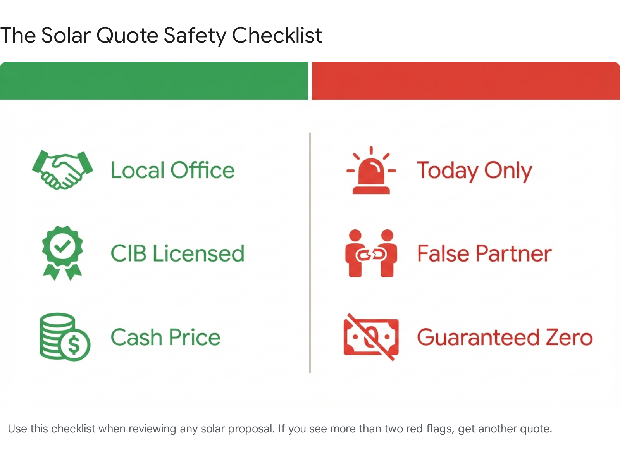
- Impersonation. Scammers often wear vests or carry clipboards that look like utility company uniforms. They might say, "We are partnering with OG&E to check your meter." OG&E does not have solar installation partners door‑knocking at your home.25
- High‑Pressure Tactics: "This special pricing ends at 6 PM tonight." A legitimate contractor knows that a $20,000 construction project takes time to decide. They will let you sleep on it.
- "No Cost" claims: They often confuse "No Upfront Cost" (a loan) with "No Cost" (free).
The HOA Question
"Can my Homeowners Association stop me?"
This is a battleground in Oklahoma.
- The Law: Oklahoma has a "Solar Access Law" (Title 60, Section 820.1) that says property owners generally have a right to use solar energy. It prohibits agreements that "sever" air rights.26
- The Reality: While HOAs cannot outright ban solar in many interpretations, they can enforce "reasonable restrictions" regarding aesthetics and placement. For example, they might demand you put the panels on the back of the house (where they can't be seen from the street).
- The Problem: If the back of your house faces North, putting panels there renders them useless.
- Legislative Fights: Bills like SB 618 (2023) were introduced to explicitly stop HOAs from banning solar, but they have faced hurdles and amendments.28
- Advice: Never take a salesperson's word that "The HOA can't stop you." Read your specific neighborhood covenants (CC&Rs) and submit a formal request to your architectural committee before you sign a contract.
---
Part 6: Special Options for Rural Oklahomans
If you live outside the major metro areas—Tulsa, OKC, Norman—you might have access to a "secret weapon" incentive that city dwellers don't: The USDA REAP Grant.
What is REAP?
The Rural Energy for America Program (REAP) is a federal grant designed to help rural areas become more energy independent.
- Who Qualifies?
- The Benefit: REAP offers grants that can cover up to 50% of the total eligible project cost.30
- The "Stack": You can generally "stack" this 50% grant with the 30% Federal Tax Credit.
- Math: 50% Grant + 30% Credit = 80% of cost covered.
- The Catch: This is a competitive grant, not a guarantee. It requires paperwork, a DUNS number, and a System for Award Management (SAM) registration. It is primarily for businesses, so if you are just a residential homeowner with no business activity, you won't qualify. But if you run a small business out of your rural shop, it is worth investigating.
Deadlines
REAP grants typically have quarterly application windows. For example, recent deadlines have been set for September 30, December 31, and March 31.32 You need to plan ahead.
---
Part 7: Technical Considerations for Oklahoma Weather
Oklahoma weather is brutal. We have wind, ice, hail, and tornadoes. Your solar system needs to be tough.
Hail Damage
Oklahoma is in "Hail Alley." Modern solar panels are tempered glass, designed to withstand typical hail (often rated for 1‑inch hail at 50mph). However, baseball‑sized hail will destroy them, just like it destroys your roof and car.
- Insurance: You must add your solar system to your homeowner's insurance policy. It usually increases your premium slightly, but it protects you from total loss during a storm.
- Roof Age: Do not put new solar panels on an old roof. If your roof has 5 years of life left, replace the roof first. Otherwise, you will have to pay thousands to remove and reinstall the panels when the roof leaks in a few years.
Batteries: Luxury or Necessity?
Five years ago, batteries (like the Powerwall) were considered a luxury toy for the rich. In Oklahoma today, the math is changing.
- Necessity for OG&E: As discussed, avoiding the OG&E Demand Charge is almost impossible without a battery to smooth out your usage spikes.
- Resilience: Solar panels without a battery will shut off when the grid goes down. This is a safety requirement (anti‑islanding) to protect linemen working on the wires. If you want power during an ice storm blackout, you must have a battery.
- Buyback Economics: Since utilities pay so little for your exports, storing that energy in a battery to use yourself at night is often smarter than selling it for 3 cents.
---
Part 8: Buying Guide – How to Shop Smart
If you have done the reading and decided solar is right for you, here is your step‑by‑step checklist to ensure you get a fair deal.
1. The "Price Per Watt" Rule
Ignore the monthly payment. A dishonest salesperson can make any car or solar system look affordable by stretching the loan to 25 years.
Focus on the Price Per Watt (PPW).
- Take the Total Cash Price (before tax credits).
- Divide by the System Size in Watts (e.g., 7kW = 7,000 Watts).
- Good Price: $2.70 to $3.50 per Watt.
- Rip‑off Price: Anything over $4.00 per Watt.
2. Get Three Quotes
Never sign the first contract. Prices can vary by $10,000 for the exact same equipment. Get quotes from:
- A large national installer.
- Two local Oklahoma‑based installers.
Local companies often care more about their reputation in the community and may offer better service.
3. Check Licenses
In Oklahoma, electrical work must be performed by licensed professionals. Check the Oklahoma Construction Industries Board (CIB) to ensure the company and their electricians are properly licensed.33
---
Conclusion: The Final Verdict
Solar power in Oklahoma is not a magic bullet. It is not "free," and it is not a quick flip for profit. It is a long‑term infrastructure investment for your home, similar to remodeling a kitchen or adding a pool, but with the added benefit of paying you back over time.
Solar is a "GO" for you if:
- You have a clear, south‑facing roof with no shade.
- You have a federal tax liability to use the 30% credit.
- You plan to stay in your home for at least 10–12 years.
- You value energy independence and insurance against rising rates.
- You are willing to navigate the utility rules (perhaps with a battery).
Solar is a "NO‑GO" for you if:
- You plan to move in 3 years.
- Your roof is shaded or old.
- You are relying on a lease because you can't afford the loan (leases often complicate home sales).
- You believe the "free government solar" ads.
The sun in Oklahoma is free, abundant, and powerful. Harvesting it costs money, but if you do it wisely, with your eyes open and your calculator out, it can be one of the smartest investments you make for your home.
Works cited
- Solar Panel Fraud | Oklahoma Consumer Law Firm | Oklahoma City, OK, accessed December 18, 2025, https://www.okconsumerlaw.com/areas-of-practice/solar-panel-fraud.html
- Growing Rooftop Solar Scams Prompt Action From Government, Co‑ops, accessed December 18, 2025, https://www.tricountyelectric.org/growing-rooftop-solar-scams-prompt-action-government-co-ops
- Oklahoma Solar Incentives, Tax Credits & Rebates 2025 – EnergySage, accessed December 18, 2025, https://www.energysage.com/local-data/solar-rebates-incentives/ok/
- Instructions for Form 5695 (2025) | Internal Revenue Service, accessed December 18, 2025, https://www.irs.gov/instructions/i5695
- Federal Tax Credits for Energy Efficiency, accessed December 18, 2025, https://www.energystar.gov/about/federal-tax-credits
- Guide to Oklahoma Solar Incentives & Tax Credits in 2025 – SolarReviews, accessed December 18, 2025, https://www.solarreviews.com/solar-incentives/oklahoma
- 2025 Net Energy Billing Option (“NEBO”) Avoided Energy Cost Rate, accessed December 18, 2025, https://www.psoklahoma.com/lib/docs/ratesandtariffs/Oklahoma/PSO_NEBO_Avoided_Energy_Prices_11-24-25.pdf
- Is Solar Worth It in Oklahoma? (2025 Homeowner's Guide) – EcoWatch, accessed December 18, 2025, https://www.ecowatch.com/solar/worth-it/ok
- OG&E Proposes New Charge, Billing Structure for Rooftop Solar | StateImpact Oklahoma, accessed December 18, 2025, https://stateimpact.npr.org/oklahoma/2015/08/21/oge-proposes-new-charge-billing-structure-for-rooftop-solar/
- PRESS RELEASE: Attorney General Drummond, OG&E partner to warn customers about solar scams – Oklahoma City Free Press, accessed December 18, 2025, https://freepressokc.com/press-release-attorney-general-drummond-oge-partner-to-warn-customers-about-solar-scams/
- Residential Clean Energy Credit | Internal Revenue Service, accessed December 18, 2025, https://www.irs.gov/credits-deductions/residential-clean-energy-credit
- Homeowner's Guide to the Federal Tax Credit for Solar Photovoltaics – Department of Energy, accessed December 18, 2025, https://www.energy.gov/sites/prod/files/2021/02/f82/Guide%20to%20Federal%20Tax%20Credit%20for%20Residential%20Solar%20PV%20-%202021.pdf
- Oklahoma Solar: Costs, Incentives, Savings – Palmetto, accessed December 18, 2025, https://palmetto.com/local/oklahoma/
- Free Oklahoma Solar Incentives: Claim Solar Panels (Open Enrollment), accessed December 18, 2025, https://oklahoma.statesolar.org/
- Tax Exemptions For Home Solar Power – How To Save On Sales And Property Taxes – SolarReviews, accessed December 18, 2025, https://www.solarreviews.com/blog/sales-and-solar-property-tax-exemptions
- Big Property Tax Savings – News & Alerts – Oklahoma County, accessed December 18, 2025, https://www.oklahomacounty.org/News/ArticleID/142/Big-Property-Tax-Savings
- OG&E proposes demand charge for distributed generation owners – Utility Dive, accessed December 18, 2025, https://www.utilitydive.com/news/oge-proposes-demand-charge-for-distributed-generation-owners/404401/
- Solar Energy – PSO, accessed December 18, 2025, https://www.psoklahoma.com/clean-energy/renewable/solar/
- Net Metering – Oklahoma Electric Cooperative, accessed December 18, 2025, https://okcoop.org/net-metering/
- Solar Agreement | Verdigris Valley Electric Cooperative, Inc, accessed December 18, 2025, https://www.vvec.com/solar-agreement
- Rate Information – Canadian Valley Electric Cooperative, accessed December 18, 2025, https://www.mycvec.coop/rate-information
- October 2025 – Canadian Valley Electric Cooperative, accessed December 18, 2025, https://canadian-valley-electric.squarespace.com/s/October-FINAL.pdf
- Oklahoma Solar Panel Data for 2025: Installation, Pricing, & Savings – EnergySage, accessed December 18, 2025, https://www.energysage.com/local-data/solar/ok/
- Sales and Property Tax Exemptions for Solar Panels – Palmetto, accessed December 18, 2025, https://palmetto.com/policy/solar-sales-and-property-tax-exemption-guide
- Drummond, OG&E warn consumers of recent scams – Southwest Ledger, accessed December 18, 2025, https://www.southwestledger.news/news/drummond-oge-warn-consumers-recent-scams
- STATE OF OKLAHOMA – LegiScan, accessed December 18, 2025, https://legiscan.com/OK/text/SB1787/2010
- What to Expect: Your HOA and Solar Panels, accessed December 18, 2025, https://thesolarcowboys.com/knowledge/what-to-expect-your-hoa-and-solar-panels
- Req. No. 1450 Page 1 1 2 3 4 5 6 7 8 9 10 11 12 13 14 15 16 17 18 – Oklahoma Legislature, accessed December 18, 2025, https://www3.oklegislature.gov/cf_pdf/2023-24%20int/sb/SB618%20int.pdf
- OK SB618 | BillTrack50, accessed December 18, 2025, https://www.billtrack50.com/billdetail/1529050
- Rural Energy For America Program (REAP), accessed December 18, 2025, https://www.rd.usda.gov/inflation-reduction-act/rural-energy-america-program-reap
- Rural Energy for America Program Renewable Energy Systems & Energy Efficiency Improvement Loans & Grants in Oklahoma – USDA Rural Development, accessed December 18, 2025, https://www.rd.usda.gov/programs-services/energy-programs/rural-energy-america-program-renewable-energy-systems-energy-efficiency-improvement-guaranteed-loans/ok
- Rural Economic Development Loan & Grant Program in Oklahoma, accessed December 18, 2025, https://www.rd.usda.gov/programs-services/business-programs/rural-economic-development-loan-grant-program/ok
- Renewable Energy FAQs – Oklahoma Electric Cooperative, accessed December 18, 2025, https://okcoop.org/renewable-energy-faqs/