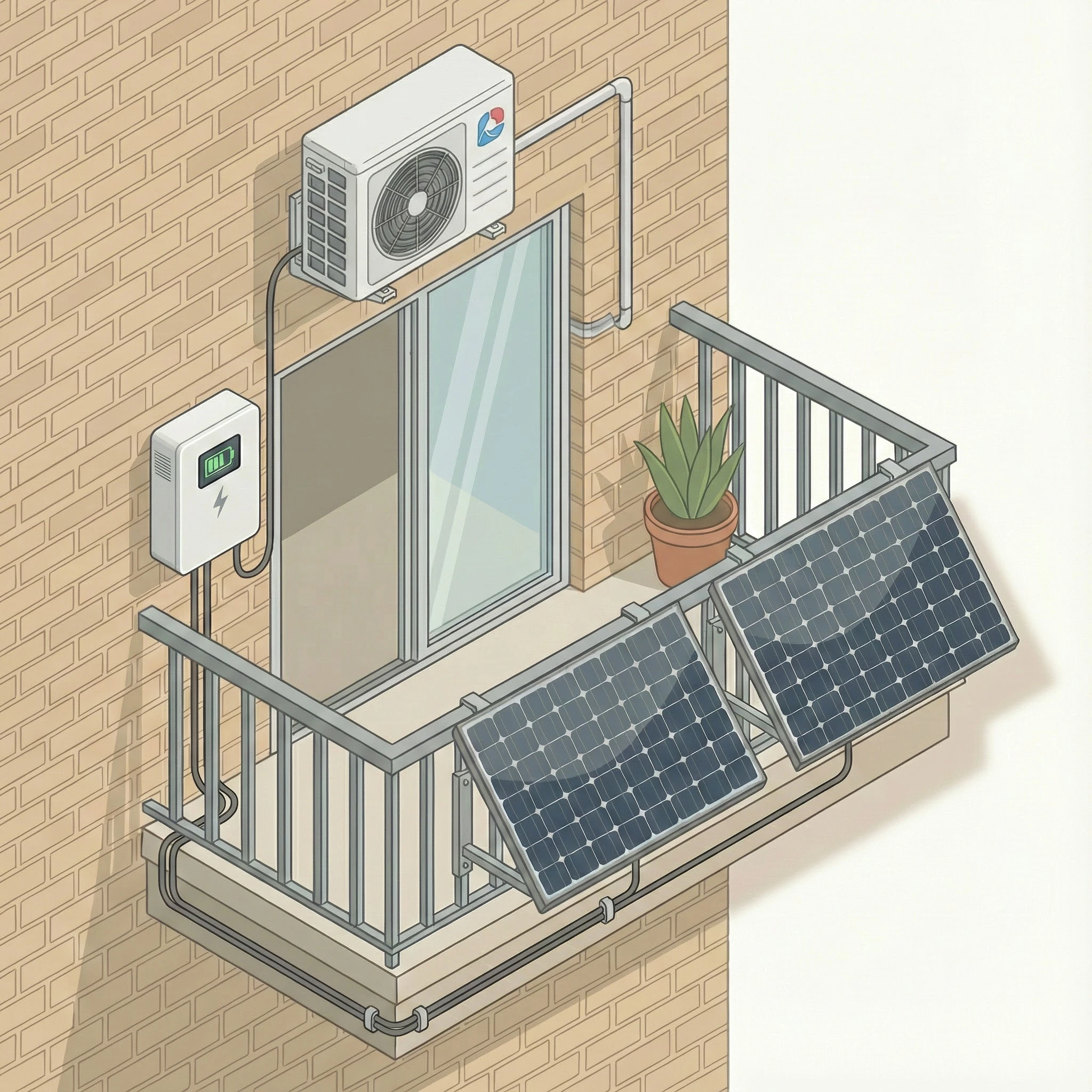
The relationship between the American home and the sun is undergoing a radical transformation. For decades, the concept of "solar power" brought to mind clunky water heaters on roofs or off‑grid cabins relying on expensive battery banks. However, the energy landscape of 2025 presents a fundamentally different reality. A convergence of legislative changes, specifically the "One Big Beautiful Bill" (OBBB) signed in July 2025, and rapid advancements in heat pump technology has created a new urgency for homeowners.1 The sun is no longer just a source of daylight; it is the primary engine for a new generation of home heating and cooling solutions that promise to sever ties with volatile fossil fuel markets.
This report serves as an exhaustive guide for the modern homeowner. It navigates the complex duality of solar energy: the "passive" methods that use architecture to trap heat without moving parts, and the "active" systems that employ pumps, fans, and advanced electronics to harvest energy.3 It also addresses the critical "showdown" between traditional solar thermal technologies and the rising dominance of solar photovoltaics (PV) paired with electric heat pumps.5 Most importantly, this document provides a strategic roadmap for navigating the impending expiration of major federal tax credits on December 31, 2025, a deadline that redefines the financial logic of home energy investment.2
1.1 The Urgency of Now: The 2025 Cliff
The residential energy market is currently defined by a specific date: December 31, 2025. On this day, the Residential Clean Energy Credit (Section 25D) and the Energy Efficient Home Improvement Credit (Section 25C) for homeowner‑owned systems are set to expire under the provisions of the OBBB.1 For years, these incentives provided a 30 % reduction in the cost of solar installations and heat pumps, democratizing access to clean energy. The elimination of these credits for purchased systems creates a "use it or lose it" scenario. Projects must be fully installed and "placed in service"—meaning operational and ready to generate power—by midnight on New Year's Eve 2025 to qualify.7 This cliff edge serves as the backdrop for all subsequent analysis in this report, as the economics of solar heating and cooling will shift dramatically on January 1, 2026.
1.2 The Two Paths: Heat and Electricity
Homeowners must distinguish between two fundamental approaches to solar energy. The first is Solar Thermal, a technology that captures the sun's heat directly to warm water or air. It is efficient in its capture but limited in its application.5 The second is Solar Photovoltaic (PV), which converts sunlight into electricity. While less efficient at capturing raw energy per square foot than thermal collectors, PV electricity is universally useful. It can power lights, charge cars, and—crucially—run electric heat pumps that warm and cool the home with remarkable efficiency.6 The industry trajectory strongly suggests that the future belongs to the electrification of heat, where solar panels power mechanical devices rather than thermal collectors heating fluids directly.5
---
2. Passive Solar Design: Harnessing the Sun Without Machines
Before discussing expensive machinery, it is essential to understand the most cost‑effective heating system available: the house itself. Passive solar design relies on the building's architecture—its windows, walls, and floors—to collect, store, and distribute solar energy without the use of electrical inputs.3 Passive solar heating is not merely about having windows; it is about the precise orchestration of sunlight and thermal mass. The goal is to maximize heat gain during the winter while strictly limiting it during the summer. This balance relies on five distinct elements: aperture, absorber, thermal mass, distribution, and control.13
2.1.1 Aperture: The South‑Facing Lens
The "aperture" refers to the windows or glass areas that allow sunlight to enter. In the Northern Hemisphere, the sun travels a low arc across the southern sky in winter and a high arc directly overhead in summer. Therefore, the primary aperture must face within 30 degrees of true south.14
- The Winter Window: From 9 a.m. to 3 p.m. during the heating season, these windows must remain unshaded to allow solar radiation to penetrate the home.
- The Summer Shield: Because the summer sun is higher in the sky, properly sized roof overhangs or awnings can completely shade these vertical windows, preventing overheating. This simple geometric trick allows the home to "turn on" heating in winter and "turn it off" in summer automatically.4
2.1.2 Thermal Mass: The Heat Battery
Sunlight entering a window provides instant heat, but without storage, the room will overheat by noon and freeze by midnight. This is where "thermal mass" functions as a battery. Dense materials like concrete, brick, stone, and tile absorb heat when sunlight strikes them (or when warm air touches them) and release it slowly as the room cools.4
- Material Matters: Water is the most efficient thermal mass, holding significantly more heat per volume than concrete, but it is difficult to integrate into a living space. Masonry floors and walls are the standard solution. For optimal performance, thermal mass should be dark‑colored to absorb more radiation, although lighter colors can reflect light to other massive surfaces.14
- The 6:1 Ratio: A general rule of thumb suggests that the area of thermal mass should be roughly six times the area of the south‑facing glazing to prevent temperature swings.13
2.1.3 Distribution and Control
Once heat is captured and stored, it must move throughout the home. Passive distribution relies on natural laws: hot air rises (convection) and heat moves from warm to cool surfaces (radiation).
- Convection Loops: Open floor plans facilitate the movement of warm air from sunspaces to northern rooms. Ceiling fans, set to low speeds, can aid this process without qualifying as an "active" system.14
- Control Mechanisms: To prevent heat loss at night, insulating window coverings—such as thermal drapes or movable shutters—are essential. Glass is a poor insulator (even double‑paned), and without "night insulation," much of the day's gain can be lost back to the cold night sky.17
2.2 Advanced Passive Retrofits: The Trombe Wall
For existing homes that lack large south‑facing windows, the Trombe wall offers a powerful retrofit solution. Named after French engineer Félix Trombe, this system serves as an indirect‑gain thermal battery.
- Construction: A Trombe wall consists of a thick masonry wall (8 to 16 inches of concrete, brick, or stone) painted black and located on the south side of the building. A layer of glass is installed roughly one inch in front of the wall, creating a small air space.14
- Mechanism: Sunlight passes through the glass and is absorbed by the dark masonry. The heat travels slowly through the wall via conduction. The rate of transfer is predictable; heat typically moves through concrete at a rate of one inch per hour. Therefore, an 8‑inch wall absorbs noon sun and releases it into the interior living space starting around 8 p.m., perfectly timing the heat delivery for the evening when occupants are home.15
- Vents: Some Trombe walls include vents at the top and bottom. During the day, heated air in the gap between the glass and wall rises and enters the home through the top vent, while cool floor‑level air is drawn in through the bottom vent, creating an immediate convection heating loop.15
2.3 Window Films: High‑Tech Passive Retrofitting
Replacing windows is expensive and disruptive. For homeowners seeking to improve passive performance without construction, modern window films offer a sophisticated alternative. In 2025, these films have evolved beyond simple tints into spectrally selective barriers.20
2.3.1 Low‑Emissivity (Low‑E) Films
Low‑E films are designed to retain heat. They work by reflecting infrared radiation (heat) back into the room during winter, essentially turning the glass into a thermal mirror. This is crucial for homes in cold climates with single or older double‑pane windows. These films also reflect summer heat away from the house, providing year‑round utility.20
2.3.2 Ceramic Window Films
Ceramic films represent the premium tier of the market. Unlike older metallic films, ceramic options use non‑conductive nano‑ceramic particles embedded in the film.
- No Signal Interference: Metallic films can block Wi‑Fi and cell signals; ceramic films do not.21
- Spectral Selectivity: These films are "spectrally selective," meaning they can block high levels of heat‑causing infrared rays (up to 50 %) and damaging UV rays (99 %) while allowing a high percentage of visible light to pass through. This allows homeowners to keep their views and natural light without the accompanying solar heat gain.23
- Durability: Ceramic films are resistant to fading and corrosion, particularly in coastal environments where salty air destroys metallic alternatives.23
2.3.3 Metallic and Privacy Films
Metallic films (like "Silver 15") are highly effective at rejecting heat (Total Solar Energy Rejected or TSER can exceed 75 %) because they act like a mirror. However, they create a mirrored look on the exterior and can become internally reflective at night, turning windows into mirrors that prevent occupants from seeing outside. They significantly reduce natural light and change the aesthetic of the home.21
---
3. DIY Passive Solar Projects: Low‑Cost Ingenuity
For the hands‑on homeowner, passive solar principles can be applied through standalone devices. These Do‑It‑Yourself (DIY) projects function as "solar furnaces" that can be mounted to windows, providing supplemental heat for specific rooms without any electricity.24
3.1 The Theory of the Solar Air Heater
These devices operate on the thermosiphon principle. A shallow, insulated box is mounted vertically on a south‑facing wall or in a window. The interior is painted matte black to absorb sunlight. As the air inside the box heats up, it becomes less dense and rises. This rising air exits through a top vent into the room, while cooler air from the floor of the room is drawn into the bottom of the box to replace it. This creates a continuous, silent cycle of air circulation powered entirely by the sun.26
3.2 The "Soda Can" Heater
One of the most popular and effective DIY designs utilizes recycled aluminum cans.
- Materials: Aluminum beverage cans are ideal because aluminum is a rapid conductor of heat and the thin walls transfer thermal energy quickly to the air.25
- Construction: The tops and bottoms of the cans are cut out (or drilled with large holes) to form tubes. These cans are stacked and glued together to form long vertical columns. The columns are painted with high‑temperature matte black paint—matte finishes absorb more light than glossy ones.28
- Assembly: The columns are placed inside a wooden box insulated with rigid foam board (polyisocyanurate is recommended for high heat tolerance). The box is covered with a glazing material, such as polycarbonate or tempered glass.25
- Performance: On a sunny winter day, output temperatures can reach 120 °F to 160 °F. However, it is critical to install back‑draft dampers (simple plastic flaps) on the vents. Without dampers, the cycle will reverse at night: the box will cool down, and warm room air will flow into the box, cool, and sink back into the room, turning the heater into a refrigerator.25
3.3 The Window Box Collector
A simpler variation is the window box unit, which sits in the window frame like an air conditioner but works to heat rather than cool.
- Design: This unit typically uses a flat black absorber plate (aluminum flashing or screen) suspended in the middle of the box. Air flows on both sides of the plate to maximize surface contact.
- Screen Absorbers: Using layers of black window screen as the absorber is highly effective. The air must pass through the mesh, which creates turbulence and ensures that every molecule of air touches the heated wires, resulting in very efficient heat transfer.27
- Limitations: These units have no thermal storage. They provide heat only when the sun is shining directly on them. Once a cloud passes or the sun sets, production stops immediately. They are supplemental devices, not replacements for a central heating system.25
---
4. Active Solar Thermal: The Traditional Approach
Moving beyond passive methods, Active Solar Thermal systems employ technology to capture solar energy more aggressively. These systems are historically the most common form of "solar heating," used primarily for domestic hot water (DHW) and swimming pools.3
4.1 How Active Thermal Systems Work
An active system consists of three main loops: the collection loop, the storage loop, and the distribution loop.
- Collection: Solar collectors on the roof absorb sunlight and heat a fluid. In climates that never freeze, this fluid can be the potable water itself (Open Loop). In most of the US, the fluid is a mixture of water and non‑toxic propylene glycol antifreeze (Closed Loop).3
- Exchange: The heated fluid is pumped down to a heat exchanger, typically a coil inside a water storage tank. The heat transfers from the glycol to the domestic water without the two fluids mixing.
- Storage: The heated water is stored in an insulated tank until a faucet is opened. Because solar availability does not always match demand, a backup heating element (electric or gas) is integrated to ensure hot water during cloudy spells.5
4.2 Collector Technologies: Flat Plate vs. Evacuated Tube
The heart of the system is the collector. Two distinct technologies dominate the market, each with specific strengths.
4.2.1 Flat Plate Collectors
These are the most recognizable solar thermal panels. They resemble slim skylights, consisting of a dark metal absorber plate covered by tempered glass and insulated on the back and sides.32
- Advantages: Flat plates are generally more affordable ($600–$1,200 per panel) and have a simpler, more robust construction. They are aesthetically lower‑profile and are effective at shedding snow because heat escaping through the glass melts the accumulation.32
- Disadvantages: They are less efficient in cold or windy weather. As the temperature difference between the outside air and the heated fluid increases, flat plates lose heat to the environment via conduction through the glass. They are heavy, requiring significant roof structural support.32
- Best Application: Flat plates excel in moderate to warm climates (California, Florida, Texas) and are the standard for low‑temperature applications like swimming pool heating.5
4.2.2 Evacuated Tube Collectors
Evacuated tube collectors look like a row of glass fluorescent lights. Each tube consists of two glass layers with a vacuum in between—similar to a thermos flask. Inside the inner tube is a metal heat pipe or absorber fin.3
- The Power of the Vacuum: The vacuum is a near‑perfect insulator, eliminating conductive and convective heat loss. This allows evacuated tubes to heat water to high temperatures (over 200 °F) even when the outside air is well below freezing. Wind chill has virtually no effect on their performance.35
- Passive Tracking: The cylindrical shape of the tubes allows them to capture sunlight from lower angles in the morning and afternoon more effectively than flat plates, which perform best only at noon.33
- Durability and Snow: These collectors are fragile; the glass tubes can break under heavy hail or mechanical stress. Paradoxically, their excellent insulation is a liability in snow; they do not leak enough heat to melt snow off, so they can remain covered and useless for days after a storm unless manually cleared.34
- Overheating: In summer, these systems can be too efficient. If the hot water is not used, the fluid can boil (stagnation), damaging the glycol and pumps. Systems often require "heat dumps" (radiators) to burn off excess heat.34
- Best Application: Cold, cloudy, and windy climates (Midwest, Northeast, Pacific Northwest) where flat plates would struggle to produce useful heat.5
4.3 Solar Pool Heating
The most economically attractive application of solar thermal is pool heating.
- Simplicity: These systems often use unglazed plastic (polymer) collectors. Because the pool water only needs to be heated a few degrees above ambient temperature, expensive glass and insulation are unnecessary.31
- Cost: Installation costs $2,500 to $7,000, which is comparable to a gas heater. However, the fuel (sunshine) is free, yielding a payback period of just 1.5 to 7 years. These systems are typically used seasonally and are drained in winter to prevent freezing.31
4.4 Maintenance Realities
Unlike solar PV panels, which are solid‑state and require little care, active solar thermal systems are mechanical plumbing stations.
- Fluid Maintenance: The glycol antifreeze degrades over time and becomes acidic. It must be checked annually and replaced every 3–5 years ($300+ service cost). Failure to do so can corrode the copper piping from the inside out.5
- Mechanical Failure: Pumps and controllers are moving parts that eventually wear out. Sensors can fail, leading to pumps running at night (cooling the water) or not running during the day (stagnation).4
- Leak Risks: With dozens of joints and connections subjected to extreme temperature cycling (freezing to boiling), leaks are a persistent risk over the system's 20‑year life.10
---
5. The Heat Pump Revolution: Electrifying Heat
While solar thermal technology has plateaued, electric Heat Pumps have experienced a technological quantum leap. When paired with solar PV panels, heat pumps are rapidly displacing traditional solar thermal systems as the preferred method for residential heating and cooling.
5.1 The Magic of the Heat Pump
A heat pump does not "make" heat; it moves it. It operates on the same principle as a refrigerator, but in reverse. A refrigerator extracts heat from inside the box and dumps it into the kitchen. A heat pump extracts heat from the outdoor air (even cold air) and dumps it into the house.38
- Thermodynamics: The system uses a refrigerant with an extremely low boiling point. Even at ‑10 °F, there is thermal energy in the air. The refrigerant absorbs this heat, boils into a gas, and is then compressed by an electric compressor. The compression drastically raises the temperature of the gas, which is then released into the home or water tank.39
- Coefficient of Performance (COP): This is the metric of magic. A standard electric resistance heater (like a toaster or baseboard heater) has a COP of 1.0—one unit of electricity produces one unit of heat. Modern heat pumps have COPs ranging from 2.0 to 4.5. This means for every $1 of electricity purchased, the homeowner gets $2 to $4.50 worth of heat. The extra energy is free, harvested from the air.40
5.2 Heat Pump Water Heaters (HPWH)
The Heat Pump Water Heater (also known as a Hybrid Water Heater) is the direct competitor to solar thermal. It is a standard water tank with a small heat pump mounted on top.
- Efficiency: These units are 3 to 4 times more efficient than standard electric water heaters. They use electricity only to run the compressor and fan, not to generate heat directly.11
- Dehumidification Bonus: As the heat pump extracts heat from the surrounding air (e.g., a garage or basement), it also condenses moisture, acting as a dehumidifier. It exhausts cool, dry air, which can be a benefit in humid climates or a slight penalty in heating‑dominated ones.10
- Smart Grid Ready: Many HPWHs are "smart," allowing them to heat water when solar production is high or electricity rates are low, effectively storing cheap energy as hot water.44
5.3 Solar PV + Heat Pump: The Ultimate Synergy
The emerging dominant model for the solar home is the "PV + Heat Pump" combination. Instead of putting plumbing on the roof (solar thermal), the homeowner installs solar electric panels (PV). These panels generate electricity, which powers the heat pump.
- Year‑Round Utility: A dedicated solar thermal system is useless once the water is hot; excess energy is wasted. A PV system, however, powers the heat pump to make hot water, but once that demand is met, the electricity flows to the refrigerator, the lights, the TV, or the grid for credit. Every photon is utilized.5
- Simplicity: PV panels have no moving parts, no fluids to leak, and a 25‑year warranty. The heat pump is a standard appliance that any HVAC technician can service, unlike solar thermal systems which require specialized and increasingly rare plumbing expertise.5
---
6. The Great Showdown: Solar Thermal vs. PV + Heat Pump
In 2025, homeowners are often faced with a choice: install a traditional solar thermal system or install PV panels and a heat pump water heater. The data heavily favors the latter.
6.1 The Efficiency Myth
Proponents of solar thermal argue that it is more efficient because collectors capture 70–80 % of solar radiation, while PV panels only capture 20 %. While true, this ignores the COP of the heat pump.
- The Math: If a PV panel is 20 % efficient but powers a heat pump that is 400 % efficient (COP 4), the total "sun‑to‑heat" efficiency is roughly 80 % (20 % × 4). The systems are effectively equal in thermodynamic efficiency.6
6.2 The Cost and ROI Comparison
The financial argument is where the PV + Heat Pump model wins decisively.
| Metric | Solar Thermal System | PV + Heat Pump Water Heater |
|---|---|---|
| Upfront Cost | $6,000 – $10,000 | $1,500 – $3,000 (Heater) + PV Cost |
| Versatility | Heats water only | Powers home, EV, & water |
| Maintenance | High (Glycol, pumps, leaks) | Low (Filter cleaning) |
| Lifespan | 20 Years (Pumps/Tank fail sooner) | PV: 25+ Years / HPWH: 10–15 Years |
| Summer Waste | High (Curtailment of excess heat) | None (Excess power exported/used) |
| Winter Performance | Poor (30–40 % Solar Fraction) | Good (HP works in cold, PV works in cold) |
| Payback Period | 7–15 Years | 3–7 Years |
Table Data Sources: 5
6.3 Conclusion: The Verdict
For most residential applications, PV + Heat Pump is the superior investment. It offers better ROI, lower maintenance, and greater flexibility. Solar thermal remains viable only in specific niches: heating swimming pools (where unglazed plastic collectors are cheap) or in large commercial settings with massive hot water loads (laundromats, hotels) where the high volume justifies the maintenance complexity.5
---
7. Solar Cooling: PV vs. Absorption
The concept of "solar cooling" usually conjures images of using heat to drive air conditioning. While technologically possible, it is rarely practical for homes.
7.1 Absorption Chillers
Absorption chillers use a heat source (hot water from solar collectors) to drive a chemical process (using lithium bromide or ammonia) that produces cooling.
- The Failure for Homes: These machines are inefficient (COP ≈ 0.7), meaning they require huge amounts of heat. They are also incredibly expensive, large, and complex. A residential solar thermal array would need to be massive to drive even a small chiller, and the system would be useless in winter.46
7.2 PV‑Driven Air Conditioning
The practical solution for solar cooling is simply using Solar PV panels to power a high‑efficiency electric air conditioner (or heat pump in cooling mode).
- Perfect Timing: Solar production peaks on hot, sunny afternoons—exactly when air conditioning demand is highest. This "load matching" makes PV cooling incredibly effective. A standard split‑system AC unit powered by rooftop panels is cheaper, more reliable, and far more efficient (COP 3.0+) than any absorption system.46
---
8. The 2025 Financial Cliff: Taxes, Incentives, and the OBBB
The economics of solar energy are heavily influenced by government policy. The passage of the "One Big Beautiful Bill" (OBBB) in July 2025 has created a high‑stakes timeline for homeowners.
8.1 The Expiration of Homeowner Tax Credits
Under the OBBB, the two primary federal tax credits for residential energy are set to expire completely on December 31, 2025.
- Section 25D (Residential Clean Energy Credit): This provides a 30 % tax credit for solar panels, solar water heaters, geothermal heat pumps, and battery storage. It is a dollar‑for‑dollar reduction in tax liability.
- The Cliff: Expenditures made after Dec 31, 2025, are ineligible. The system must be "placed in service" (installed and working) by this date. Delays in permitting or inspection that push completion to January 2026 will cost the homeowner the entire 30 % credit.1
- Section 25C (Energy Efficient Home Improvement Credit): This credit offers up to $2,000 annually for heat pumps and heat pump water heaters, and up to $1,200 for insulation, windows, and doors. This also expires at the end of 2025.1
8.2 The "Safe Harbor" Does Not Apply to Homeowners
It is a common misconception that signing a contract or making a down payment "locks in" the credit. This is false for homeowners. Unlike commercial projects, which have "safe harbor" provisions allowing them to start construction to qualify, residential Section 25D credits strictly require the system to be operational within the tax year.7
8.3 The Leasing Loophole: Section 48E
While the homeowner credit (25D) dies in 2025, the Commercial Clean Electricity Investment Tax Credit (Section 48E) continues through 2027 (and potentially beyond).
- The Mechanism: Solar leasing companies and Power Purchase Agreement (PPA) providers are commercial entities. They can claim the Section 48E credit for systems they install on residential roofs.
- The Implication for 2026: Starting January 1, 2026, a homeowner who buys a solar system gets zero federal tax help. A homeowner who leases a system allows the leasing company to claim the 30 % credit. Competitive leasing companies will pass this value through to the homeowner in the form of lower monthly payments.50
- Market Prediction: 2026 will see a massive pivot back to third‑party ownership (TPO). Leasing, which had fallen out of favor, will become the primary vehicle for accessing federal solar incentives.52
---
9. Buying vs. Leasing: The 2026 Decision Matrix
For homeowners who miss the 2025 deadline, the decision to buy or lease will look very different than it does today.
9.1 The Case for Leasing in 2026
With the loss of the homeowner tax credit, leasing becomes the "discounted" option.
- Pros: Zero upfront cost. The system is maintained by the provider (inverter replacements, panel issues are their problem). The monthly payment is likely to be lower than a loan payment because the provider applies the 48E tax credit to buy down the cost basis.53
- Cons: You do not own the system. Selling your home can be complicated; the buyer must agree to take over the lease or you must buy it out. Most leases have an "escalator clause" where the payment increases by roughly 2.9 % every year. Over 20 years, a $150 payment can grow to over $260.53
9.2 The Case for Buying in 2026
Buying will be more expensive without the 30 % coupon, but it still offers benefits.
- Pros: Maximum lifetime savings (no interest or lease fees). Full control over the system. Increases home resale value (owned solar adds value; leased solar does not). No annual payment hikes.
- Cons: High upfront cost ($20,000–$30,000). You are responsible for maintenance after warranties expire. Longer payback period (10–12 years vs. 7 years previously).52
9.3 State‑Specific "Lifeboats"
Some states will remain attractive for buyers even without federal help due to high electricity rates or local incentives.
- California: High electricity rates ($0.30–$0.50/kWh) mean solar saves money fast, even without tax credits. However, NEM 3.0 rules require batteries to make financial sense.
- New York: The NY State Tax Credit (25 % up to $5,000) remains active, providing a significant cushion for buyers.
- Massachusetts: The SMART program and state tax credit ($1,000) continue to support the market.
- The South (GA, TN, LA): These states have low electricity rates and few state incentives. Without the federal tax credit, the economic case for buying solar in these regions will collapse in 2026, making leasing the only viable option.
---
10. Conclusion and Recommendations
The path forward for the American homeowner is clear but time‑sensitive. The "solar home" of the future is an electrified home: well‑insulated, heated by high‑efficiency heat pumps, and powered by solar PV.
10.1 Immediate Action Plan (Before Dec 31, 2025)
- Prioritize the Heat Pump Water Heater: This is the single highest‑ROI upgrade available. Replacing a resistance heater with a heat pump unit saves ≈ $300/year and qualifies for a $2,000 tax credit.42
- Go Solar Now: If you intend to own your solar system, you must sign contracts immediately to ensure installation is complete by year‑end. The 30 % discount disappears forever at midnight on New Year's Eve.7
- Insulate: Do not ignore the $1,200 credit for insulation and windows. A tighter home requires a smaller, cheaper heating system.59
10.2 Strategy for 2026 and Beyond
If you miss the deadline, shift your strategy.
- Explore Leasing: Look for Power Purchase Agreements (PPAs) without escalators. Let the leasing company monetize the tax credits you can no longer claim.
- Focus on Passive: Window films and thermal mass retrofits never expire. They are permanent, low‑tech investments in comfort.
- Electrify: Even without tax credits, replacing gas appliances with electric heat pumps protects you from volatile fossil fuel prices and prepares your home for a renewable future.
The sun will keep shining in 2026, but the financial rules of harvesting it will change. By understanding the technologies—from simple window films to complex heat pumps—and the economic landscape, homeowners can secure energy independence and comfort for decades to come.
---
Quick Reference Tables
Table 1: 2025 Federal Tax Credit Cliff
| Incentive | What it Covers | Benefit Amount | Expiration Date |
|---|---|---|---|
| Section 25D | Solar Panels, Solar Thermal, Geothermal, Batteries | 30 % of Cost | Dec 31, 2025 |
| Section 25C | Heat Pumps, Heat Pump Water Heaters | 30 % up to $2,000 | Dec 31, 2025 |
| Section 25C | Insulation, Windows, Doors | 30 % up to $1,200 | Dec 31, 2025 |
| Section 48E | Commercial/Leased Solar | 30 % of Cost | 2027+ |
Note: For 25D and 25C, "Expiration" means the system must be installed and working by this date.
Table 2: State Solar Incentives (Post‑2025 Survival)
| State | Key Incentive | Status Post‑2025 |
|---|---|---|
| New York | 25 % State Tax Credit (Max $5k) | Active |
| Massachusetts | 15 % State Tax Credit (Max $1k) | Active |
| California | Property Tax Exclusion | Active |
| Texas | Local Utility Rebates (Austin/San Antonio) | Varies by Utility |
| Florida | Property/Sales Tax Exemption | Active |
| Georgia/TN/LA | None (Reliance on Federal) | Market Collapse Likely |
Works cited
-
FAQs for modification of sections 25C, 25D, 25E, 30C, 30D, 45L, 45W, and 179D under Public Law 119-21, 139 Stat. 72 (July 4, 2025), commonly known as the One, Big, Beautiful Bill (OBBB) | Internal Revenue Service, accessed December 7, 2025, https://www.irs.gov/newsroom/faqs-for-modification-of-sections-25c-25d-25e-30c-30d-45l-45w-and-179d-under-public-law-119-21-139-stat-72-july-4-2025-commonly-known-as-the-one-big-beautiful-bill-obbb
-
Trump and the Fate of the 30% Solar Tax Credit in 2025, accessed December 7, 2025, https://www.solar.com/learn/trump-and-the-fate-of-the-30-solar-tax-credit/
-
Solar Energy | EESI, accessed December 7, 2025, https://www.eesi.org/topics/solar/description
-
Passive vs. Active Solar Energy: What's the Difference? – EcoFlow, accessed December 7, 2025, https://www.ecoflow.com/us/blog/passive-vs-active-solar-energy
-
Solar Thermal vs PV + Heat‑Pump Water Heaters: 2025 Showdown, accessed December 7, 2025, https://solarpoweredwaterheaters.com/blog/solar-thermal-vs-pv-heat-pump-water-heaters-2025-showdown/
-
Heat Pumps Win The Hot Water Efficiency War – SolarQuotes, accessed December 7, 2025, https://www.solarquotes.com.au/blog/heat-pumps-win-the-hot-water-efficiency-war/
-
Residential Solar Tax Credit Going Away In US After 2025 – GreenLancer, accessed December 7, 2025, https://www.greenlancer.com/post/solar-tax-credit-ending
-
What to Know About Expiring Energy Tax Credits | NAHB, accessed December 7, 2025, https://www.nahb.org/blog/2025/07/expiring-energy-tax-credits
-
Solar PV vs Solar Thermal: Which Is Better in 2025? – Arka360, accessed December 7, 2025, https://arka360.com/ros/solar-photovoltaic-vs-solar-thermal
-
Solar Water Heating – Solar Thermal vs. Electric Heat Pumps – Mylene Merlo – North County San Diego Real Estate Advisor, accessed December 7, 2025, https://mylenemerlo.com/blog/solar-water-heating/
-
Is it viable to drop Solar‑water‑heating and replace it fully with solar‑electric‑water‑heating?, accessed December 7, 2025, https://diysolarforum.com/threads/is-it-viable-to-drop-solar-water-heating-and-replace-it-fully-with-solar-electric-water-heating.114138/
-
What's The Difference Between Passive & Active Solar Systems – ShopSolar, accessed December 7, 2025, https://shopsolarkits.com/blogs/learning-center/what-is-the-difference-between-passive-solar-systems-and-active-solar-systems
-
Passive Solar Heating | WBDG – Whole Building Design Guide, accessed December 7, 2025, https://www.wbdg.org/resources/passive-solar-heating
-
Passive Solar Homes | Department of Energy, accessed December 7, 2025, https://www.energy.gov/energysaver/passive-solar-homes
-
Passive Solar Design for the Home – NREL, accessed December 7, 2025, https://docs.nrel.gov/docs/fy01osti/27954.pdf
-
Passive heating – YourHome, accessed December 7, 2025, https://www.yourhome.gov.au/passive-design/passive-heating
-
Passive solar building design – Wikipedia, accessed December 7, 2025, https://en.wikipedia.org/wiki/Passive_solar_building_design
-
Permaculture 101: Simple DIY Passive Solar Home Retro‑fits – The Austin Common, accessed December 7, 2025, https://theaustincommon.com/permaculture-101-simple-diy-passive-solar-home-retro-fits/
-
Passive Solar Heating Techniques You Can Use in Your Own Home – Modernize, accessed December 7, 2025, https://modernize.com/homeowner-resources/other/passive-solar-heating-techniques
-
Best Window Films for Energy Savings: Top Options for Every Climate – accessed December 7, 2025, https://blog.americanwindowfilm.com/best-window-films-for-energy-savings-low-e-ceramic
-
The Best Types of Tint for Home Windows in 2025 – EDH Film Group, accessed December 7, 2025, https://edhfilmgroup.com/blog/home-window-tint-options-2025/
-
8 Best Window Insulation for Winter Solutions of 2025 – Home Blinds and Floors, accessed December 7, 2025, https://www.homeblindsandfloors.com/post/8-best-window-insulation-for-winter-solutions-of-2025
-
Best Solar Control Window Film for Home – accessed December 7, 2025, https://windowfilm.com/best-solar-control-window-film-for-home/
-
Low Profile Passive Solar Heater : 7 Steps – Instructables, accessed December 7, 2025, https://www.instructables.com/Low-profile-passive-solar-heater/
-
Anyone try making a passive solar air heater? – r/preppers – Reddit, accessed December 7, 2025, https://www.reddit.com/r/preppers/comments/1hmvl60/anyone_try_making_a_passive_solar_air_heater/
-
Solar Air Heater – DIY – Solar Panel Talk, accessed December 7, 2025, https://www.solarpaneltalk.com/forum/solar-thermal/solar-air-heating/3900-solar-air-heater-diy
-
Solar Window Box Heaters – Do It Yourself and Save – Home Construction Improvement, accessed December 7, 2025, https://www.homeconstructionimprovement.com/solar-box-window-heater/
-
Screened Solar Air Heater – 12 Steps – Instructables, accessed December 7, 2025, https://www.instructables.com/Screened-Solar-Air-Heater/
-
Screened Solar Air Heater – 12 Steps – Instructables, accessed December 7, 2025, https://www.instructables.com/Screened-Solar-Air-Heater/
-
Active vs. Passive Solar Energy: 6 Key Differences – accessed December 7, 2025, https://uslightenergy.com/active-vs-passive-solar-energy-how-do-they-differ/
-
2025 Solar Home Heating Costs: Pool, Water & Air Heater Price by Region – Modernize, accessed December 7, 2025, https://modernize.com/solar/solar-heating-costs
-
Solar Water Heater Collector Types – Free Quotes – Modernize, accessed December 7, 2025, https://modernize.com/homeowner-resources/solar/solar-water-heater-collector-types
-
Solar Water Heater Choices: Flat Plate or Evacuated Tube Collectors? – SolarTown, accessed December 7, 2025, https://solartown.com/learning/solar-water-heaters/solar-water-heater-choices-flat-plate-or-evacuated-tube-collectors/
-
Solar Thermal Flat Plate VS. Evacuated Tube Collectors? – HeatSpring Magazine, accessed December 7, 2025, https://blog.heatspring.com/solar-thermal-flat-plate-or-evacuated-tube-collectors/
-
What is the difference between flat plate and evacuated tube solar hot water collectors? – accessed December 7, 2025, https://ecohotwater.co.nz/what-is-the-difference-between-flat-plate-and-evacuated-tube-solar-hot-water-collectors/
-
Compare Evacuated Tube Collectors Vs. Flat Panel Collectors Comparison – Solar Panels Plus, accessed December 7, 2025, https://www.solarpanelsplus.com/all-about-solar/evacuated-tubes-or-flat-plates/
-
Solar PV vs Solar thermal – r/solar – Reddit, accessed December 7, 2025, https://www.reddit.com/r/solar/comments/11cufcr/solar_pv_vs_solar_thermal/
-
Heat Pump Systems – Department of Energy, accessed December 7, 2025, https://www.energy.gov/energysaver/heat-pump-systems
-
Heat Pump vs Solar Hot Water: Which Is Better? – EcoFlow, accessed December 7, 2025, https://www.ecoflow.com/au/blog/heat-pump-vs-solar-hot-water
-
Heating Efficiency Breakdown: Heat Pump vs Strip Heat Operating Costs – The Furnace Outlet, accessed December 7, 2025, https://thefurnaceoutlet.com/blogs/hvac-tips/heating-efficiency-breakdown-heat-pump-vs-strip-heat-operating-costs
-
How to Calculate ROI on an Air to Water Heat Pump – GOODHEAT, accessed December 7, 2025, https://www.goodheatglobal.com/How-to-Calculate-ROI-on-an-Air-to-Water-Heat-Pump-id42463106.html
-
Heat Pump Water Heater Cost Guide: Price, Savings & ROI Calculator – Rheem, accessed December 7, 2025, https://www.rheem.com/water-heating/articles/heat-pump-water-heater-cost-guide-price-savings-roi-calculator/
-
150 amp Electric Tankless Power Consumption vs Heat Pump Water Heater – Reddit, accessed December 7, 2025, https://www.reddit.com/r/heatpumps/comments/1kkxf2i/150-amp-electric-tankless-power-consumption-vs/
-
Heat Pump ROI Calculator – Harvest Thermal, accessed December 7, 2025, https://www.harvest-thermal.com/news/rewiring-calculator
-
Heat Pump Water Heater vs Solar Water Heater – JNOD, accessed December 7, 2025, https://www.jnodenergy.com/heat-pump-water-heater-vs-solar-water-heater/
-
Comparison of a Solar Driven Absorption Chiller and Photovoltaic Compression Chiller Under Different Demand Profiles: Technological, Environmental and Economic Performance – MDPI, accessed December 7, 2025, https://www.mdpi.com/1996-1073/18/20/5334
-
Absorption Chiller for residential air conditioning? – Reddit, accessed December 7, 2025, https://www.reddit.com/r/HVAC/comments/3dj49k/absorption_chiller_for_residential_air/
-
Solar air‑conditioning: Case study of solar absorption versus photovoltaic vapor compression systems – IEEE Xplore, accessed December 7, 2025, https://ieeexplore.ieee.org/document/7934888/
-
How the Federal Solar Tax Credit Works In 2025 – Paradise Energy Solutions, accessed December 7, 2025, https://www.paradisesolarenergy.com/blog/how-does-the-solar-tax-credit-work/
-
Lease, buy, or solar PPA? How to install solar panels in 2026 – EDGE Energy, accessed December 7, 2025, https://www.edge-gogreen.com/solar/lease-buy-or-solar-ppa/
-
Solar Leases And The Federal Tax Credit: What You Need To Know – EnergySage, accessed December 7, 2025, https://www.energysage.com/solar/can-you-claim-the-solar-tax-credit-with-leased-solar-panels/
-
Are Solar Panels Worth It in 2026 and Beyond? Rising Electricity Prices Say Yes – SolarReviews, accessed December 7, 2025, https://www.solarreviews.com/blog/are-solar-panels-worth-it-2026
-
What You Need to Know About Solar Leases in 2025 – EnergySage, accessed December 7, 2025, https://www.energysage.com/solar/solar-leases/
-
Solar Panel Lease vs Buy 2025: Tax Credit Ends December 31 – EcoFlow, accessed December 7, 2025, https://www.ecoflow.com/us/blog/smartest-way-to-go-solar
-
Residential Solar Leasing Pros & Cons – Bryan Texas Utilities, accessed December 7, 2025, https://www.btutilities.com/news/residential-solar-leasing-pros-cons
-
NY Solar Incentives After 2025 – What's Ending & What Remains – Empire Solar NY, accessed December 7, 2025, https://empiresolarny.com/solar-incentives-new-york-ending-2025/
-
2025 Solar Incentives and Rebates (Top 9 Ranked States) – EcoWatch, accessed December 7, 2025, https://www.ecowatch.com/solar/incentives
-
Congress Killed the Residential Solar Tax Credit—These States Should Go Solar Now – EnergySage, accessed December 7, 2025, https://www.energysage.com/blog/these-states-should-go-solar-now/
-
25C Heat Pump Federal Tax Credits: A Guide – Rewiring America, accessed December 7, 2025, https://homes.rewiringamerica.org/federal-incentives/25c-heat-pump-tax-credits