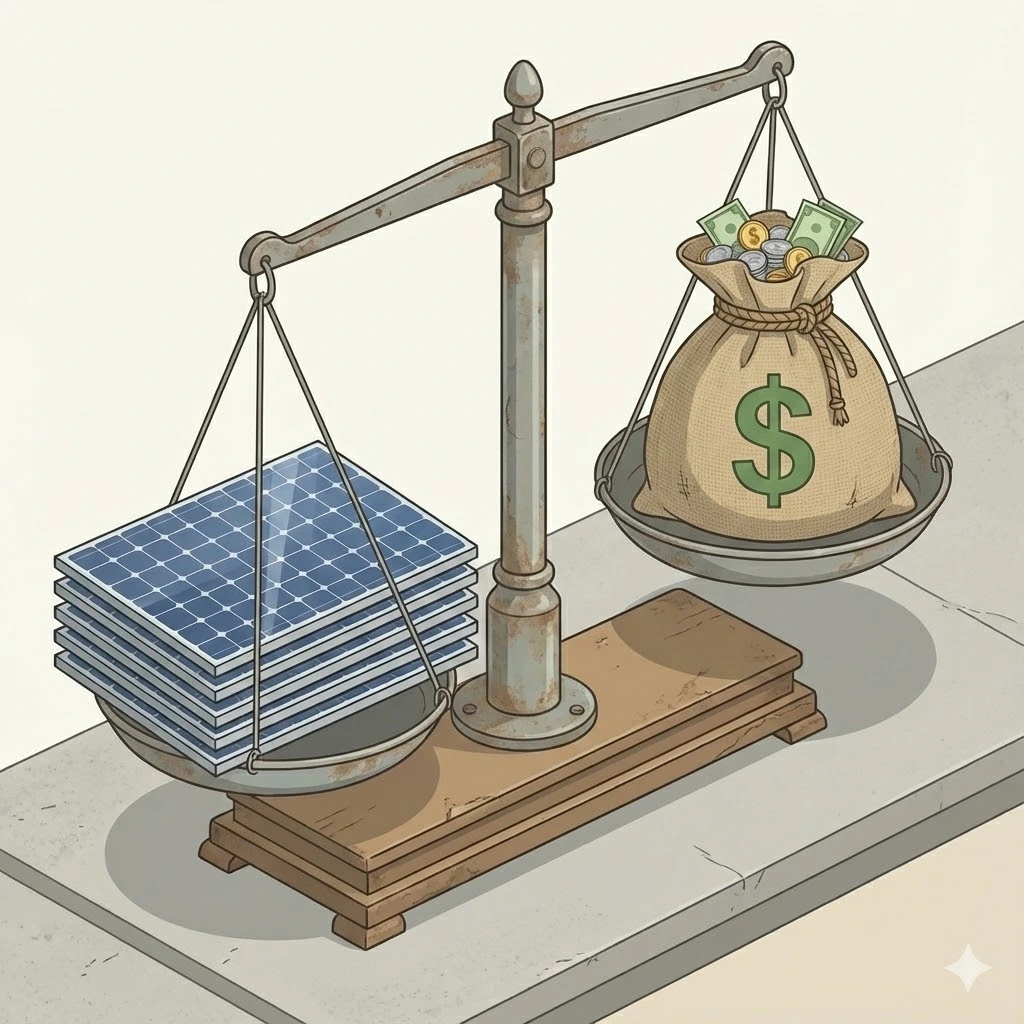
Imagine someone knocks on your door and offers to lower your electric bill forever. They point to the blazing sun above your roof and say, "We can capture that energy for you, and you won't have to pay a single penny upfront." It sounds like magic. It sounds like the deal of a lifetime. For millions of American homeowners, this is the introduction to the world of solar energy. The pitch is enticing: save money, save the planet, and do it all with zero money down.
But if you are reading this, you are probably smart enough to know that "free" usually comes with a catch. The reality of the solar industry is a mix of incredible technology and complicated financial products. While the sun’s energy is free, the equipment to catch it—and the labor to install it—is expensive. When a company offers to give it to you for "no upfront cost," they are offering a financial arrangement that will tie you to them for decades.
This guide is written for you—the homeowner who wants to make a smart choice, not just a fast one. We are going to strip away the sales jargon and look at the real math behind "zero-down" solar. We will talk about loans, leases, power purchase agreements, and the hidden fees that can turn a good deal into a financial headache. We will explore what happens when you try to sell your house, how to spot a scam, and why "free solar" is a myth you should ignore. By the end of this report, you will have the knowledge of an industry insider, explained in plain English.
TL;DR: The Quick Summary
If you do not have time to read the full deep dive right now, here is the cheat sheet. "No upfront cost" solar usually falls into three buckets. Each has pros and cons, but none are truly free.
| Feature | Solar Lease | Power Purchase Agreement (PPA) | Zero-Down Solar Loan |
|---|---|---|---|
| What is it? | You rent the equipment on your roof. | You buy the electricity the panels make. | You borrow money to buy the system. |
| Who Owns It? | The solar company. | The solar company. | You do. |
| Tax Credit (ITC) | The company keeps it. | The company keeps it. | You get it (if eligible). |
| Monthly Bill | Fixed monthly "rent" payment. | Variable payment (based on sun/usage). | Fixed loan payment. |
| Hidden Trap | Escalators: Payments often rise every year. | True-Ups: You might pay for power you don't use. | Dealer Fees: The price is jacked up 20-30%. |
| Selling Home | Hard: Buyer must take over your lease. | Hard: Buyer must qualify and agree to terms. | Easier: You can pay it off or transfer. |
| Best For | Seniors/Low-tax liability; hands-off maintenance. | People who want to pay only for performance. | People who want max savings & ownership. |
---
2. The "No Upfront Cost" Menu: Leases, PPAs, and Loans
To understand where your money is going, you have to understand the vehicle you are using to pay for solar. The industry has created three main ways to get panels on your roof without writing a check for $30,000. Let's break them down.
The Solar Lease: Renting Your Roof
Think of a solar lease exactly like leasing a car or renting an apartment. A solar company comes to your house, installs a system, and keeps the ownership title. You get to use the panels, and in exchange, you pay them a monthly rent. 1
The main selling point here is simplicity. You do not have to worry about the technical details. If the inverter breaks, the landlord (the solar company) has to fix it because it is their property. 3 You pay a flat fee—say, $120 a month—and you get to use all the power the system produces.
However, there is a catch. Since you are just a renter, you do not build any equity. After 20 years of paying rent, you own nothing. The solar company typically keeps all the financial incentives, like the big federal tax credit and any state rebates. 5 You are trading long-term wealth for short-term convenience.
The Power Purchase Agreement (PPA): Your New Utility
A PPA is similar to a lease, but the payment structure is different. Instead of paying a flat "rent" for the equipment, you agree to buy the electricity the panels generate. 2
Imagine the solar company installs a mini power plant on your roof. They put a meter on it. Every month, they check how much power that plant made, and they bill you for it at a set rate—for example, 14 cents per kilowatt-hour (kWh).
The pitch is that this rate is lower than what your local utility company charges (maybe they charge 20 cents per kWh). So, you save money on every unit of energy you use. The risk with a PPA is that your bill fluctuates. In the summer, when the sun is blazing and the panels are working overtime, your bill from the solar company will be high. In the winter, it will be low. 6
You are also betting that utility rates will keep going up. If utility rates drop or stay flat, you might end up paying more for your solar power than you would have paid the grid. 7
The Zero-Down Loan: Buying on Credit
This is the path to ownership. Instead of renting, you take out a loan to pay for the system. "Zero-down" just means the bank pays the installer 100% of the cost, and you pay the bank back over 10, 15, or 25 years. 2
Because you are the owner, you get the perks. You can claim the 30% Federal Investment Tax Credit (ITC) on your tax return. 8
You also add value to your home because you are adding an asset, not a liability. 2
However, ownership means responsibility. If a hail storm smashes a panel or a squirrel chews a wire after the warranty is up, that is your problem to solve (and pay for). 1
---
3. The Hidden Cost of Loans: Dealer Fees and Interest Rates
If you decide to buy with a loan, you need to be very careful. Not all loans are created equal. In fact, the solar loan industry has developed a fee structure that confuses almost everyone. It is called the "Dealer Fee," and it can cost you thousands of dollars.
The "Buy-Down" Game
You might see an ad for a solar loan with an incredibly low interest rate, like 2.99% or 3.99%. In today's economy, where mortgage rates are much higher, that sounds like a steal. How can they offer such cheap money?
They do it by charging you a massive upfront fee, often called a "Dealer Fee" or "Origination Fee." This fee is tacked onto your loan amount.
Here is how the math works in real life:
- Cash Price of System: Let’s say the installer would charge you $30,000 if you wrote them a check today.
- Dealer Fee: To give you that 2.99% interest rate, the lender charges the installer a fee of 30%.
- Loan Price: The installer adds that fee to your total. Now, the price of the system is $42,857.
- The Result: You are taking out a loan for nearly $43,000 for a system worth $30,000. You are paying interest on that extra $13,000 for the next 25 years. 9
Consumer protection agencies, like the Consumer Financial Protection Bureau (CFPB), have warned about this practice. It hides the true cost of the loan. When you are shopping for a loan, always ask the installer: "What is the cash price? And what is the financed price?" The difference between those two numbers is the fee you are paying just to get the loan. 10
The Balloon Payment Trap
Solar loans often have another tricky feature: the "Voluntary Prepayment" or "Balloon Payment."
The lender knows you are supposed to get a 30% tax credit from the government. So, they structure the loan assuming you will give that money to them. They set your monthly payment low for the first 18 months, essentially giving you time to file your taxes and get your refund. 9
But here is the trap: If you do not pay that 30% lump sum to the lender by month 18, your monthly payment automatically goes up. It "re-amortizes."
- Example: Your payment starts at $150/month.
- Month 18: You spent your tax refund on a vacation, or maybe you didn't qualify for the full credit because you didn't owe enough taxes.
- Month 19: Your payment jumps to $210/month and stays there for the next 23 years. 9
Many homeowners are shocked when this happens. They didn't realize that the low payment they signed up for was conditional on them handing over their tax refund. 11
---
4. The Lease & PPA Trap: Escalators and True-Ups
If you choose to lease or use a PPA, you avoid the dealer fees and balloon payments of loans. But you face a different set of financial risks. The biggest one is the "Annual Escalator."
The Escalator: Compounding Costs
An escalator is a clause in your contract that says your monthly payment will increase every year. It is usually a small percentage, like 2.9% or 3.9%. The salesperson will tell you, "Utility rates go up faster than that, so you are still saving money!"
While utility rates do rise, a fixed 2.9% compound increase adds up fast.
Let’s look at the math on a lease that starts at $150/month with a 2.9% escalator:
- Year 1: $150.00 / month
- Year 2: $154.35 / month
- Year 5: $168.00 / month
- Year 10: $194.00 / month
- Year 20: $258.00 / month
- Year 25: $297.00 / month
By the end of the contract, your payment has nearly doubled. 12
If your local electricity company didn't raise their rates that fast, you could end up paying more for your solar power than you would have paid to just stay on the grid.
The Golden Rule: If you sign a lease, fight for a 0% escalator. This locks in your payment at the Year 1 price for the entire contract. A flat payment is a much safer bet against inflation. 12
The PPA "True-Up": Paying Double
With a Power Purchase Agreement (PPA), you pay for the power the system produces. But what happens if the system produces too much power? Solar systems are designed to cover your needs, but weather varies. In a mild spring, you might not run your AC, but the sun is shining bright. Your panels might pump out 1,000 kWh of electricity, but you only use 600 kWh.
In a PPA, you often have to pay for that full 1,000 kWh because you agreed to buy all the production. 7
The extra 400 kWh goes back to the utility grid. In some states, the utility pays you for that power (Net Metering), which can offset the cost. But in states with bad net metering rules (like California under NEM 3.0), the utility pays you pennies for that power. So, you pay the solar company a high rate (say, 15 cents) for the power, and sell it to the utility for a low rate (say, 4 cents). You lose money on every extra kilowatt. 6
This is why sizing the system correctly is critical in a PPA. Do not let a salesperson sell you a system that is too big just to "generate extra savings."
---
5. The "Free Solar" Scam and Government Lies
We need to address the elephant in the room: the aggressive marketing that claims the government is giving away solar panels. You have likely seen the Facebook ads or YouTube videos claiming, "Congress just passed a law to pay for your solar!" or "Get paid to go solar!"
The Reality Check
The Federal Trade Commission (FTC) has been very clear: The government does not buy solar panels for people. There is no "free solar program" where the government writes a check to cover the whole cost. 14
When salespeople use this language, they are twisting the truth about the Investment Tax Credit (ITC). The ITC is a tax credit, not a rebate check. It reduces the income tax you owe to the IRS. If you buy a system for $30,000, the government lets you pay $9,000 less in taxes. That is a huge benefit, but it is not "free solar," and you still have to come up with the money to buy the system (or get a loan) in the first place. 15
Red Flags to Watch For
Scammers and unethical companies use specific tactics to trap homeowners. Watch out for these warning signs:
- "We are from the utility company": Scammers often wear vests or badges that look like your local power company. They say they are there for an "energy audit" or to check your meter. Real utility companies rarely do this without an appointment. They are usually just salespeople trying to get in your door. 16
- The Tablet Signature: A salesperson might hand you an iPad and say, "Just tap here to see if you qualify." In reality, that "tap" might be your digital signature on a 25-year contract. Never sign anything on a tablet until you have seen the full contract sent to your email. Take your time to read it on your own computer. 14
- "Today Only" Deals: If they say the price is only good for right now, kick them out. Solar pricing doesn't change by the hour. This is a pressure tactic designed to make you sign before you do your research. 17
---
6. The Exit Strategy: The Nightmare of Selling Your Home
This is the part of the contract that most homeowners ignore until it is too late. What happens when you want to move? A solar contract lasts 20 to 25 years. The average American moves every 7 to 10 years. That math means you will almost certainly have to deal with your solar contract when you sell your house. This is where the biggest "nightmare stories" come from.
The Transfer Process
If you have a lease or PPA, you cannot just take the panels with you. The new buyer of your home has to agree to take over your contract.
This sounds simple, but it creates huge friction:
- Credit Checks: The new buyer has to qualify for the solar lease. If they have bad credit, the solar company can reject them. Now you have a buyer who wants your house but can't buy it because of your solar panels. 18
- Buyer Reluctance: Buyers are scared of taking over someone else's debt. They might love your house but hate the idea of signing a 20-year contract with a solar company they didn't choose. They might demand that you pay off the lease before they buy the house. 19
- Delays: Transferring a solar lease takes time. It involves paperwork, credit checks, and coordination between the title company and the solar company. Real estate agents report that solar transfers often delay closing by weeks. 18
The Expensive Buyout
If the buyer refuses to take over the lease, your only option is to "buy out" the contract.
You might think, "Okay, I'll just pay the fair market value of the used panels."
Example: You are 5 years into a 25-year lease. You pay $150/month.
Remaining Payments: 20 years x 12 months x $150 = $36,000.
The Shock: You have to write a check for $36,000 just to get out of the contract so you can sell your house. 20
This is why real estate agents often advise against leases. It can turn an asset (your home) into a liability. If you own the system (via a loan or cash), it is much easier. You can just include the value of the system in the sale price of the home, pay off the loan with the proceeds, and walk away clean. 21
The "Lien" Confusion: UCC-1 Filings
When you lease solar or get a loan, the solar company files a document called a UCC-1 Financing Statement with the county.
While they will tell you "It's not a lien on your home," it acts a lot like one. It tells the world that they own the fixtures (panels) on your roof. 22
When you try to sell or refinance your mortgage, the title company will see this filing. They will require the solar company to release it or subordinate it (step back). If the solar company is slow or unresponsive—which happens frequently with bad customer service—it can kill your refinance deal or your home sale. 22
---
7. The Math of Incentives: Who Gets the Money?
We mentioned the tax credit earlier, but we need to dive deeper because the rules are changing. The Federal Solar Tax Credit (ITC) is the biggest financial lever in the industry.
Residential vs. Commercial Credit
- Residential Credit (Section 25D): This is for you, the homeowner. If you buy a system (cash or loan), you claim this.
- Commercial Credit (Section 48): This is for businesses. If you lease, the solar company claims this because they are the business that owns the system.
The 2025 Cliff
According to current tax code discussions, the residential credit (for homeowners buying systems) is set to step down or expire after 2025, while the commercial credit (for leasing companies) might continue longer. 5
What this means for you: If you are thinking about buying a system to capture that 30% discount, the clock is ticking. You generally need to have the system installed and operating before the deadline to claim the credit. 5
Future Market: If the residential credit expires, leasing might become the most popular option again, simply because the leasing companies will still get a government subsidy that they can use to lower your price. 23
Seniors and Low-Income Households
This is a critical demographic point. The tax credit is non-refundable. That means if you owe $0 in taxes (because you are retired on Social Security, or have low taxable income), the IRS will not send you a check for $9,000. The credit is worthless to you. 5
For seniors in this position, a Lease or PPA can actually be the better financial choice. Since the solar company does have tax liability, they can claim the credit and use it to offer you a lower monthly rate than you could get on a loan. If you are a senior, do not let a salesperson talk you into a loan with a "tax credit balloon payment" if you don't pay enough taxes to get the credit! 5
---
8. Technical Troubles: Roofs, Inverters, and Warranties
Solar panels are durable, but they are attached to your roof, which is the most important shield your home has against the weather.
The Roof Warranty Risk
When installers put up panels, they drill dozens of holes in your roof to bolt on the racking. If they do a bad job, your roof will leak.
Here is the danger: Your original roof warranty (from the shingle manufacturer) might be voided because of these penetrations. They will say, "We didn't design this roof to have holes drilled in it." 24
Protection: You need to ensure your solar installer provides a "Workmanship Warranty" or a "Penetration Warranty." This promises that they will fix any leaks they cause, usually for 10 years.
Best Practice: If your roof is old (15+ years), replace it before you get solar. Installing panels on an old roof is a disaster waiting to happen. You will have to pay thousands of dollars to take the panels off and put them back on when the roof eventually fails. 25
The Inverter Failure
Solar panels often last 25-30 years. Inverters (the box that converts the power) usually last 10-15 years.
If you Own: You will likely have to pay $1,500 to $3,000 to replace the inverter halfway through the system's life. You need to budget for this. 24
If you Lease: The solar company typically covers the inverter replacement because they own the equipment. This is one of the few genuine perks of the lease model. 4
Production Guarantees
Does the contract promise how much power the system will make?
Good Contract: Includes a "Production Guarantee." If the system is supposed to make 10,000 kWh but only makes 8,000 kWh, the company pays you cash for the difference. 26
Bad Contract: No guarantee. If the system underperforms, you are stuck paying the full lease payment plus a higher utility bill to make up the difference. Always check for this clause. 26
---
9. State-Specific Nuances: Where You Live Matters
Solar is not the same in every state. The "deal" depends heavily on your local laws and utility rates.
California (NEM 3.0)
California recently changed its net metering rules (NEM 3.0). The utility now pays very little for the solar power you send back to the grid.
Impact: This hurts the economics of "solar-only" systems. To save money in California now, you almost have to get a battery (like a Powerwall) to store your solar power so you can use it at night instead of selling it cheap to the grid.
Lease Implication: If you are leasing in CA, make sure the system includes a battery, or the savings might not be real. 6
SREC States (NJ, MA, DC, MD)
Some states have "Solar Renewable Energy Certificates" (SRECs). These are certificates you earn for producing green power, and utility companies buy them from you. They can be worth thousands of dollars a year.
The Trap: In a lease, the solar company usually keeps the SRECs. They take that cash revenue stream for themselves.
The Owner's Edge: If you buy the system, you get the SREC checks. In states like New Jersey or Massachusetts, owning is almost always better because of this income. 27
Cheap Electricity States
In states like Idaho, Louisiana, or Washington, electricity is very cheap (often under 10-12 cents/kWh).
The Math: It is very hard for a solar company to offer a lease price lower than 10 cents/kWh and still make money. In these states, "no upfront cost" solar often doesn't make financial sense. You might pay more for the solar than the grid power. Be very skeptical of savings claims in cheap-energy states. 28
---
10. How to Protect Yourself: A Checklist
If you are going to explore "no upfront cost" solar, treat it like buying a house or a car. Do not rush. Use this checklist to stay safe.
1. Get Three Quotes
Never sign with the first person who knocks on your door. Prices can vary by 50% between companies. Get a quote from a big national company and two quotes from local installers. [29](#