The decision to install solar panels is often driven by a desire for energy independence, financial savings, and environmental stewardship. However, the moment a homeowner looks up at their roof—the primary shield protecting their family and possessions from the elements—a fundamental anxiety often takes hold. The concept of drilling dozens of holes into a perfectly functional, watertight structure seems counterintuitive, if not downright dangerous. This report serves as a comprehensive examination of the engineering, hardware, and methodologies used to attach solar arrays to residential rooftops in the United States. It is designed to demystify the process, replacing fear with an understanding of the robust science that keeps solar panels secure and roofs dry.
The Structural Challenge of Rooftop Solar
To understand how solar panels are attached, one must first understand the forces at play. A solar array is not merely a sticker applied to a surface; it is a structural addition that must withstand significant environmental stressors. The attachment system—often referred to as "racking" or "mounting"—must satisfy two competing requirements: it must grip the building’s frame with immense strength to resist wind and snow, yet it must float gently enough to accommodate the thermal expansion and contraction of the roof materials without causing damage.1
The forces acting on a solar array are categorized into three primary loads:
- Dead Load: This is the static weight of the panels, racking, and hardware itself. A typical solar panel weighs around 40 pounds, and the mounting gear adds another few pounds per panel. While this seems heavy, spread across a roof, it usually amounts to less than 3 pounds per square foot—a weight most modern roofs can easily support.3
- Wind Uplift: This is often the most critical factor. Wind doesn't just push down on panels; it acts like a wing. As wind flows over the roof and under the panels, it creates low pressure that tries to suction the panels off the house. The attachment points must be capable of resisting thousands of pounds of upward force to keep the array grounded during hurricanes or severe storms.5
- Snow Load: In northern climates, snow accumulates on the panels. The mounting system must transfer this heavy, wet weight down through the roof deck and into the structural rafters without bowing or collapsing.7
The engineering solution to these challenges lies in a sophisticated ecosystem of lag bolts, flashings, rails, and clamps. These components have evolved from improvised hardware-store solutions in the early days of solar to highly specialized, code-compliant systems tested in wind tunnels and certified by safety organizations like Underwriters Laboratories (UL).8
The Evolution of Solar Mounting
In the nascent days of the solar industry, installers often fabricated their own mounts, sometimes leading to leaky roofs and corroded metals. Today, the market is dominated by specialized manufacturers like IronRidge, Unirac, SnapNrack, S-5!, and QuickBOLT.3 These companies produce integrated systems where every washer, bolt, and rail is designed to work in concert.
The modern mounting system is built on a philosophy of "redundancy." Waterproofing is not achieved by a single layer of sealant but by a combination of chemical seals, mechanical compression, and gravity-driven flashing. Structural integrity is not achieved by hoping a screw holds, but by calculating torque specifications and engaging specific depths of structural wood.1
Throughout this report, we will explore how these principles are applied to the most common roof types found in America: asphalt shingles, metal standing seam, corrugated metal, clay tile, and flat membrane roofs. We will also analyze the emerging trends in "rail-less" technology and ground-mounted alternatives, ensuring you have the complete picture before a single truck pulls into your driveway.
---
Chapter 2: The Universal Anatomy of a Solar Attachment
Before dissecting the specific methods for different roof materials, it is essential to understand the "skeleton" of a solar array. Regardless of whether a roof is made of asphalt, metal, or tile, the mounting system generally consists of four primary components: the roof attachment, the flashing, the rail (or rail-less interface), and the module clamps.
1. The Roof Attachment: The Anchor
The roof attachment is the interface between the solar system and the building structure. On a wood-framed house, which constitutes the majority of US residential construction, this attachment is typically a lag bolt.
- The Lag Bolt: This is a heavy-duty screw, usually made of stainless steel to resist rust. It is typically 5/16ths of an inch in diameter and requires a pilot hole to be drilled into the roof rafter.1 The bolt must penetrate deep into the solid wood of the rafter—often at least 2.5 inches—to achieve the necessary "pull-out strength." If a bolt only grips the plywood roof deck (sheathing), it is liable to rip out during high winds.1
- The Stanchion (or L-Foot): The head of the lag bolt holds down a metal bracket, often L-shaped (hence "L-foot"), which stands up vertically from the roof surface. This L-foot serves as the connecting point for the rest of the racking system.1
2. The Flashing: The Water Shield
Waterproofing is the single most important aspect of the attachment for the homeowner. The flashing is a sheet of aluminum or galvanized steel that is integrated into the roofing material.
- The Shingle Principle: Roofs work by shedding water from one layer to the next, using gravity. A proper solar flashing is inserted underneath the shingle row above the attachment point and hangs over the shingle row below it. This ensures that when rainwater runs down the roof, it flows over the flashing and continues down, never having an opportunity to seep into the bolt hole.13
- The Raised Seal: Modern flashings often feature a raised circular area or a rubber grommet where the bolt passes through. This creates an elevated dam; water running down the roof flows around this raised area rather than over it, adding a secondary layer of protection.12
3. The Racking: The Skeleton
Once the attachments are secure, a framework is needed to hold the panels.
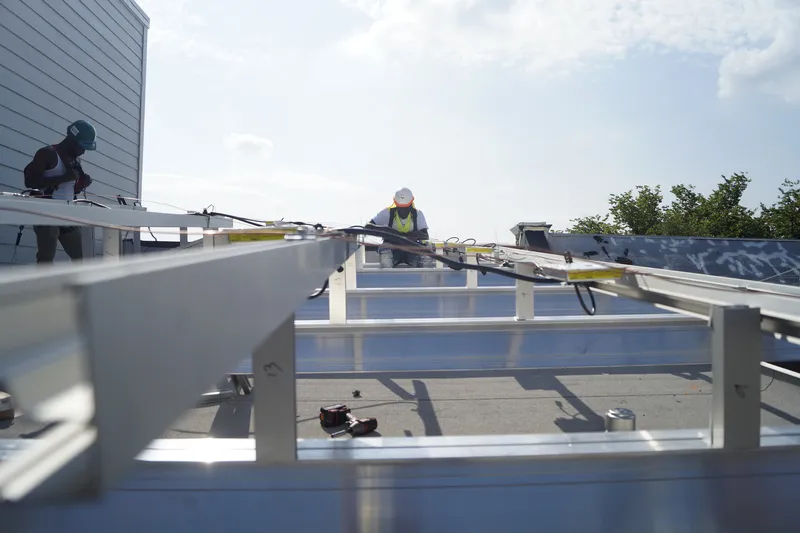
- Rails: The traditional and most common method involves long aluminum tracks (rails) that run horizontally across the roof. These rails bolt onto the L-feet. Rails provide a straight, rigid surface for the panels, correcting for any waviness in the roof structure.1
- Rail-Less Systems: An increasingly popular alternative eliminates the long rails. Instead, specialized "skirt" mounts or individual grippers attach directly to the roof feet, and the panels themselves act as the structural bridge between them. We will explore the pros and cons of this "Rail vs. Rail-Less" debate in a dedicated chapter.15
4. The Clamps: The Grip
Solar panels are not screwed directly to the rails. They are held in place by clamps.
- Mid-Clamps: These T-shaped clamps sit between two adjacent solar panels. When tightened, they press down on the frames of both panels, locking them to the rail.1
- End-Clamps: These are used at the very end of a row. They grip the frame of the last panel and clamp it securely to the rail or mount.17
- Torque Specifications: Installers use torque wrenches to tighten these clamps to a specific setting (e.g., 14 foot-pounds). If they are too loose, panels can slide; if too tight, the glass can shatter or the bolt can snap.1
Materials Science: The Battle Against Corrosion
The hardware used on a roof must survive decades of rain, sun, and temperature swings.
- Aluminum: Most rails and clamps are made of anodized aluminum. It is lightweight, strong, and naturally resistant to corrosion.1
- Stainless Steel: Bolts and nuts are typically stainless steel for maximum strength.
- Galvanic Corrosion: A critical rule in solar installation is avoiding "dissimilar metals." If aluminum touches copper, or if stainless steel touches galvanized steel in the presence of water, a chemical reaction occurs that eats away the metal (galvanic corrosion). Installers use stainless steel washers or specialized coatings to separate these metals and prevent the system from rotting away.19
---
Chapter 3: Asphalt Shingle Roofs – The American Standard
Asphalt shingles cover approximately 75% of homes in North America. Consequently, the solar industry has optimized its installation processes primarily for this roof type. The installation on asphalt is a refined dance of locating structure, preserving waterproofing, and managing weight distribution.
Step 1: Locating the Rafters (The Art and Science)
The most critical step happens before a single hole is drilled. The installer must locate the roof rafters—the angled wooden beams that support the roof deck. Attaching to the thin plywood decking is insufficient for wind loading; the lag bolts must bite into the structural timber.1
Finding a rafter hidden beneath layers of shingles, tar paper, and plywood is challenging. Installers utilize several techniques:
- The Mallet Test (The "Solar Two-Step"): Experienced installers tap the roof with a rubber mallet. A hollow, low-frequency thud indicates the space between rafters. A sharp, solid thud indicates the presence of a rafter. By walking across the roof and feeling for "stiff" spots vs. "spongy" spots, they can map out the substructure.20
- The Pilot Hole Method: Once a potential location is identified, a very small drill bit is used to bore a pilot hole. If the bit plunges through easily, it missed the rafter. If it meets resistance and pulls out wood shavings, the rafter has been found. Any "missed" holes must be immediately sealed with high-grade roofing sealant to prevent leaks.9
- Deep-Scan Stud Finders: While common in carpentry, standard stud finders often struggle through thick roofing layers. Specialized "deep-scan" models or powerful magnets (which find the nails holding the roof deck to the rafters) are sometimes employed for greater accuracy.1
- Visual Clues: On dewy or frosty mornings, the thermal bridging of the rafters can create visible vertical lines on the roof surface, revealing the exact location of the lumber below.1
Step 2: The Penetration and Sealant Injection
Once the rafter center is marked, the installer drills the primary hole for the lag bolt. This is the moment of maximum anxiety for the homeowner—the intentional breach of the roof's integrity. However, the sealing process is rigorous.
- Chemical Sealing: Before inserting the bolt, the installer fills the pilot hole with a high-performance sealant, such as Geocel or Chemlink. This "goop" is not standard caulk; it is a specialized polymer designed to withstand extreme temperatures and UV exposure.
- The "Hershey Kiss": A bead of sealant is often placed over the hole surface. As the bolt is driven in, it forces this sealant deep into the wood fibers and creates a gasket-like seal between the bolt shank and the roof deck.1
Step 3: Flashing Installation (The Mechanical Shield)
- Breaking the Seal: The installer uses a flat pry bar to gently lift the shingle above the drilled hole. In cold weather, this must be done carefully to avoid cracking the brittle asphalt. In hot weather, the shingles are pliable but the tar strips are sticky.9
- Insertion: The metal flashing plate is slid underneath the upper shingle. This ensures that water flowing down the roof travels over the upper shingle, onto the metal flashing, and down over the lower shingle. The flashing covers the penetration point completely, shielding it from direct rainfall.13
- Integrated Systems: Modern products like the IronRidge FlashFoot2 or Unirac FlashLoc combine the structural mount and the flashing into a single unit, streamlining the process and reducing the number of loose parts on the roof.9
Step 4: Rail Attachment and Leveling
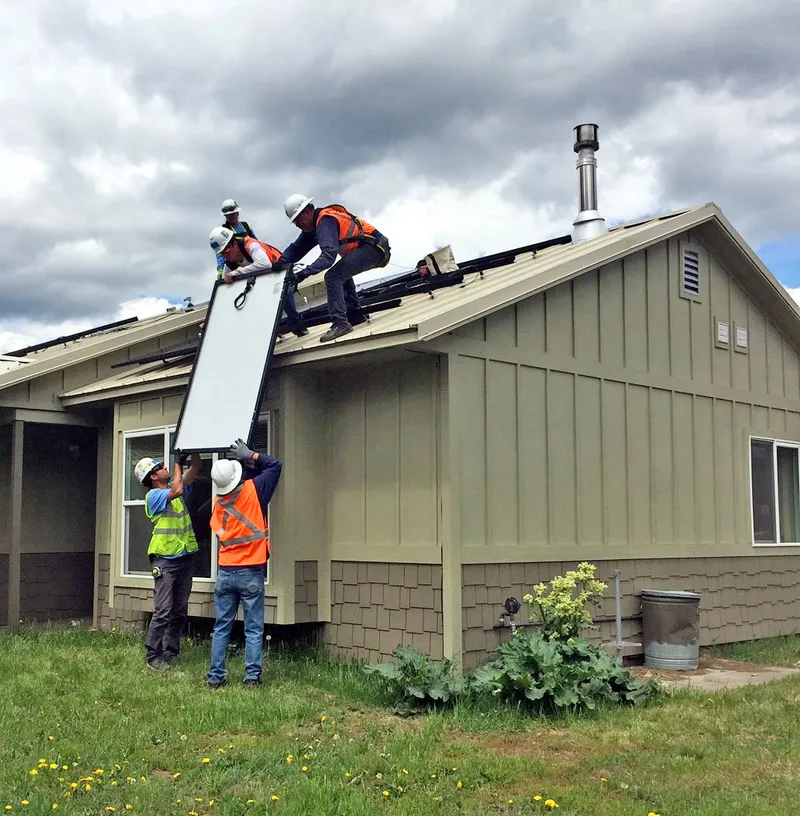
With the feet (mounts) secured to the rafters—typically spaced every 4 to 6 feet horizontally—the aluminum rails are attached.
- Leveling: Roofs are rarely perfectly flat; they often sag or bow with age. The connection between the foot and the rail is adjustable, allowing the installer to raise or lower the rail height. This ensures the solar panels sit on a perfectly flat plane, which is crucial for aesthetics. A wavy solar array is a sign of poor workmanship.1
- Cantilevers: The rails can extend past the last attachment point, but only by a specific distance (usually 1/3 of the span between mounts). This "cantilever" must be calculated to prevent the rail from bending under snow load.9
Table 1: Asphalt Shingle Installation Checklist
| Step | Action | Critical Quality Check |
|---|---|---|
| 1. Rafter Search | Locate structural beams | Verify solid wood contact; seal all "missed" pilot holes immediately. |
| 2. Shingle Prep | Lift upper shingle course | Do not tear shingles; use a pry bar to separate tar strip gently. |
| 3. Drilling | Drill lag bolt hole | Ensure hole is perpendicular to roof surface for maximum strength. |
| 4. Sealing | Inject sealant into hole | Use roofing-grade sealant (e.g., butyl, polyurethane); avoid cheap silicone. |
| 5. Flashing | Slide metal plate under shingle | Ensure flashing extends fully under the upslope course (shingle principle). |
| 6. Mounting | Bolt L-foot to rafter | Torque to manufacturer spec (e.g., 15-20 ft-lbs) to compress seal without stripping wood. |
---
Chapter 4: Metal Roofing – The Solar Installer’s Best Friend
While asphalt shingles are common, metal roofs are often considered the ideal substrate for solar power. Metal roofs have a lifespan of 50 to 70 years, closely matching the 30+ year lifespan of solar panels. This eliminates the dreaded scenario of having to remove solar panels 15 years down the road to replace a worn-out roof.22 However, the attachment method varies drastically depending on the specific profile of the metal.
Scenario A: Standing Seam (The Gold Standard)
Standing seam roofs feature vertical metal ribs (seams) running from the ridge to the eaves. These roofs offer the possibility of a "zero-penetration" installation, which preserves the roof warranty and eliminates leak risks entirely.
- The Clamp Mechanism: Specialized clamps, such as those made by S-5!, are designed to fit over the standing seam. Instead of drilling through the metal, these clamps use set screws to "pinch" the seam.
- Non-Penetrating Grip: The set screws are tightened to a specific torque, biting into the metal fold without piercing it. This mechanical interlock is incredibly strong, capable of withstanding hurricane-force winds.2
- Thermal Expansion: One major advantage of this system is that it allows the roof and the solar array to expand and contract together. Metal roofs move significantly with temperature changes; clamping to the seam allows the entire assembly to "breathe" without shearing bolts.19
- Cost and Aesthetics: While standing seam clamps can be more expensive than generic lag bolts, the labor savings (no drilling, no sealant) often balance the cost. The result is a sleek, low-profile look where the panels appear to float just above the roof surface.22
Scenario B: Corrugated and Ribbed Metal (The Screw-Down Method)
Corrugated (wavy) or trapezoidal metal roofs are common in agricultural and rural settings. Unlike standing seam, these profiles generally do not offer a rib tall enough to clamp onto. Penetration is usually unavoidable.
- The Bracket: Installers use a bracket that matches the curvature of the roof rib. It is critical to attach these brackets to the "high" part of the rib (the crest), not the "low" part (the valley) where water flows.
- Structural Screwing: Because the metal sheet itself is often thin gauge steel, screws must penetrate through the metal and into the wooden purlins or trusses beneath.
- Waterproofing: The waterproofing relies on heavy-duty EPDM rubber gaskets integrated into the bracket or the screw head. When tightened, the rubber compresses against the metal, forming a watertight seal similar to the gasket on a plumbing fixture.6
Scenario C: Stone-Coated Steel
These roofs look like shingles or tiles but are actually stamped metal with a granular coating.
- Complexity: These roofs look like shingles or tiles but are actually stamped metal with a granular coating.
- Method: Often, the installation is treated like a tile roof (see Chapter 6), where the panel is removed or a specialized bracket is used to hook onto the batten structure underneath. Great care must be taken not to crush the metal profile while walking on it.26
---
Chapter 5: Tile Roofing – Fragility and the "Comp-Out" Controversy
Clay and concrete tile roofs, prevalent in the American Southwest and Florida, present the most significant challenge for solar installers. The tiles are brittle, prone to cracking under foot traffic, and difficult to waterproof once penetrated. The industry has developed three distinct approaches to handling tile roofs, each with its own trade-offs.
Method 1: The "Comp-Out" (Removal and Replacement)
In this method, the installer removes all the tiles from the area where the solar array will be located.
- The Process: The tiles are stripped, and the exposed roof deck is covered with composite asphalt shingles (hence "comp-out"). Standard solar mounts are then installed on this shingle patch.
- Pros: This creates a flat, easy-to-waterproof surface. There is zero risk of broken tiles under the panels because there are no tiles left.
- Cons: It changes the aesthetic of the roof. If the solar panels are not perfectly flush, the shingle patch may be visible from the street, creating a "picture frame" effect. It is also labor-intensive and requires storing or disposing of the removed tiles.27
Method 2: Tile Hooks (The Traditional Approach)
This method keeps the tiles in place but uses a specialized hook to reach the structure.
- The Hook: A heavy-duty metal arm (the hook) is bolted to the rafter. It curves down to the roof deck, slides under the tile, and then curves back up between the tile rows to hold the rail.18
- The Grinding: To ensure the tile sits flat over the hook, installers often have to use an angle grinder to carve a notch into the underside of the tile. If this step is skipped, the tile will stick up, allowing wind-driven rain to enter and potentially breaking the tile when someone steps on it.
- Flashing Challenges: Waterproofing a hook is complex. It requires a primary flashing at the deck level (under the tile) and relies on the tile itself as the secondary water shed. "Double flashing" is the gold standard here to prevent leaks.6
Method 3: Tile Replacement Mounts (The Modern Solution)
Increasingly, installers are moving toward tile replacement mounts (e.g., from IronRidge or QuickBOLT).
- The Concept: Instead of drilling through a tile or grinding it, the installer removes a single tile and replaces it with a metal "dummy" tile that has a mounting post built into it.
- The Fit: These metal replacements are molded to the exact shape of standard tile profiles (Flat, S-Tile, W-Tile). They slot perfectly into the roof row.
- Advantages: This eliminates the need for grinding and drilling tiles. The metal flashing tile is completely waterproof and virtually indestructible. It serves as both the mount and the flashing, simplifying the installation and reducing breakage risks.27
Table 2: Tile Roof Mounting Options Comparison
| Method | Leak Risk | Aesthetic Impact | Labor Intensity | Tile Breakage Risk |
|---|---|---|---|---|
| Comp-Out | Low | High (shingles visible) | High (removing all tiles) | Zero (under array) |
| Tile Hooks | Moderate | Low (original look) | High (grinding required) | Moderate |
| Replacement Mounts | Low | Low (matches profile) | Moderate | Low |
---
Chapter 6: Flat and Low-Slope Roofs – Gravity vs. Penetration
Flat roofs, common on commercial buildings and modern residential architecture, require a fundamentally different approach. The primary enemy on a flat roof is standing water. Unlike a pitched roof where water runs off immediately, a flat roof can accumulate puddles. Therefore, drilling holes is discouraged unless absolutely necessary.
The Ballasted System (The Weight Method)
The preferred method for flat roofs is the ballasted mount.
- How it Works: The solar panels are attached to racking trays that are angled (typically 10 to 15 degrees) to catch the sun.
- Physics: The friction between the racking and the roof, combined with the heavy ballast weight, prevents the array from moving during high winds.
- Roof Protection: To prevent the concrete or metal from abrading the roof membrane (TPO, EPDM, or PVC), a protective "slip sheet" or rubber mat is placed under the racking.
- Advantages: This system requires zero roof penetrations, preserving the roof warranty perfectly. It is also modular and easy to remove if roof repairs are needed later.5
The Attached System (The Anchor Method)
In areas with extreme wind requirements (like hurricane zones) or on roofs that cannot support the extra weight of concrete blocks, mechanically attached systems are used.
- The Anchor: Stand-offs are bolted through the roof and into the structural deck.
- The Seal: On membrane roofs (like TPO or PVC), the mount is often sealed using a "chemical flash." A patch of the same roofing material is heat-welded over the mount, fusing it to the roof surface. This creates a seamless, monolithic seal that is far superior to caulk or tar.31
Hybrid Systems
Hybrid systems combine both methods. They use a small number of mechanical anchors to prevent the array from sliding, but rely primarily on ballast weight to keep it down.31
---
Chapter 7: The Great Debate – Rails vs. Rail-Less Systems
For decades, the standard solar installation involved bolting long aluminum rails to the roof and then clamping panels to those rails. Recently, "Rail-Less" (or "Direct Attach") systems have surged in popularity. Each has distinct advantages for the homeowner.
The Case for Railed Systems (The Traditionalist)
Brands like Unirac SolarMount and IronRidge XR represent the railed approach.
- Leveling: Rails are rigid. If a roof is wavy or uneven (common in older homes), the installer can adjust the height of the rails to create a perfectly flat plane for the panels. This results in a cleaner, "glass-like" appearance.
- Wire Management: The rails act as a trough. Wires can be tucked inside or clipped neatly to the rail, keeping them off the roof surface and protected from the sun and squirrels.
- Strength: Rails distribute the weight of the panels and snow loads across multiple rafters, bridging any weak spots in the roof structure.
The Case for Rail-Less Systems (The Modernist)
Brands like SnapNrack, S-5! PVKIT, and Ecoflow mounting kits offer rail-less solutions.
- Aesthetics: Without the bulky rail underneath, the panels sit closer to the roof (lower profile). This looks sleeker and reduces "side view" visibility.
- Logistics: Rails are long (10-20 feet) and expensive to ship. Rail-less systems consist of small boxes of clamps and skirts. This reduces shipping costs and makes it easier for installers to get materials up the ladder.
- Speed: Proponents argue that rail-less systems are faster to install because there is less measuring and cutting of aluminum track.
- The Trade-Off: Rail-less systems are unforgiving. If the roof is wavy, the solar array will be wavy. Wire management is more challenging, as cables must be clipped to the panel frames themselves.
Table 3: Rail vs. Rail-Less Decision Matrix
| Feature | Railed System | Rail-Less System |
|---|---|---|
| Best For... | Older/uneven roofs; Complex arrays | New/flat roofs; Simple rectangular arrays |
| Aesthetics | Panels sit higher (3-5 inches) | Low profile (2-3 inches); Sleek look |
| Wire Management | Excellent (tucked in rail) | Challenging (clipped to frame) |
| Shipping/Logistics | Difficult (long, heavy rails) | Easy (compact boxes) |
| Cost | Higher material cost | Lower material cost (less aluminum) |
---
Chapter 8: Ground Mounts – When the Roof Isn’t the Answer
Sometimes, the best place for solar panels isn't on the roof at all. Ground mounts account for a significant portion of residential solar, particularly on larger properties.
Standard Ground Mounts
These systems use a metal frame anchored into the ground.
- Foundations: The legs of the frame are typically set in concrete footings or driven directly into the soil using pile drivers (similar to highway guardrails).
- Adjustability: Unlike roof mounts, which are stuck at the roof's pitch, ground mounts can be set at the perfect angle for solar production. Some even offer manual tilt adjustments for winter vs. summer sun angles.
Pole Mounts
A single, massive steel pole supports a large rack of panels.
- Tracking: Pole mounts often incorporate "trackers" that physically move the panels to follow the sun from east to west throughout the day. This can increase energy production by 25% or more compared to a fixed roof system.
- Clearance: Because the panels are high off the ground, the space underneath can still be used for gardening or grazing small animals.
When to Choose Ground Mounts:
- Roof Issues: Your roof faces north, is too shady, or is structurally unsound.
- Space: You have a large yard or field.
- Efficiency: You want to maximize production with perfect orientation and tilt.
- Maintenance: You want easy access to clean off snow or dust without climbing a ladder.
---
Chapter 9: Electrical Safety and Wire Management
Attaching the panels is only half the battle. The electrical integration is equally critical for safety and longevity.
Grounding (Bonding)
A solar array is a large metal structure on top of your house. It must be properly grounded to prevent electrical shock.
- Integrated Bonding: Modern clamps (like the IronRidge UFO or S-5! PVKIT) have small stainless steel teeth that bite through the anodized coating of the aluminum rails and panel frames. This bonds every metal component together electrically. A single copper grounding wire then connects the entire array to the home's ground rod.
- Why it matters: If a wire frays and touches the rail, the grounding system ensures the breaker trips immediately rather than energizing the entire metal rack, which would be a lethal hazard to anyone touching it.
Wire Management
Loose wires are a major failure point.
- The Threat: Wires flapping in the wind can chafe against the abrasive roof shingles, wearing through the insulation and causing arc faults (fires).
- The Solution: Installers use UV-rated zip ties and stainless steel clips to secure every inch of cable. Wires should never touch the roof surface. They should be suspended tightly against the rails or panel frames.
---
Chapter 10: Installation Day, Warranties, and the Future
The Installation Experience
On the day of installation, expect noise. The sound of lag bolts being driven into rafters resonates through the house frame.
- Safety First: A reputable crew will set up OSHA-compliant safety lines. You will see installers wearing harnesses tethered to roof anchors. If you see a crew working without fall protection, it is a sign of unprofessionalism and liability risk.
- Timeline: A typical residential install takes 1 to 3 days. The racking and flashings usually go up on day one, followed by the panels and wiring on day two.
The Warranty Question
Homeowners often fear that solar will void their roof warranty.
- The Magnuson-Moss Act: In the US, a manufacturer cannot void a warranty simply because you installed an aftermarket product, unless the installation caused the failure.
- Bifurcated Warranty: After solar is installed, your roof warranty essentially splits. The original roofer covers the undisturbed areas. The solar installer provides a Workmanship Warranty (typically 10-25 years) that covers the penetration points.
- Best Practice: Ask your installer for a written warranty that specifically covers roof leaks related to their penetrations. Many top-tier installers offer "penetration warranties" that match the remaining life of your roof.11
Future-Proofing: Detach and Reset
If you need a new roof in 15 years, the panels must be removed. This process, called "Detach and Reset," is labor-intensive. It typically costs between $150 and $250 per panel. Homeowners should budget for this if their roof is already midway through its life when they go solar.41
---
Conclusion
The fear of roof penetrations is natural, but the engineering behind modern solar attachments is formidable. From the "shingle principle" of flashings to the zero-penetration clamps of standing seam roofs, the industry has developed solutions that respect the integrity of the building envelope.
By understanding the mechanics of these systems—how a lag bolt bites into a rafter, how a flashing sheds water, and how a clamp grips a rail—you are no longer a passive observer but an informed partner in your home’s energy transformation. Whether you choose the rugged reliability of a railed system or the sleek profile of a rail-less array, the technology exists to keep your power on and your attic dry for decades to come.
Glossary of Terms
- Lag Bolt: Heavy-duty screw used to anchor racking to rafters.
- Flashing: Metal sheet used to waterproof penetrations.
- Rafter/Truss: Structural wooden beams supporting the roof.
- Ballast: Concrete weights used to secure flat roof systems.
- Torque: Rotational force applied to bolts; critical for secure clamping.
- Galvanic Corrosion: Chemical decay caused by incompatible metals touching.
- Cantilever: The portion of rail extending past the last attachment point.
Works cited
- How to Mount Solar Panels to the Roof: Complete Installation Guide - SolarTech, accessed December 8, 2025, https://solartechonline.com/blog/how-to-mount-solar-panels-roof-installation-guide/
- PVKIT® Rail-Less Metal Roof Solar Mount - S-5!, accessed December 8, 2025, https://www.s-5.com/products/solar-panels-on-metal-roof-pvkit-2-0/
- Rail vs. Rail-less: Which is the Best Solar Mounting Platform - Blog - S-5!, accessed December 8, 2025, https://blog.s-5.com/blog/rail-vs.-rail-less-which-is-the-best-solar-mounting-platform-for-your-roof
- Solar Panel Mounting System: Avoid CRITICAL Home Solar Setup Mistakes! - EcoFlow, accessed December 8, 2025, https://www.ecoflow.com/us/blog/solar-panel-mounting-system-guide
- Ballasted vs Roof-Penetrating Racks: Risks, Costs, Use Cases - Anern Store, accessed December 8, 2025, https://www.anernstore.com/blogs/diy-solar-guides/ballasted-penetrating-roof-racks
- Solar Panel Roof Leaks Prevention Flashing Tips - Austin Hi-Tech Restoration, accessed December 8, 2025, https://www.austinhi-tech.com/solar-panel-roof-leaks-prevention-flashing-tips/
- Comprehensive Guide to Solar Mounting Systems: Flat Ground, Slopes, U-Pile, and More, accessed December 8, 2025, https://manuals.plus/m/b4d905f2b608df16727490e92e69b6045620c975ea93e5c6ab3ac37ddcaede0f
- Installation Instructions - LA County Public Works, accessed December 8, 2025, https://dpw.lacounty.gov/bsd/lib/fp/Small Residential Rooftop Solar Energy Systems/LA County Recognized UL 2703 Racking Systems/GAF Energy DecoTech Installation Guide.pdf
- Rooftop Solar Panel Installation Checklist for Asphalt Shingle Roofs - GreenLancer, accessed December 8, 2025, https://www.greenlancer.com/post/solar-installation-checklist
- Solar Panel Mounting Hardware: A Complete Guide - solocityglobal.com, accessed December 8, 2025, https://solocityglobal.com/solar-panel-mounting-hardware/
- Will Installing Solar Void a Roof Warranty? - UPDATE - QuickBOLT, accessed December 8, 2025, https://quickbolt.com/blog/will-installing-solar-void-roof-warranty-update
- How Will The Solar Panels Attach To My Roof?, accessed December 8, 2025, https://americansentrysolar.com/how-will-solar-panels-attach-to-roof/
- How to Install Solar Panels on a Shingle Roof? - Maine Energy Experts, accessed December 8, 2025, https://maineenergyexperts.com/solar-panels-on-shingle-roof/
- Solar Racking: Everything You Need to Know - EnergySage, accessed December 8, 2025, https://www.energysage.com/solar/solar-racking-overview/
- Railed vs Rail-less Solar Mounting: Choosing the Right Racking Solution for Your Next Solar Project, accessed December 8, 2025, https://energysolutions-solar.com/railed-vs-rail-less-solar-mounting-choosing-the-right-racking-solution/
- The Evolution of Solar Panel Rails: From Installation to Long-Term Benefits - Unimacts, accessed December 8, 2025, https://www.unimacts.com/the-evolution-of-solar-panel-rails-from-installation-to-long-term-benefits/
- The Ultimate Guide To Solar Panel Clamps: Why Rapid Mid And End Clamps Are A Game-Changer For Your Solar Mounting Bracket Installation, accessed December 8, 2025, https://www.btc-solar.com/news/the-ultimate-guide-to-solar-panel-clamps-why-rapid-mid-and-end-clamps-are-a-game-changer-for-your-solar-mounting-bracket-installation/
- How to Install Solar Panels on a Tile Roof — Use tile roof hook - PV MOUNTS, accessed December 8, 2025, https://pv-mounts.com/how-to-install-solar-panel-on-tile-roof/
- Guide to good practice – steel roofing and photovoltaic/solar panels, accessed December 8, 2025, https://cdn.dcs.bluescope.com.au/download/tb-36
- Expert Tips for Locating Trusses in Your Roof for Solar Panel Installation - YouTube, accessed December 8, 2025, https://www.youtube.com/watch?v=Og_v8XOy9Rs
- What's the most reliable tool to locate a truss through shingles? : r/solar - Reddit, accessed December 8, 2025, https://www.reddit.com/r/solar/comments/amej1g/whats_the_most_reliable_tool_to_locate_a_truss/
- Standing Seam Vs Corrugated Metal Roof (7 Key Differences) - Buckeye State Roofing, accessed December 8, 2025, https://buckeyestateroofing.com/blog/standing-seam-vs-corrugated-metal-roof/
- Can You Install Solar Panels on a Metal Roof? - Paradise Energy Solutions, accessed December 8, 2025, https://www.paradisesolarenergy.com/blog/can-you-install-solar-panels-on-a-metal-roof/
- Comparing Clamp Designs: Standing Seam vs Corrugated Panels - Anern Store, accessed December 8, 2025, https://www.anernstore.com/blogs/diy-solar-guides/clamp-designs-standing-seam-corrugated
- Shingles or standing seam under solar? - Reddit, accessed December 8, 2025, https://www.reddit.com/r/solar/comments/1o4exy4/shingles_or_standing_seam_under_solar/
- Fixing solar panels to membrane roofs - Nicholson Roof Products, accessed December 8, 2025, https://www.nicholsonsts.com/articles/fixing-solar-panels-to-membrane-roofs/
- How Solar Is Installed On Clay Tile Roofs - SolarReviews, accessed December 8, 2025, https://www.solarreviews.com/blog/how-solar-is-installed-on-clay-tile-roofs
- How are Solar Panels Fixed to the Roof? | Read on to find out, accessed December 8, 2025, https://solar-gain.co.uk/how-are-solar-panels-fixed-to-the-roof/
- How Does Project Solar Mount Panels on Flat Roofs? - FAQ, accessed December 8, 2025, https://knowledge.projectsolar.com/how-does-project-solar-mount-panels-on-flat-roofs
- Flat Roof Solar Mounting: Which System Is Best?, accessed December 8, 2025, https://www.solarpermitsolutions.com/blog/flat-roof-solar-ballasted-vs-attached
- Best Flat Roof Solar Mounting Systems in Los Angeles, accessed December 8, 2025, https://primeamericanroofing.com/best-flat-roof-solar-mounting-systems-in-los-angeles/
- Rail-less vs. Traditional Rails: Which Solar Mounting Saves More Money? - xmtopenergy.com, accessed December 8, 2025, https://www.xmtopenergy.com/blog/rail-less-vs-traditional-rails-which-solar-mounting-saves-more-money_b359
- Is Rail-less Solar Mounting Really Reliable? Pros and Cons Explained - xmtopenergy.com, accessed December 8, 2025, https://www.xmtopenergy.com/blog/is-rail-less-solar-mounting-really-reliable-pros-and-cons-explained_b326
- Solar Panel Installation: How to Install Solar Step by Step, accessed December 8, 2025, https://unboundsolar.com/blog/step-by-step-diy-solar-installation
- Your Guide To Solar Panel Mounts In 2025 - SolarReviews, accessed December 8, 2025, https://www.solarreviews.com/blog/solar-panel-mounts-guide
- Complete Guide To Solar Mounting Solutions: Types, Installation & Cost (2025) - SolarTech, accessed December 8, 2025, https://solartechonline.com/blog/solar-mounting-solutions-guide/
- Penetrating vs Non-Penetrating Roof Mounts: Selection Criteria and Limits - Utkarsh India, accessed December 8, 2025, https://utkarshindia.in/blog/penetrating-vs-non-penetrating-roof-mounts-selection-criteria-and-limits
- Maintenance Best Practices for Solar Mounting Systems, accessed December 8, 2025, https://deosolar.co.za/maintenance-best-practices-solar-mounting-systems/
- Do Solar Panels Void Your Roof Warranty?, accessed December 8, 2025, https://roofmaxx.com/learning-hub/do-solar-panels-void-your-roof-warranty/
- Will Solar Panels Void My Roof Warranty?, accessed December 8, 2025, https://capecodsolarguys.com/will-solar-panels-void-my-roof-warranty/
- Uncover the Truth About Solar Panel Roof Warranty, Detach and Reset Costs, and Hidden Roof Damage! - Redline Roofing, accessed December 8, 2025, https://www.redlineroofingtx.com/roofing-and-solar-panels-what-homeowners-should-know/