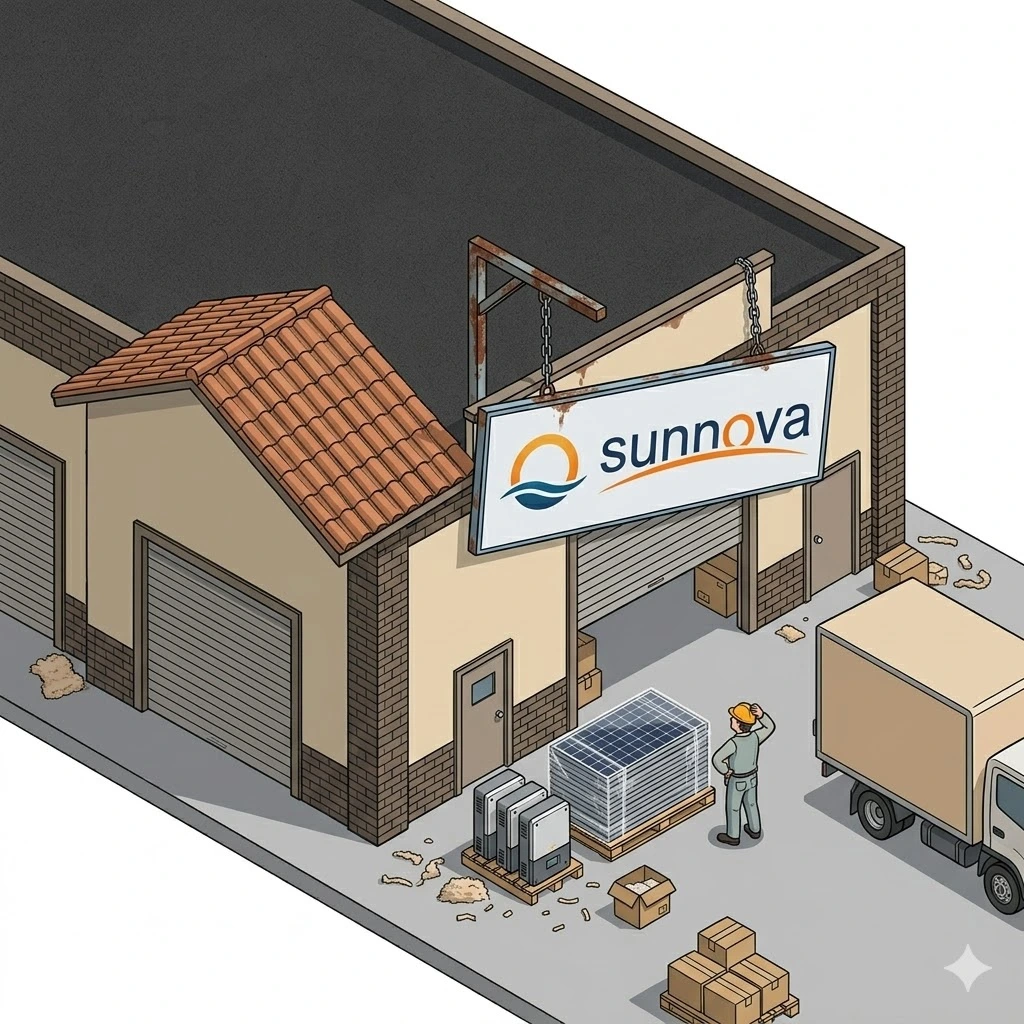
A homeowner signs a 25-year solar lease. The installer mounts the panels and switches them on. Then the financier files for bankruptcy before the contract paperwork is finalized: no monthly bills are ever drawn, no UCC filing is recorded at the county, and no successor servicer can find the homeowner in its system. The system runs. The contract sits in limbo. And the original installer, unpaid for the work, comes knocking with a buyout offer.
This isn't a hypothetical. After Sunnova Energy filed for Chapter 11 protection in June 2025, a court-supervised sale transferred substantially all of its assets to a new owner group, and SunStrong Management took over servicing for in-service customer accounts. But that transfer assumes a clean chain of records on the way in, and accounts whose origination paperwork was never completed pre-petition can fall through the gap.
What the lease was supposed to do
A residential solar lease is a financing arrangement in which the homeowner does not own the equipment. The third-party owner, Sunnova, in this case, owns the panels and leases them to the homeowner for a monthly payment. To preserve its claim against the equipment if the homeowner defaults or sells the home, the third-party owner records a UCC-1 financing statement, often as a fixture filing in the county real-property records.
The fixture filing is what makes the lease enforceable against later parties: buyers, mortgage lenders, title companies. Without it, the third-party owner has a contractual claim against the lessee but no perfected security interest in the equipment that anyone running a title search would see.
How paperwork gets stranded
In residential solar, the contract is not fully executed until installation, interconnection, and a permission-to-operate notice from the utility are all reflected in the financier's system, after which the financier pays the installer and begins billing the homeowner. If any step stalls, a missed inspection, a misfiled interconnection notice, an unresolved utility account number, the financier may never trigger billing, never pay the installer, and never record the UCC filing the contract promised. Systems in this state can still be physically connected and producing electricity even though no payment ever changes hands.
When the financier then enters Chapter 11, the asset sale operates on the records the debtor has. A contract that exists on paper at the homeowner's house but never got fully booked at the financier may not appear in the receivable schedules sold to the new owner. Homeowners in this situation have reported that SunStrong cannot locate their accounts when contacted with name, address, phone, and email, and that inquiries to the bankruptcy claims agent have not produced contract-specific answers.
What homeowners should not do quickly
Two responses are common in these situations and both carry real risk.
Pay the installer for a buyout. The installer, unpaid by the bankrupt financier, may offer to release the panels in exchange for a payment and may promise to honor the manufacturer warranty. The installer was not a party to the lease and cannot release the homeowner from a contract held by the financier or its successor. If the contract is later located and assumed by a buyer in the bankruptcy, the homeowner could end up paying twice: once to the installer and again to whoever holds the lease.
Do nothing on the assumption that bankruptcy voids the contract. The Chapter 11 sale transferred assets to a new owner; contracts the new owner identifies and assumes remain enforceable. The general bar date for filing claims in the Sunnova case was August 6, 2025, which has already passed, and missing a bar date can foreclose a homeowner's ability to assert defenses or claims later.
What homeowners should do
For US homeowners with a Sunnova lease whose status is unclear:
- Pull the county real-property records and search for a UCC-1 fixture filing referencing the address. Absence is a relevant fact, but it does not by itself void the lease.
- Contact Kroll Restructuring Administration, the court-appointed claims and noticing agent in the Sunnova case, using the contact information on the case docket page.
- Contact SunStrong directly using the customer welcome materials it sent to successor accounts; if SunStrong has no record after a thorough search by name, address, phone, and email, document that search.
- Consult a consumer-protection or bankruptcy attorney before paying any party, installer, lender, or third-party buyer, for the panels. If the homeowner is elderly or has cognitive decline, a power of attorney or guardian may need to be involved before any contract decision.
A lease that was never recorded in county records, never billed by the financier, and not located by the financier's successor is a signal that the chain of administration broke before bankruptcy. That does not make the contract disappear, but it does mean the path forward should be mapped by a lawyer, not by an installer trying to recoup costs.