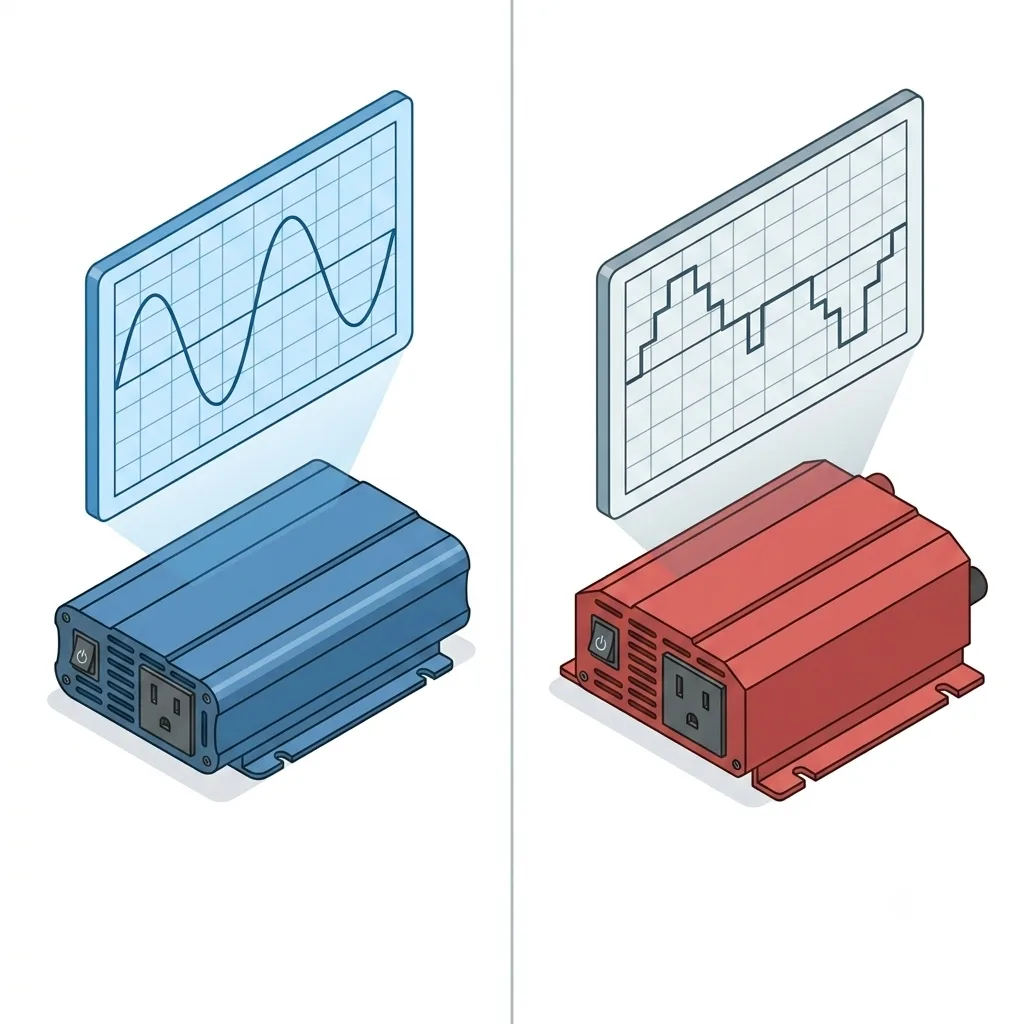
If you have ever bought a budget inverter and discovered that half your appliances would not run correctly on it, the waveform type is usually the reason.
We just published a detailed knowledge base article, Pure Sine Wave vs. Modified Sine Wave Inverters: Which One Do You Actually Need?, that walks through exactly what separates the two types, which devices are affected and why, and how to choose the right inverter for a solar backup or off-grid setup.
Modified sine wave inverters cost 40–75% less than pure sine wave equivalents, which makes them tempting for backup systems and portable setups. But that price gap comes with real compatibility limits. Audio equipment, refrigerators, washing machines, microwaves, forced-air furnaces, and medical devices like CPAP machines all have problems on modified sine wave power: ranging from audible interference to motor overheating to outright failure to start.
The article includes a compatibility table, explains why harmonic distortion causes these issues, and covers the cases where modified sine wave is genuinely fine (resistive loads like kettles, heaters, and incandescent bulbs, as well as laptops and modern TVs with switching power supplies).
For homeowners adding battery backup to a solar system or building an off-grid setup, the key takeaway is straightforward: if your load mix includes motors, audio gear, or medical equipment, a pure sine wave inverter avoids the compatibility research and the long-term efficiency penalty.